
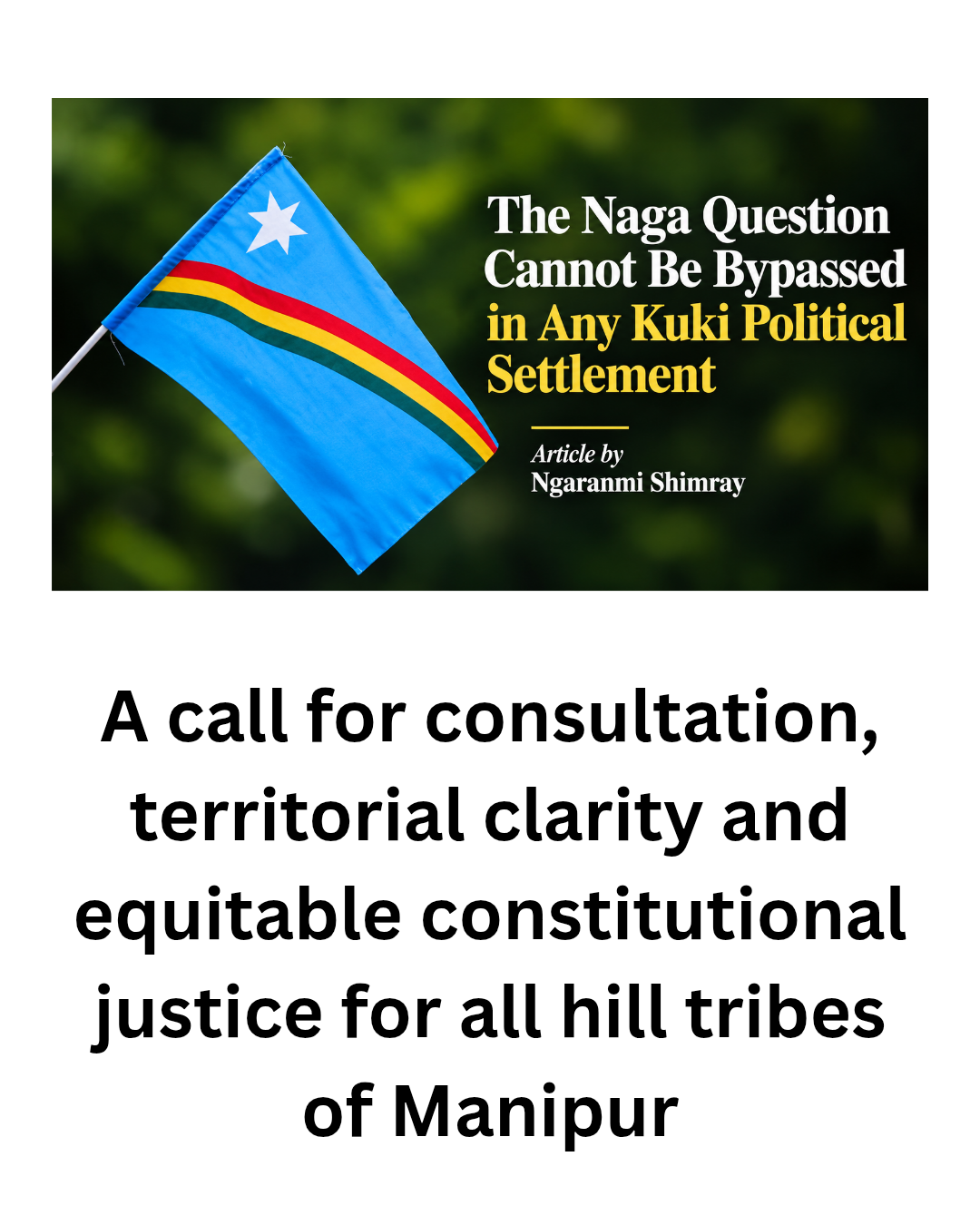
A call for consultation, territorial clarity and equitable constitutional justice for all hill tribes of Manipur
In my view, the Naga community of Manipur should articulate its position to the Government of India with clarity regarding the reported political settlement proposed for the Kuki community.
The Naga strategy should not be one of obstruction; rather, it should emphasise the necessity of consultation and inclusion of the Nagas of Manipur as stakeholders in any such arrangement.
It should be contended that any settlement under consideration for the Kukis would primarily affect the Nagas of Manipur in terms of land. The territorial jurisdiction of the proposed Kuki administration is contested by the indigenous Nagas, which constitutes a fundamental cause of conflict. The Nagas maintain that the land belongs to the indigenous Nagas as the original inhabitants, and this claim must be resolved prior to finalising any political agreement.
Secondly, a settlement involving one tribal group while excluding another within Manipur cannot be concluded in isolation, as both the Nagas and Kukis inhabit the same geographical area with unresolved boundaries.
Thirdly, as both communities reside in the hill areas of Manipur under Article 371-C, any benefit extended to one group should be made available to the other if the settlement is confined to the state. If the proposed arrangement for the Kukis is consistent with the Constitution of India, it may not conflict with ongoing Naga peace initiatives, which address distinct demands expected to benefit all Nagas irrespective of their state of residence.
Finally, this constitutes a legitimate demand for fair and equitable justice for all tribes in the hill areas of Manipur, ensuring that no group is addressed in isolation.
Ngaranmi Shimray
(The views and opinions in this article are solely those of the author and do not necessarily reflect the official stance of Rural Post)