
To
His Excellency
Mr. Sidharto Reza Suryodipuro,
President of the Human Rights Council
Palais des Nations
CH-1211 Geneva 10, Switzerland
Subject: Memorandum on Systematic Human Rights Violations Against the Naga People and Escalating Aggression by Kuki Militants/ Armed Groups in the Naga Homeland, with Special Reference to the Heinous Attack of 18 April 2026
Excellency,
The Naga Students’ Federation (NSF), representing the collective voice of Naga youth across the Naga homeland, most respectfully submits this memorandum before the esteemed United Nations Human Rights Council to urgently draw international attention to the grave, systematic and escalating human rights violations being perpetrated against the Naga people.
This memorandum is placed on record in the aftermath of the heinous and barbaric ambush carried out on 18 April 2026 at TM-Kasom village along NH-202 in Ukhrul District, Manipur where innocent Naga civilians, Late Mr. Chinaoshang Shokwungnao of Tashar village and Late Mr. Yaruingam Vashum of Kharasom village, were brutally killed. This cold-blooded act, perpetrated by armed Kuki militants, is not an isolated occurrence but part of a sustained and coordinated pattern of aggression targeting Naga communities across the region.
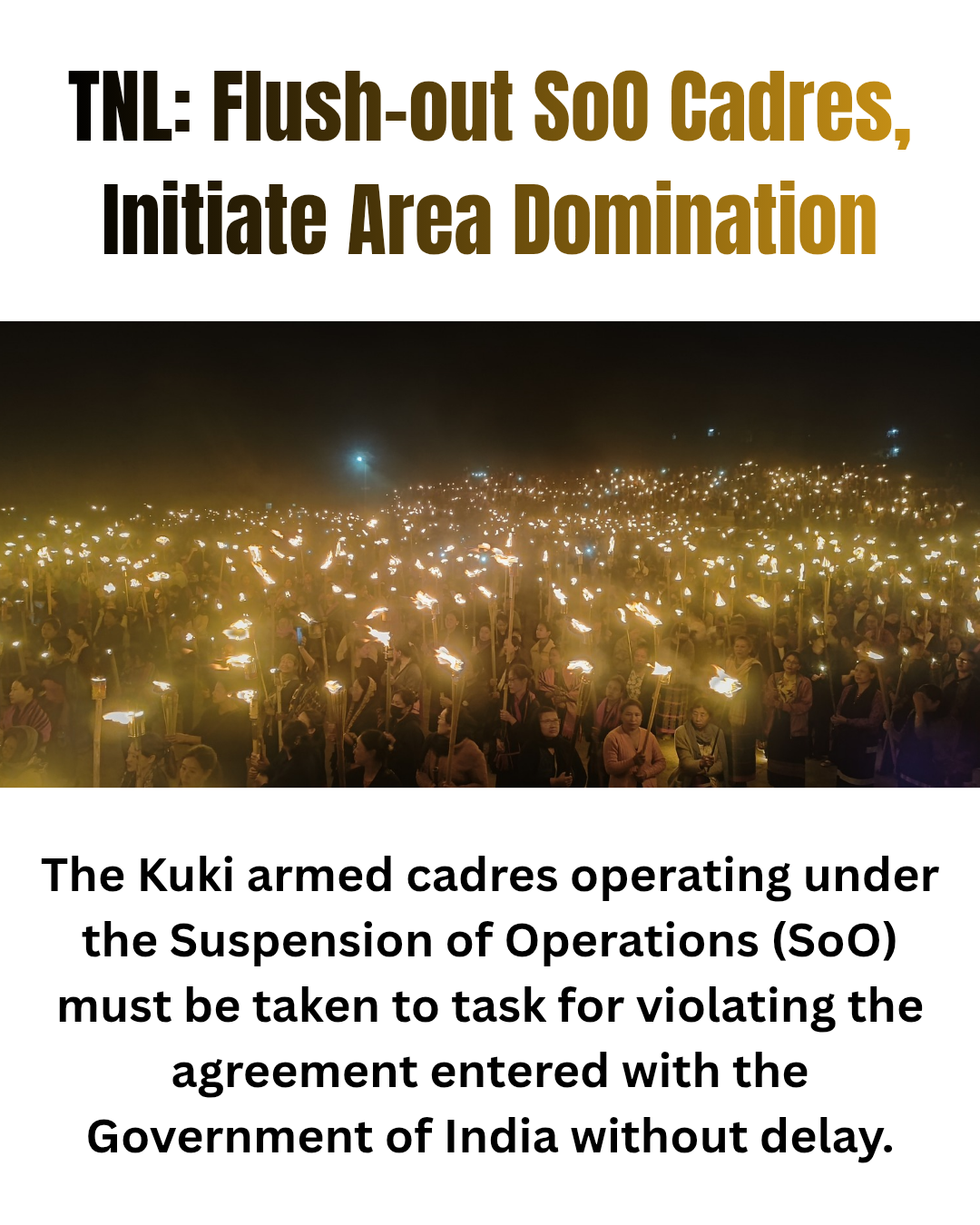
On the solemn occasion of a Candlelight Vigil to be held on 23 April 2026 at NSF Oking, Kohima, in solidarity with resolutions adopted by Naga civil bodies, the Federation seeks to present before the international community a comprehensive account of the historical, political and contemporary realities confronting the Naga people.
I. HISTORICAL FOUNDATION OF THE NAGA POLITICAL MOVEMENT
The Naga political movement stands as one of the oldest indigenous assertions of self-determination in South Asia. The Nagas, as a distinct people with unique socio-cultural, political and historical identity, have consistently asserted our right to exist as a free people.
The formation of the Naga Club in 1918 marked the beginning of organized political articulation. In 1929, the Nagas submitted a memorandum to the Simon Commission, clearly expressing our desire to be left alone to determine our own future. This foundational assertion remains central to the Naga political consciousness.
On 14 August 1947, the Nagas declared independence, a day prior to India’s independence. This was further reinforced by the 1951 plebiscite, wherein the overwhelming majority of Nagas expressed our political will for sovereignty.
Despite these historical assertions, the Naga homeland was fragmented through arbitrary and artificial boundaries imposed during colonial and post-colonial administrations. Today, Nagas remain divided across Nagaland, Manipur, Assam, Arunachal Pradesh and parts of Myanmar. This fragmentation has led to decades of conflict, militarization and systemic denial of political rights.
The Naga political movement is therefore not a recent phenomenon, but a legitimate and enduring struggle rooted in history, identity and the aspiration for dignity and self-determination.
II. CONTEMPORARY ESCALATION: A SYSTEMATIC PATTERN OF AGGRESSION BY KUKI MILITANTS/ARMED GROUPS
In recent years, particularly in Naga-inhabited areas of Manipur, there has been a marked escalation in targeted violence carried out by armed Kuki militants/ Armed Groups. These acts are neither sporadic nor incidental; they form part of a calculated and coordinated campaign aimed at intimidating, displacing, and subjugating Naga communities.
The Federation places on record the following timeline of incidents, clearly demonstrating a consistent trajectory of aggression:
16 March 2023: Armed elements from Leilon Kuki village set ablaze a JCB excavator and a two-wheeler belonging to a Naga resident of Konsaram village as an act of intimidation.
18 June 2023: Kuki militants/armed groups deliberately torched the residence of Ab. Akhon, a Naga woman at Leimakhong, targeting a civilian household and instilling fear among the local population.
7 January 2025: Achongliu Daimai of K. Lungwiram was brutally assaulted within her own village by Kuki aggressors, an act intended to terrorize the Naga community.
5 April 2025: A large group of armed Kuki militants/ armed groups launched a coordinated and unprovoked attack on Konsaram Naga village. Key community leaders including the chief, chairman, secretary and pastor were brutally assaulted, indicating a calculated attempt to dismantle community leadership structures.
11 January 2026: Armed cadres belonging to the Kuki National Front (KNF), operating under the Suspension of Operations (SoO) agreement with authorities, unlawfully entered Ireng Naga village. They vandalized public property, destroyed infrastructure, and defaced the village memorial stone with provocative slogans such as “Kukiland” and “Stay Away,” clearly signaling territorial intimidation by Kuki militants.
7 February 2026: Mr. Staling Naga was violently assaulted at Litan by Kuki militants/ armed groups, sustaining a broken jaw. The attack was triggered by a trivial and unprovoked incident, underscoring the volatility and aggression of armed elements.
9 February 2026: Armed Kuki youths set ablaze the residence of Ajan Abonmai at K. Lungwiram, once again targeting civilian property as a method of intimidation.
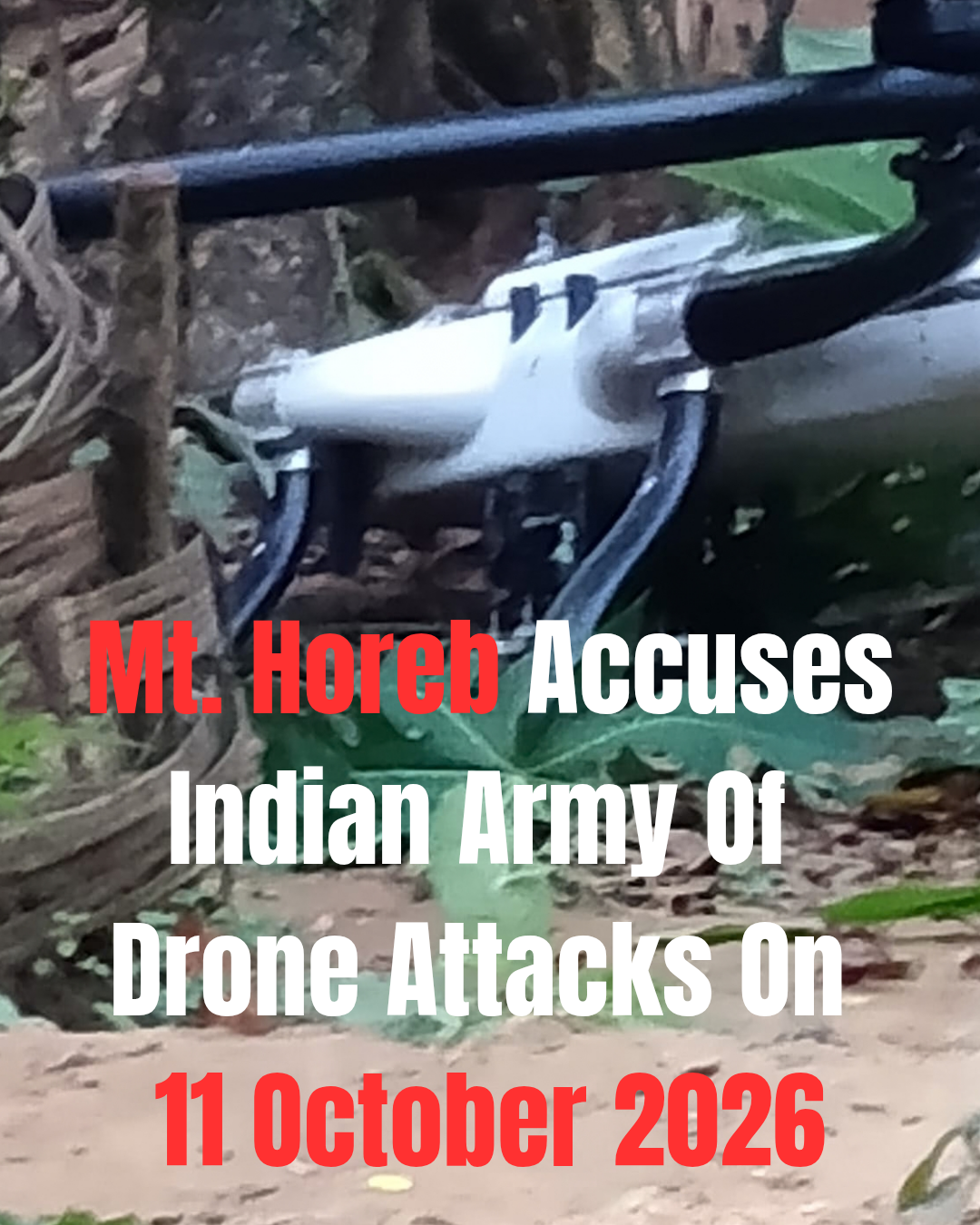
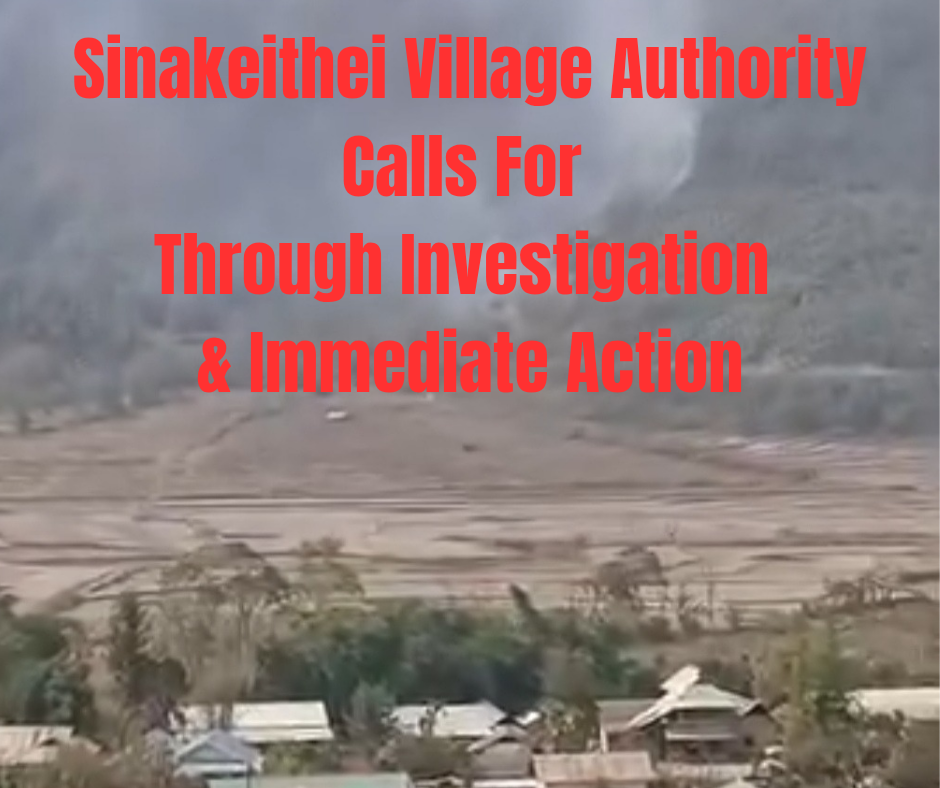
March 2026 onwards: Following the Litan incident, Kuki militants/ armed groups launched sustained and coordinated attacks on multiple Naga villages, including Sharkaphung and Sinakeithel. These attacks involved heavy gunfire using sophisticated weapons ssuch as drones, sniper rifles, bombs, SLRs, LMGs and AK-series rifles, directly targeting unarmed villagers and farmers.
21 March 2026: Armed Kuki militants/ armed groups carried out a premeditated and coordinated attack on Thonglang Naga village near Zaimeng Lake. The attack involved deliberate arson, systematic looting of valuables and livestock, widespread destruction of infrastructure, and criminal intimidation of civilians.
18 April 2026: In one of the most heinous incidents, Kuki militants/ armed groups ambushed and killed two innocent Naga civilians, Late Mr. Chinaoshang Shokwungnao and Late Mr. Yaruingam Vashum, at TM-Kasom village along NH-202.
Additionally, Kuki militants/ armed groups engaged in unwarranted provocation by disrupting the peaceful mourning observance at T. Khullen village, attempting to forcibly dismantle barricades erected by Naga volunteers, thereby exacerbating tensions during a period of grief.
III. LAND, NARCOTICS AND ARMED MILITANCY
The recurring aggression by Kuki militants/ armed groups is not merely incidental but is driven by deeper structural factors:
Encroachment on Naga Ancestral Lands:
Areas such as Ireng, Waphong Inthan, Leikhampoki, Makhan, Toppa, Thanamba, Thonglang, and Chawangkining are witnessing systematic encroachment, often enforced through violence. Illicit Poppy Cultivation:
The expansion of illegal poppy cultivation has created a narco-driven economy, fueling territorial aggression and armed conflict.
Proliferation of Illegal Arms:
The unchecked inflow of sophisticated weaponry has emboldened Kuki militants to carry out high-intensity attacks on civilian populations.
Failure of Enforcement Mechanisms:
Continued inaction and lack of accountability have created a climate of impunity, enabling further aggression.
IV. HUMAN RIGHTS VIOLATIONS
The actions of Kuki militants constitute serious violations of fundamental human rights, including:
The right to life and security
The right to dignity and peaceful existence
The right to property and livelihood
The collective rights of indigenous peoples over ancestral lands
These violations stand in direct contradiction to internationally recognized human rights principles.
The cumulative impact of these incidents represents more than isolated acts of violence. It constitutes a direct and existential threat to the Naga people. The systematic targeting of civilians, destruction of homes, and intimidation of entire communities reflect an organized effort to undermine the Naga presence in their own homeland.
V. APPEAL TO THE INTERNATIONAL COMMUNITY
In light of the above, the Naga Students’ Federation respectfully urges the United Nations Human Rights Council to:
1. Take urgent cognizance of the ongoing human rights violations
2. Urge concerned authorities to ensure accountability and justice.
3. Advocate for the protection of indigenous Naga rights.
4. Support mechanisms for peaceful and just conflict resolution.
CONCLUSION
The Naga people have long demonstrated resilience and commitment to peace. However, peace cannot be sustained without justice and dignity cannot survive under constant threat.
The tragic loss of Late Mr. Chinaoshang Shokwungnao and Late Mr. Yaruingam Vashum must serve as a wake-up call to the international community. The inhuman slaughter of these two innocent civilians symbolize the larger crisis confronting the Naga people.
As the Naga community gathers in solemn remembrance during the Candlelight Vigil on 23 April 2026 at NSF Oking, Kohima, we reaffirm our unwavering commitment to justice and dignity of all indigenous peoples. At the same time, we call upon the International community to stand in solidarity with the Naga people.
The memorandum was jointly signed by Mteisuding, President NSF and Kenilo Kent General Secretary NSF. The memorandum was also copied to the Office of the UN High Commissioner for Human Rights (OHCHR).