
Dedicated to all who served, fought, and made the ultimate sacrifice for the Naga nation. May their courage never be forgotten.
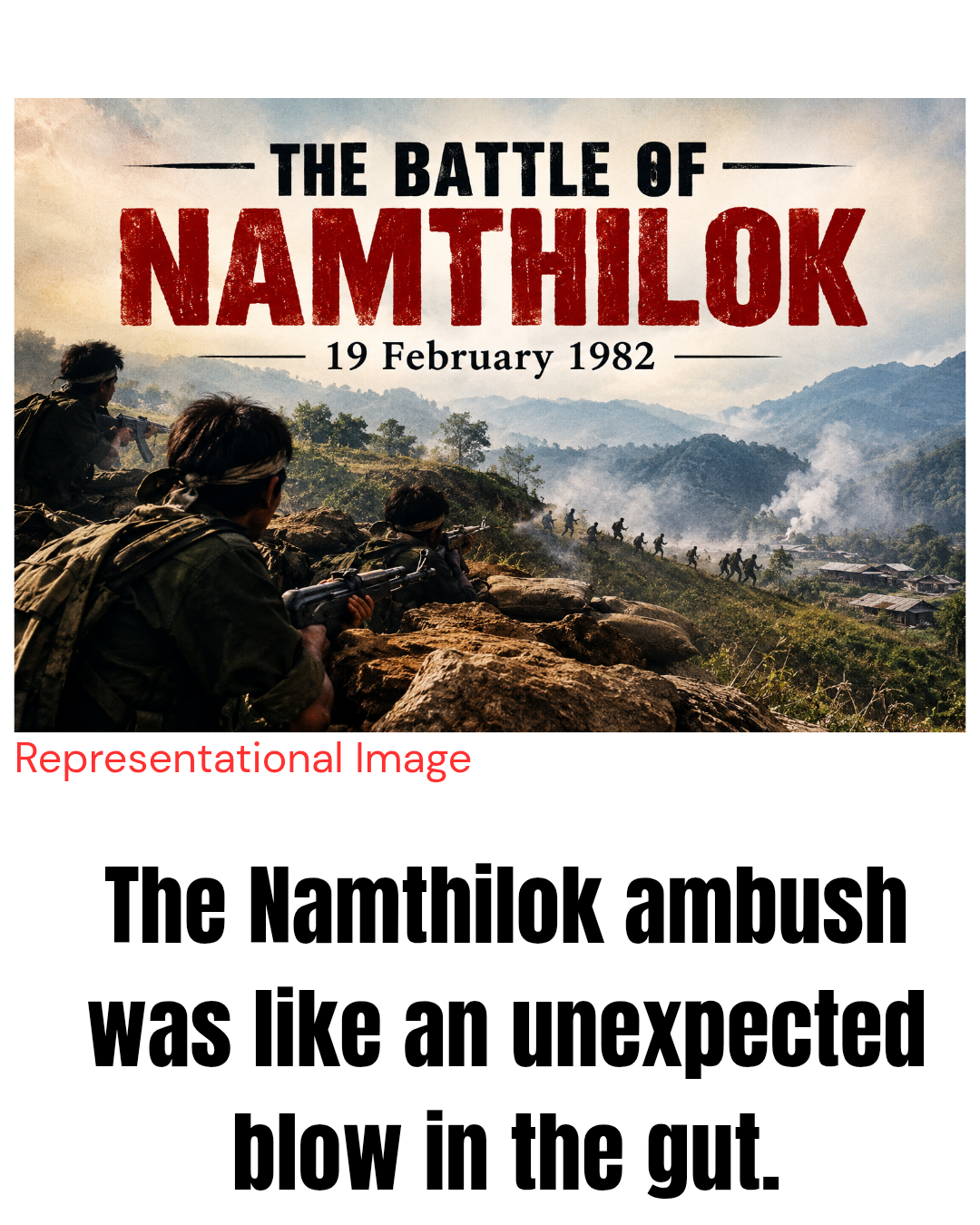
History, when it turns its face toward the small wars of small peoples, often finds its most decisive moments folded into places the wider world cannot pronounce. Namthilok is such a place a bend in the road where the hills of Ukhrul lean. close over the tarmac, where pine trees crowd the shoulders of the highway, and where, on a cold February morn-ing in 1982, seven men of the Naga Army rewrote a chapter of their na-tion’s long armed struggle against the Indian state.
The Namthilok operation had been conceived months earlier in the councils of the Wung Tangkhul Region, under the chairmanship and political stewardship of the man who would later be denied the sight of its execution, Mr Rh. Raising. He had helped draw the battle plans. Every ridge, every blind curve, every culvert had been weighed. Yet history, as it so often does, intervened through a separate mission and a set of Indian handcuffs. He was arrested in Imphal four months before the ambush, and the four walls of a lock-up became the vantage from which he would learn, secondhand, of the outcome of the am-bush
The ambush was commanded by Captain Vs. Atem, a young Tangkhul officer already respected within the ranks of the Naga Army for his composure under fire and his refusal to move troops without exhaustive reconnaissance. Beside him stood Mr Angelus Shimrah, then serving as Foreign Secretary within the political wing, but on this operation reprising the more technical role for which he was equally known the fabrication and placement of improvised explosive devices. Five cadres rounded out the strike party: Second Lieutenant Livingstone, Sergeant Major K Jeneth, Sergeant V. Athing, Corporal Kapangkhui, and Private James. Seven men in total, moving light, carrying rifles of mixed provenance, ammunition rationed to the mission’s expected duration, and, folded into their belts.
The theological dimension of the operation cannot be omitted from any honest account of it, for it was central to the men who carried it out. In keeping with the practice of the Naga Army, the strike party had entered a period of fasting prayer in the days preceding the attack – a discipline observed collectively before any major engagement, and understood by the cadres not as ritual but as a strategic petition. A vision reported by one of the movement’s prayer intercessors had circulated among the leadership in the days before the ambush: truckloads of Indian dead moving toward the Ukhrul in district headquarters, and an accompanying assurance that the operation would meet no obstruction. Whatever the historian’s private view of such matters, the men who lay in ambush that morning believed it absolutely, and their conduct. on the road bore the stamp of that certainty.
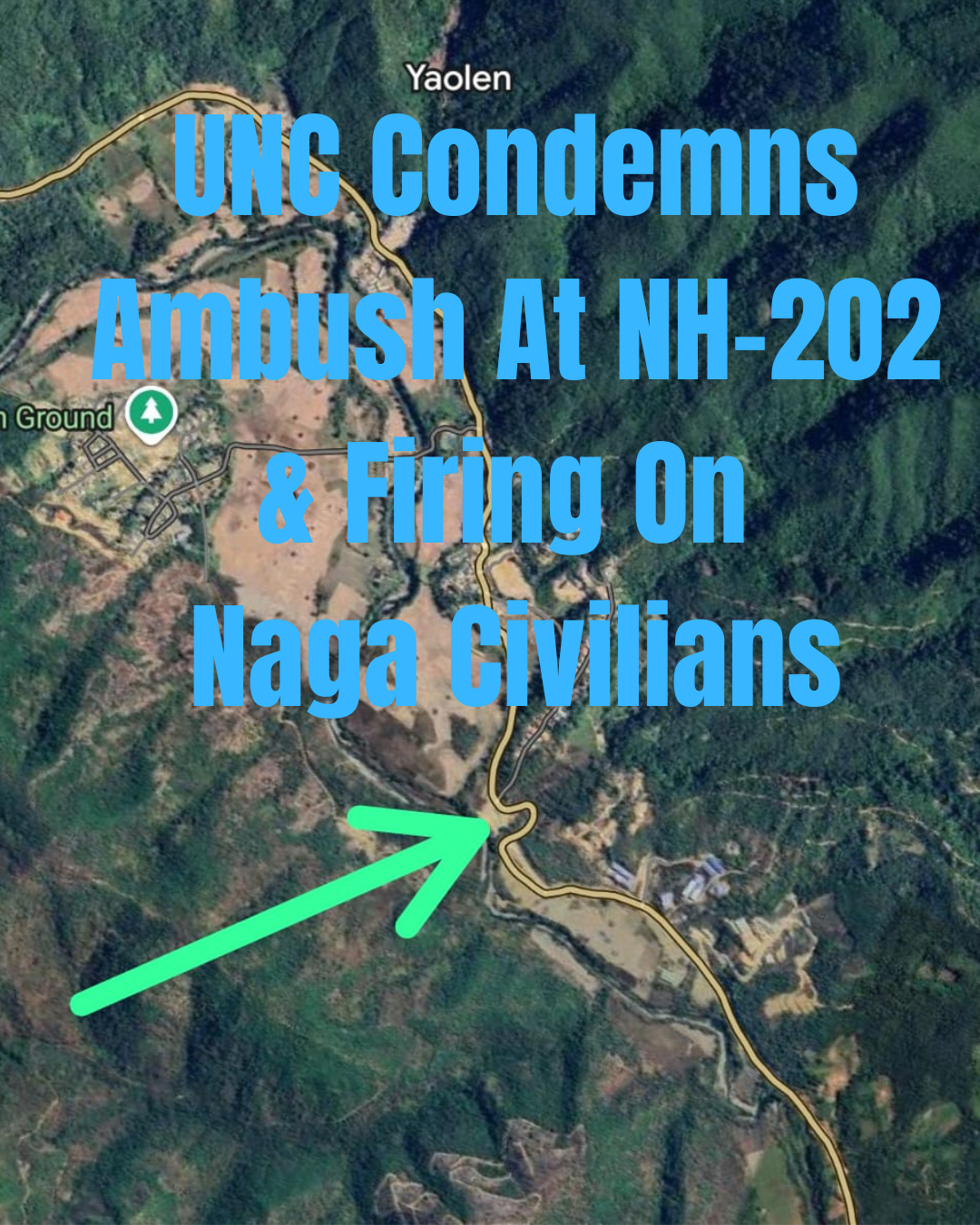
The convoy of the 21st Sikh Regiment ascended the gradient from Mahadev shortly after midmorning, moving in standard march order along what was then designated National Highway 152 the same road that carries the number 202 today. There is no evidence in the surviving accounts that the Indian column had received intelligence of the ambush; their formation, spacing, and speed all suggest a routine movement between posts. The weather was clear, the road dry, visibility along the bend limited by the natural curve of the terrain and the density of the surrounding forest.
The engagement opened with the detonation of the primary IED, placed by Angelus Shimrah beneath the roadway at a point calculated to strike the lead vehicle of the convoy at the precise moment its trailing elements would be caught within the killing ground of the ambush arc. The initial blast disabled the forward transport and threw the column into immediate disorder. Small-arms fire from the elevated positions of the Naga cadres opened within seconds, delivered in interlocking fields from concealed firing points above the road. The engagement was brief, in the manner of well-planned ambushes; sustained fire against a shocked and channelized target rarely requires duration to be decisive.
When the guns fell silent, twenty-three personnel of the Indian security forces lay dead upon the road, including a Major whose identity has been variously recorded in Naga and Indian sources. Eleven serviceable weapons were recovered by the ambush party, along with a substantial quantity of ammunition a haul of considerable operational value to an Army perennially dependent on captured Indian stores for its logistical continuity. The seven Naga cadres withdrew intact, without casualties, into the network of trails that laced the surrounding hills and led back to the safe villages of the Tangkhul interior.
The strategic significance of Namthilok lay less in its tactical dimensions.
Courtesy: Nagalim Voice
October 2026