
The Government Of India’s Double Standard In Manipur: Citizens, Refugees, And The Question of Indigenous Security
A Critical Examination of Security Force Conduct and Its Implications for Naga Indigenous Rights
Disclaimer
This document is a work of academic and journalistic analysis based on publicly available archival records, government memoranda, media reports, and witness testimony. It is published in the public interest to promote informed discussion on matters of constitutional importance, public safety, and the rights of indigenous communities.
The author asserts that this work constitutes fair use of source materials for the purposes of criticism, comment, and research under applicable laws. All allegations regarding specific incidents are presented as reported or as appearing in circulating materials, and the author does not claim independent verification of every visual or testimonial account referenced herein.
Nothing in this document is intended to incite violence, hatred, or disharmony between communities. The purpose is to advocate for truth, transparency, and equal protection under the law as the only durable foundation for peace.
The author welcomes factual corrections, legal scrutiny, and constructive dialogue. No part of this work should be construed as a threat to national security or as an attack on the sovereignty and integrity of India. It is an appeal to the conscience of democratic institutions.
Introduction: A Tale of Two Legal Statuses
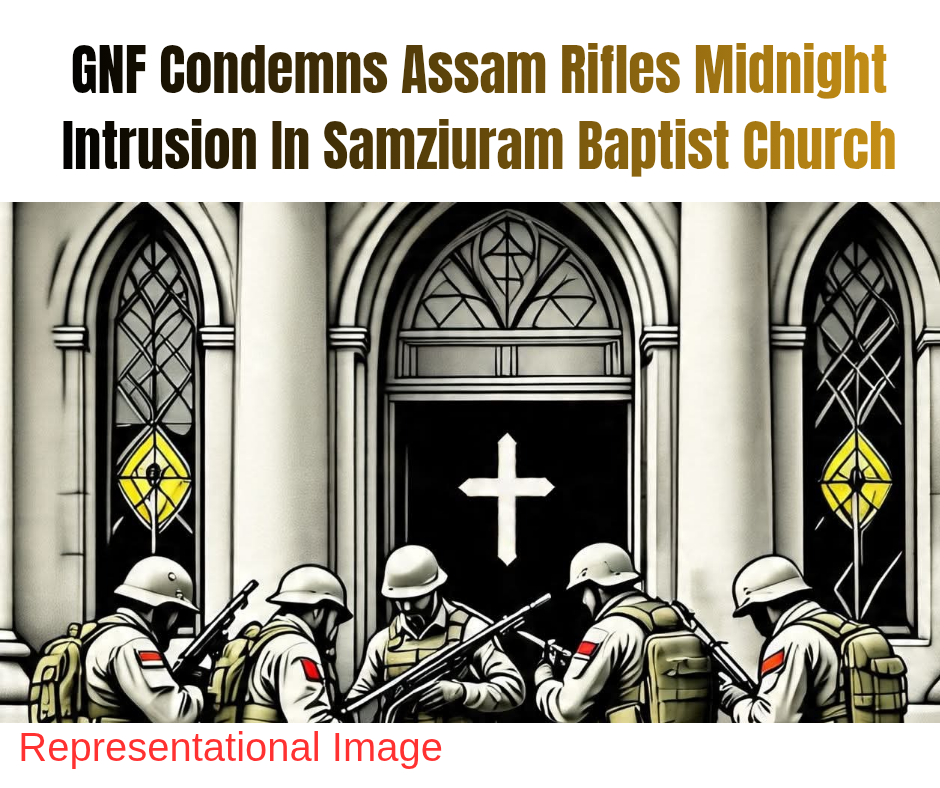
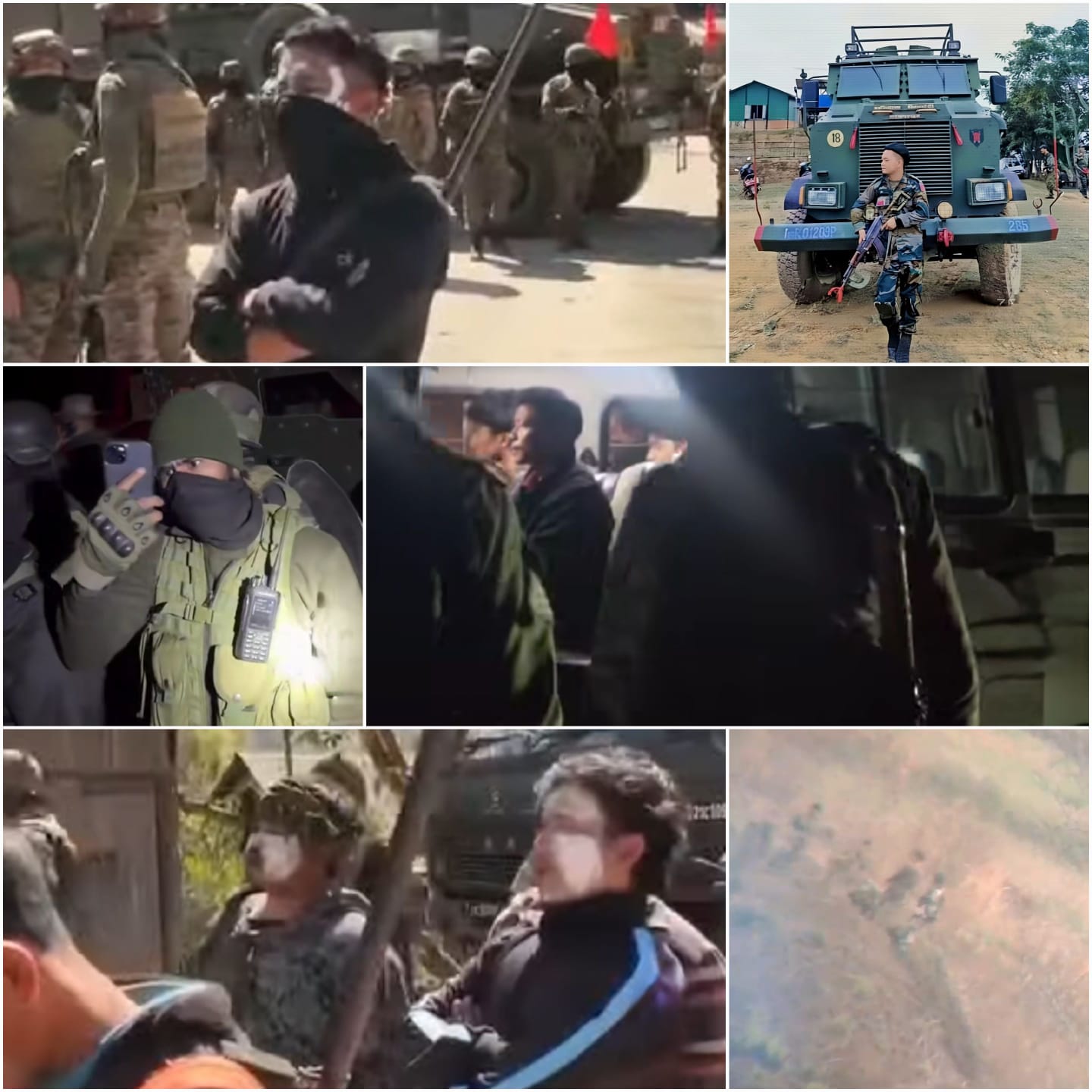
The recent escalation of tensions following the Litan incident on February 8, 2026 has exposed a troubling pattern in the conduct of Indian security forces. Across social media, numerous videos and photographs document Indian security personnel from Assam Rifles, BSF, and other units escorting, assisting, and cooperating with Kuki armed groups while Naga civilians face restrictions and hostility. This raises a fundamental question that demands an answer from the Government of India.
The government knows the legal history. It cannot claim ignorance. The archival record, parliamentary correspondence, and administrative memoranda provide documented evidence of how different communities were historically classified and administered.
Methodological Note on Sources
This analysis relies on a combination of archival documents, government memoranda, parliamentary correspondence, media reporting, victim testimony, and publicly circulated video evidence. Where claims involve events still under investigation, the article uses cautious phrasing such as “reported”, “according to witnesses”, or “appears to show”. The purpose is not to prejudge investigations but to raise questions that require transparent inquiry by the relevant authorities.
Note on Terminology
For the purposes of clarity, the terminology used in this analysis reflects commonly used descriptions in media reporting, government documentation, and public discourse.
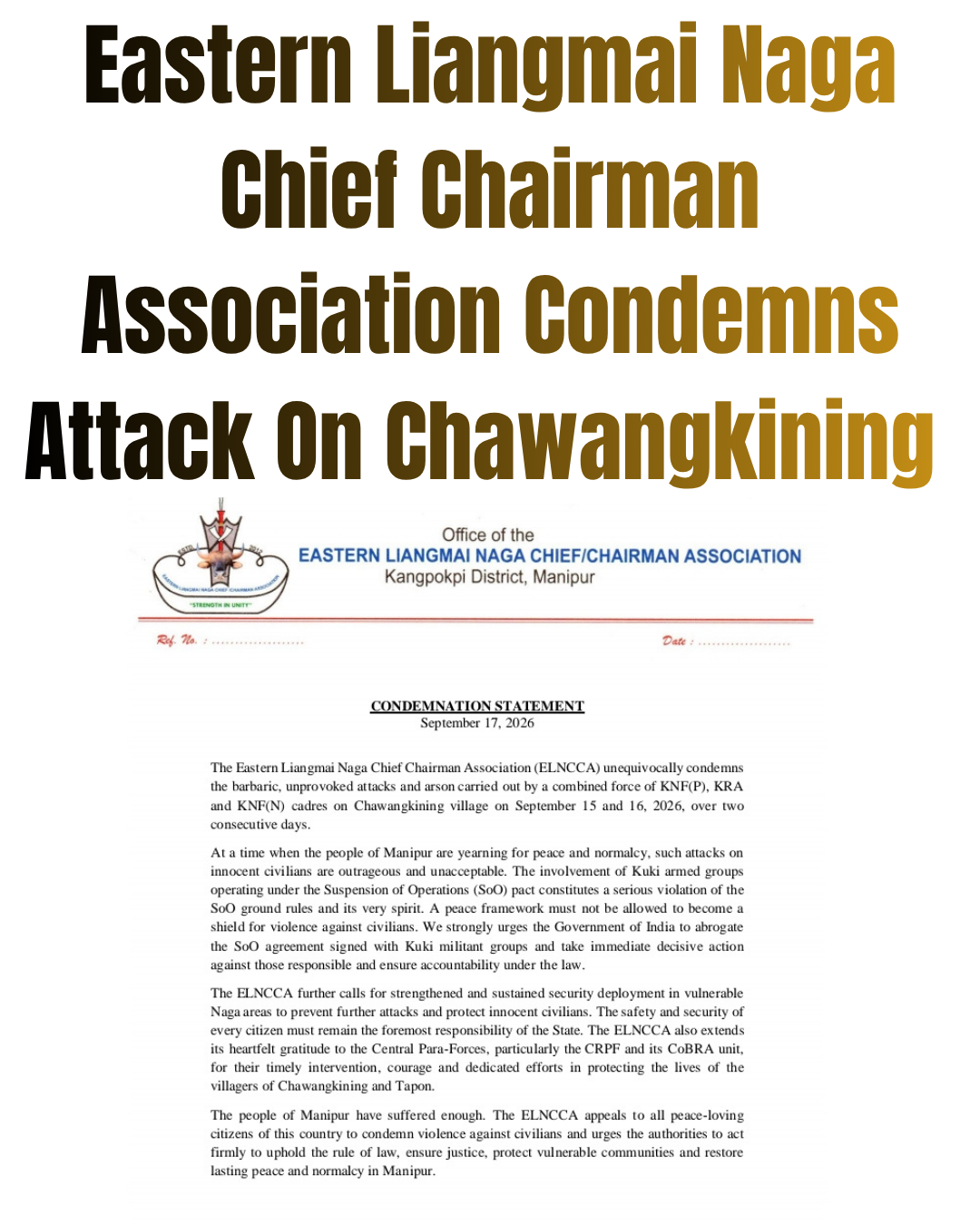
The term “militant” or “armed cadre” refers to individuals reported to be affiliated with armed groups operating under the Suspension of Operations framework or other non state armed organizations. The use of this term does not constitute a legal determination of guilt.
The term “refugee relief classification” refers specifically to historical administrative records and relief funds documented in government memoranda and archival sources. It does not imply present legal refugee status for any community.
The phrase “circulating visual documentation” refers to videos and photographs widely shared across social media platforms and messaging networks during the incidents discussed. These materials are referenced as reported public evidence and are not presented as independently verified forensic proof.
All individuals and institutions mentioned in this document are presumed innocent unless proven otherwise through lawful investigation and due process.
Historical Records of Refugee Relief Classification
The Government of India sanctioned “Refugee Relief Fund for rehabilitating the Kukis” vide Memo No. P3/9/66 from the Ministry of Finance (Home Affairs). The payments were released through the Government of Manipur in three installments.
First Payment: April 22, 1957
Second Payment: July 7, 1959
Third Payment: February 28, 1966
These funds were sanctioned following the requisition of R. Suisa, an elected Member of Parliament representing the hill areas of Manipur, who sought assistance for Kuki refugees living a nomadic existence. The NSCN IM has publicly referenced this history, stating that Suisa “was successful in getting Gratuitous Relief Fund for the Kukis by virtue of being recognised as bona fide refugees”.
The Federation of Haomee (FoH) has consistently maintained that calling Kukis refugees is factually accurate, noting that they received refugee funds under the name “Kuki Foreigner Refugees Fund” from the Government of India in three phases between 1956 and 1973 and later applied for additional funds through refugee organizations.
Archival documents from the Government of India indicate that certain Kuki populations were, at specific historical moments, categorized within relief frameworks designed for displaced or refugee communities. This is not interpretation. This is recorded administrative history.
Nagas: Citizens of India Under Constitutional Framework
The Naga tribes such as Tangkhul, Angami, Ao, Sema, Lotha, and Zeliangrong, along with all other Naga communities, are recognized as Scheduled Tribes of India. Nagas hold Indian citizenship. Nagas vote in Indian elections. Nagas pay taxes to the Indian government. Nagas serve in Indian institutions.
Whatever the political aspirations of Naga armed groups regarding sovereignty, the Naga people are, under Indian constitutional law, legitimate citizens of the Union of India.
This creates a legally contradictory and morally troubling situation.
The Fundamental Contradiction
If the Government of India’s official position is that Nagas are Indian citizens entitled to all constitutional protections, why do security forces appear to favor and protect those who historically received refugee relief funds while Naga citizens face restrictions and hostility?
If the Government of India’s intention in incorporating Naga areas into the Union was to create circumstances that could eventually enable demographic displacement, then the entire Naga political movement requires serious reinvigoration. Every Naga who believed in peaceful resolution, every Naga who trusted constitutional processes, and every Naga who placed faith in Indian democracy must now question whether that trust has been misplaced.
The conduct of security forces raises serious concerns about whether state institutions are fulfilling their constitutional duty to protect all citizens equally. When armed actors operate with apparent impunity while citizens are targeted, the social contract itself comes into question.
Recent Incidents: Alleged Evidence of Security Force Complicity
The Litan Incident of February 8, 2026
In addition to the events already described, the Litan incident of February 8, 2026 has generated extensive visual documentation that has circulated widely across social media platforms. Numerous videos and photographic materials appear to show armed individuals identified by local sources as Kuki militants operating openly in the Litan area while Indian security forces were present in the vicinity.
Several widely circulated video clips appear to show individuals carrying automatic rifles, including AK pattern weapons, moving in organized groups in full view of security personnel. In some of these recordings, individuals identified by local observers as militants affiliated with Suspension of Operations signatory groups appear to be brandishing their weapons and firing into the air.
Additional images and video footage circulated online also appear to show houses belonging to Naga residents in Litan being set on fire during the unrest. These materials, which have been shared extensively across social media platforms and messaging networks, have intensified public concern regarding the role of security forces present during the incident.
Other images circulating online appear to show armed individuals wearing combat style clothing and carrying rifles standing near or in front of Indian Army armored vehicles. In some of these images, security personnel appear to be in close proximity to armed militants.
These materials have not yet been independently verified through formal judicial or investigative processes. However, the volume of circulating footage and the consistency of claims made by local witnesses have raised serious public questions regarding whether armed militants were operating openly in the presence of security forces during the Litan incident.
If verified through official investigation, such developments would raise profound concerns regarding enforcement of the Suspension of Operations agreement and the operational neutrality expected of security forces deployed in conflict zones.
For these reasons, the Litan incident requires independent investigation so that the authenticity of the circulating materials, the identity of the armed individuals, and the conduct of security forces present at the scene can be clearly established.
The Hostage Crisis of March 11 to 12, 2026
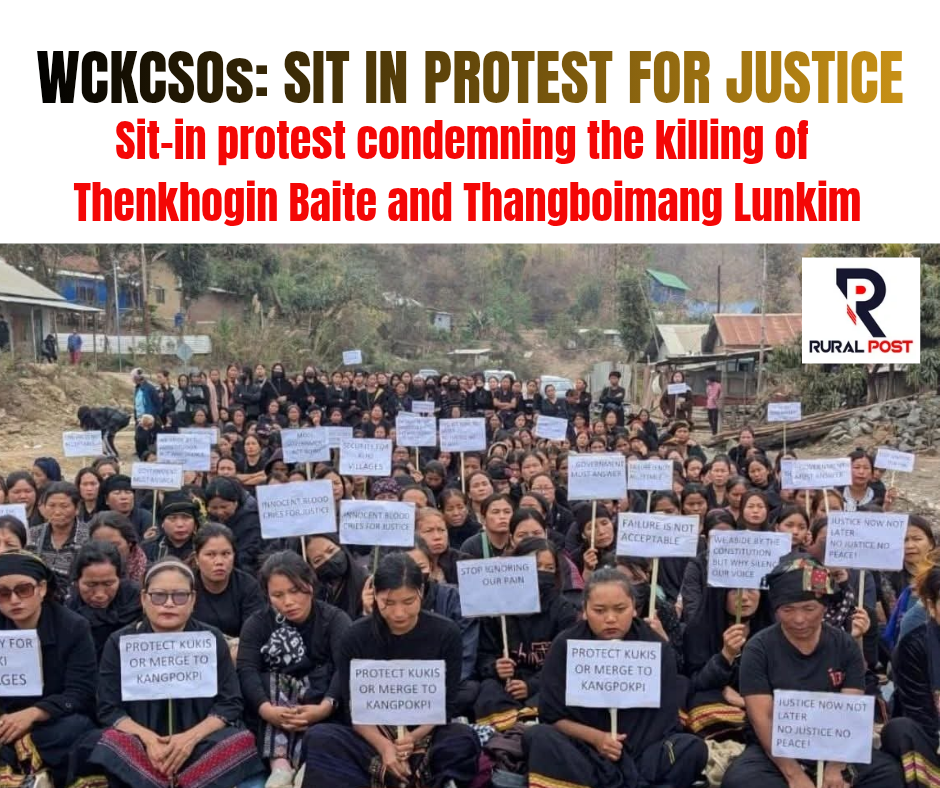
On March 11, 2026, Kuki militants stopped three vehicles carrying 21 Tangkhul Naga civilians at Shangkai on the Imphal Ukhrul Road and took them hostage.
According to victim accounts, corroborated by local witnesses and media reporting, multiple Indian Army personnel were present when the vehicles were intercepted. Despite witnessing the incident, no intervention occurred to prevent the abduction.
Central forces led by the BSF were later sent for rescue operations but were reportedly blocked by women on the road. Only after the Chief Minister sought assistance from the Ministry of Home Affairs through the Governor were the 21 Tangkhul Nagas released around 3 AM on March 12.
This raises a critical question. Why did security forces present at the scene fail to intervene while citizens of India were taken hostage by armed militants?
Security Forces Building Bunkers with Kuki Militants
On March 14, 2026 video footage circulating on social media appeared to show BSF personnel constructing defensive structures in the presence of armed Kuki militants at Thawai village in Kamjong district.
This incident is not isolated. Across social media, Naga sources have documented numerous instances of Indian security forces cooperating, coordinating, or appearing alongside Kuki armed groups.
If verified, such patterns raise serious questions about operational protocols and the principle of neutrality. Security forces tasked with protecting all citizens appear instead to be operating in environments where armed non state actors remain active while indigenous Naga civilians face escalating insecurity.
Legal Analysis: The Assam Rifles Act, 2006
The Assam Rifles Act, 2006 establishes the legal framework governing the force’s operations. Section 4(1) states that the Assam Rifles exists for ensuring the security of the borders of India, conducting counter insurgency operations in specified areas, and assisting civil authorities in maintaining law and order.
Violation of Neutrality Mandate
Under the Ministry of Home Affairs operational guidelines for conflict zones, the Assam Rifles is expected to maintain neutrality in civil conflict situations. Documented incidents of inaction or apparent bias at Litan, Shangkai, and surrounding areas, if confirmed, may constitute a breach of this statutory duty.
Security forces observed escorting armed cadres or constructing defensive structures near them are not merely maintaining order. They risk creating the perception that state forces are aligning with one party in an ethnic conflict.
Breach of Buffer Zone Protocols
Security protocols for high tension zones during 2024 to 2026 require strict enforcement against armed non state actors within designated buffer zones.
The visible presence of armed cadres near security installations, as documented in circulating videos, raises concerns regarding breakdowns in command and control structures and demands urgent investigation.
Constitutional Duty of the State and the Rule of Law
Article 14 of the Constitution of India guarantees equality before the law and equal protection of the laws. Article 21 guarantees the right to life and personal liberty, including the right to live with dignity and security.
The rule of law requires the state to exercise force impartially and protect all citizens equally. Any perception that security institutions selectively enforce authority based on ethnic or political affiliation undermines the legitimacy of democratic governance.
If security forces fail to protect citizens from armed actors or appear to enforce law unevenly between communities, such conduct raises serious constitutional concerns. The legitimacy of the state rests on its ability to ensure equal protection for all citizens.
References
Refugee Relief Fund, Government of India, Memo No. P3/9/66 (1957 to 1966)
The Assam Rifles Act, 2006 (Act No. 47 of 2006)
Revised Suspension of Operations Agreement, September 4, 2025
Ministry of Home Affairs Operational Guidelines for Conflict Zones (2024 to 2026)
Standing Orders, Manipur State Darbar (1931, 1941)
Deccan Herald, “Two abducted Kuki men shot dead in Manipur even as 21 Nagas go free”, March 11, 2026
Federation of Haomee statement on Kuki refugee funds, E Pao, May 30, 2025
New Age Bangladesh, “India’s Manipur on alert after reported Myanmar infiltration”, March 7, 2026
Additional documentation on the February 2026 Litan unrest reported by regional media outlets including The Sangai Express and The Imphal Free Press
Circulating visual documentation of the February 8, 2026 Litan incident shared across social media platforms including Facebook, X, and YouTube between February 8 and February 10, 2026
Statements and incident documentation issued by local civil society organizations and community groups in Ukhrul and Kamjong districts concerning the February 2026 Litan violence
Markson V Naga
On behalf of concerned Naga youth
(The views and opinions in this article are solely those of the author and do not necessarily reflect the official stance of Rural Post)