
THE KUKI STATEHOOD DEMAND: A NARRATIVE OF CONVENIENCE, NOT CONSTITUTIONAL RIGHT
A Rebuttal to the Manufactured Constitutional Claim
By Markson V. Luikham
This is a direct response to Suan Muanlian Zou’s article, “The Kukis Deserve Full-Fledged Statehood Under The Indian Constitution, “published by Kukiland Express on September 4, 2026. Let me be clear from the outset: the difficulty is not that Kukis are making a political demand. In a democracy, they have every right to make one. The difficulty is the much stronger claim that the demand is already grounded in a constitutional right. The central argument of this rebuttal is that the Kuki statehood demand is a political demand seeking constitutional implementation, not a constitutional right already guaranteed by the Constitution.
Suan Muanlian Zou should understand that his article’s method is one of accumulation. The Anglo-Kuki War of 1917 to 1919 is presented as ancestral contribution; Kuki participation in the INA as national sacrifice; service in the Indian armed forces as loyalty; the suffering of Kuki civilians during the 1990s and after May 2023 as permanent victimisation; and Article 3 is finally invoked to place all of these claims under a constitutional umbrella. But the Constitution does not operate by moral arithmetic. There is no provision under which an ethnic community earns a territorial entitlement by accumulating historical sacrifice, military service or victimhood.
The Anglo-Kuki War illustrates the first problem. Scholars have treated it as an important frontier uprising against imperialism. Jangkhomang Guite and Thongkholal Haokip, “The Anglo-Kuki War, 1917 to 1919: A Frontier Uprising Against Imperialism During the First World War,” 2019. But the modern Republic of India did not exist in 1917, and the Constitution of India did not exist. Resistance to British colonial authority cannot retrospectively be converted into a contract between the Kukis and a future Republic of India.
The historical reality is far more complex, and far more damning to the Kuki narrative. British colonial records themselves reveal that the Kukis were not indigenous inhabitants of the Naga hills but were strategically planted there by the British as a buffer and mercenary force. Colonel W. McCulloch, Political Agent in Manipur, recorded in 1859 that “Kukis continued their campaign to decimate the Naga population and plunder their wealth with arms supplied by the British and the Kingdom of Manipur” (McCulloch 1859; quoted in Peter 2006: 20).
The British colonial government armed a great band of 8,000 Kukis with guns and ammunition to fight against the Angami Nagas in 1851 to 1852 (Mackenzie 1979/1884: 146). Sir James Johnstone attested that “large colonies of Kukis were settled in 1885, to act as a barrier for north Cachar against the raid of the Angami Nagas” (Johnstone 1896: 26). The Kukis were initially refugees brought from Burma by the British in the 19th century to serve as porters and mercenaries in Manipur (EastMojo, February 17, 2025). The United Naga Council has stated that the British found the Kukis useful as a “mercenary tribe” and utilised their “total lack of attachment to any land and landscape” to crush the indigenous communities of Manipur (The Hindu, August 21, 2023). Thuingaleng Muivah has spoken of how, during his childhood, his mother told him the story of how Tangkhul Naga villages “were plundered by nomadic Kuki marauders” and villagers massacred (The Week, June 20, 2026).
Participation in the INA and post-independence military service face the same difficulty. The INA was a broader anti-colonial military movement, and its history cannot be transformed into an ethnic property register. Kuki soldiers served the Republic as citizens, not as representatives of an ethnic corporation in exchange for future territorial rights. National service strengthens citizenship; it does not generate a communal claim to territorial sovereignty.
The original article begins its historical narrative even earlier, with the 1860 Revolt in Tripura, presenting it as the first organised resistance against colonial oppression. But the article’s own cited sources record that 185 people were killed, 15 villages plundered and about 100 captives carried off. These were not British soldiers. They were mostly Riang and Bengali plains communities. The first chapter of Kuki political consciousness was therefore not resistance to colonialism. It was an attack on other indigenous peoples. A movement that begins by killing indigenous civilians cannot later claim that its political identity was born solely out of resistance to injustice.
The real historical question is whether the current territorial demand is genuinely a product of the May 2023 crisis. The documentary record shows that it is not. The Kuki National Assembly resolved in January 1960 to submit a memorandum to Prime Minister Jawaharlal Nehru, and that memorandum was submitted on March 24, 1960, calling for a separate Kuki State within the Union of India. Kuki National Assembly Memorandum to Jawaharlal Nehru, March 24, 1960; cited in Ray, “Authority and Legitimacy: A Study of the Thadou-Kukis in Manipur,” 1990. Research on Kuki ethnic mobilisation records the emergence of the Kuki National Front in the late 1980s and the Kuki National Organisation and Kuki National Army around the same period, with the separate Kuki State forming an important element of their political programme.
More importantly, that political project has never been confined to an uncontested, exclusively Kuki geographical space. In 2012, the Kuki State Demand Committee claimed 12,958 square kilometres, more than 60 per cent of Manipur’s total area, encompassing Sadar Hills, Churachandpur, Chandel and portions of Tamenglong and Ukhrul. Esha Roy, “The demand for a Kuki homeland, its history and rationale,” The Indian Express, May 16, 2023. The proposed territorial unit was already contested by other communities, including Nagas, long before the violence of 2023. The author knows this. He cannot pretend otherwise.
Here lies the moral contradiction at the heart of the Kuki narrative. A people cannot claim refugee status and then demand a separate homeland carved from the lands of the indigenous inhabitants who sheltered them. A people cannot form armed organisations, demand territorial separation on land that was never exclusively theirs, and then claim victimhood when the natural consequences of that project follow. If you build your house on another man’s land, you cannot call him the aggressor when he resists. The cuckoo lays its eggs in another bird’s nest, and when the chicks hatch, they push out the original chicks. The Meitei and Naga peoples are the original birds defending their nest.
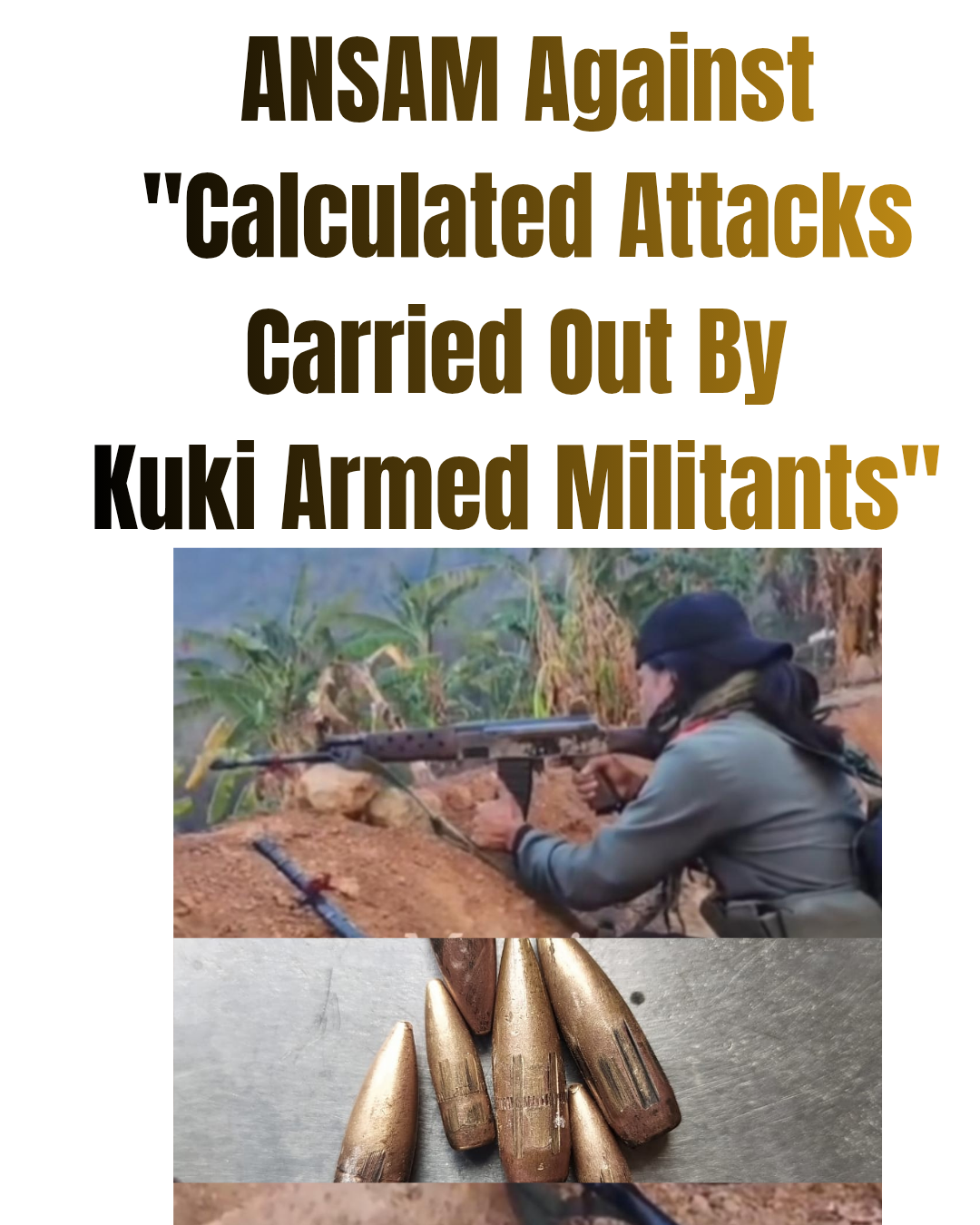
The Kuki suffering is real. I have never denied that. But the political project that produced it is also real. The Kukis were not victims of the 1990s conflict. They were its authors. According to the South Asia Terrorism Portal, Kuki militants of the Kuki National Army attacked Naga villages, killing four Nagas including a four-year-old boy in Chandel district on April 15, 1993 (SATP, Manipur Timeline, 1993). The Kuki National Army served the first quit notice in 1992, and NSCN-IM retaliation followed in 1993. The original article wants us to remember the burn without remembering who struck the match.
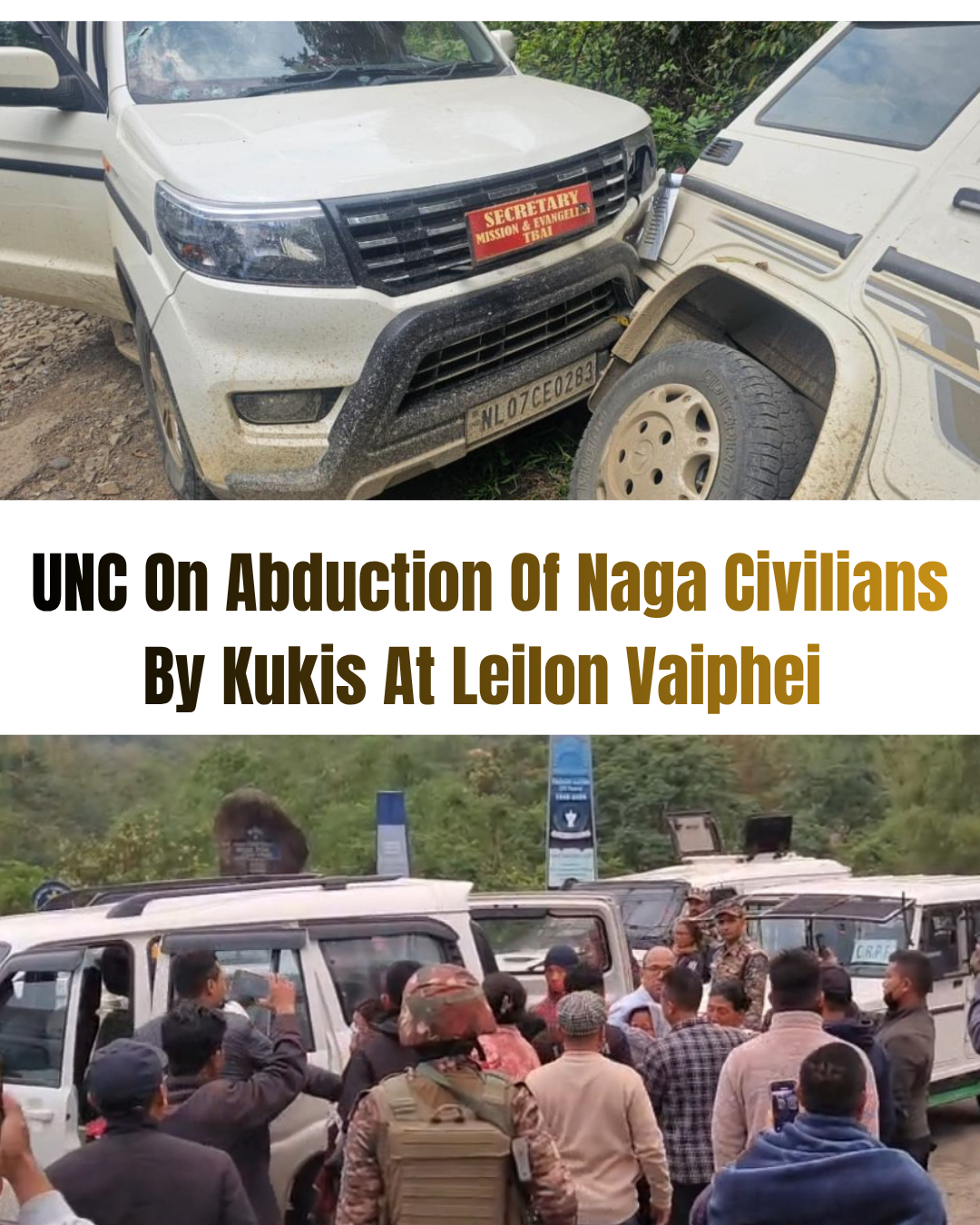
Even in the present conflict, the pattern is unmistakable. On May 7, 2026, Myanmar-based Kuki extremists carried out a pre-dawn attack on three Tangkhul Naga villages, Choro, Wanglee and Namlee, in Kamjong district, firing indiscriminately and setting 18 houses ablaze (The Hindu, May 7, 2026). The United Naga Council accused the attackers of a “cross-border invasion” (Imphal Times, May 9, 2026). On May 13, 2026, six Naga men were abducted from Leilon Vaiphei village. Their mutilated bodies were recovered on June 10, so disfigured that facial recognition was impossible (The Hindu, June 25, 2026).
The Kuki-Zo Council Chairman admitted that the six Naga civilians were killed by Kuki-Zo groups (India Today NE, June 26, 2026). On August 14, 2026, alleged Kuki extremists. attacked Langka Naga village, killing two Naga farmers (The Hindu, August 14, 2026). On August 27, 2026, four more members of the Naga community were killed in an ambush along the Imphal-Tamenglong road (Telangana Today, August 27, 2026). According to official figures, 306 people have been killed and 49 remain missing as of August 31, 2026 (Imphal Times, September 4, 2026).
We Nagas do not play the victimhood card. We have endured external aggression in our own land for generations, from colonial-era Kuki mercenaries armed by the British, to the 1990s attacks, to the present cross-border terrorism. But we have always maintained restraint and defensive lines. We have never attacked Kuki villages. We are not the aggressors. We are the defenders of our ancestral homeland.
This is not to blame ordinary Kuki civilians for the actions of their political leaders. It is to insist that the moral calculus cannot be entirely one-sided. The Naga and Meitei peoples have their own histories of suffering, their own ancestral lands, their own political institutions and their own aspirations. They did not invite a separate homeland to be carved from their territories. They did not consent to demographic transformation. They did not authorise armed groups to claim their villages as part of a future Kukiland.
The constitutional argument is clear. Article 3 of the Constitution provides that Parliament may by law form a new State, increase or diminish the area of a State, alter its boundaries or change its name. Constitution of India, Article 3, January 26, 1950, as amended. The important word is “may. “The article gives Parliament a constitutional power. It does not create a constitutional command that Parliament must act whenever a particular ethnic movement demands a new State. Constitutional competence is not the same thing as constitutional entitlement. The history of Indian State formation confirms this: Nagaland, Mizoram and Telangana were each created by specific legislation in specific historical circumstances, not by a generic ethnic entitlement to statehood.
Article 239A faces the same difficulty. The Supreme Court has explained that it is an enabling provision under which Parliament may create a legislature or Council of Ministers for Puducherry, and the decision whether to create such institutions is left to Parliament. Supreme Court of India, Government of NCT of Delhi v. Union of India, July 4, 2018. Nor can the claim that Statehood or Union Territory is the “only constitutional solution” survive scrutiny, because the Constitution already contains a special institutional framework for the Manipur Hills.
Article 371C authorises a Hill Areas Committee and provides for special responsibility of the Governor regarding the administration of the Hill Areas. Constitution of India, Article 371C. Parliament supplemented that framework through the Manipur (Hill Areas) District Councils Act, 1971, which places numerous functions under the control and administration of District Councils. Parliament of India, Manipur (Hill Areas) District Councils Act, 1971, Section 29. These institutions may be criticised as insufficient, but their existence defeats the proposition that separate Statehood is the only constitutional mechanism available.
The indigenous-rights argument encounters the same limitation. The United Nations Declaration on the Rights of Indigenous Peoples recognises self-determination and autonomy, but Article 46 expressly states that nothing in the Declaration may be interpreted as authorising action that would dismember or impair the territorial integrity or political unity of sovereign and independent States. United Nations General Assembly, United Nations Declaration on the Rights of Indigenous Peoples, September 13, 2007, Article 46. Indigenous identity cannot be converted into an unrestricted legal licence to appropriate contested territory.
The present political situation further demonstrates that the demand remains an ongoing political negotiation. In January 2026, Kuki-Zo MLAs, the Kuki-Zo Council and representatives of armed organisations operating under the Suspension of Operations framework adopted a position linking participation in government formation to a written commitment concerning a separate Union Territory with a legislature. The Indian Express, January 14, 2026. The Ministry of Home Affairs had already communicated in November 2025 that the Centre’s policy did not support the creation of new Union Territories and stressed that the interests of other communities would have to be considered. The Times of India, November 8, 2025.
A right already guaranteed by the Constitution would not depend upon persuading the executive and Parliament to create it. The Kuki National Organisation and United People’s Front are parties to the SoO process, and the political demands associated with the Kuki-Zo movement have been advanced alongside that political and security framework. Government of India, Ministry of Home Affairs, Revised Suspension of Operations ground rules, 2025. This does not make ordinary Kuki civilians responsible for the actions of insurgent organisations. It does, however, make it impossible to present the current Statehood campaign as though it exists entirely outside the history of armed mobilisation in the region.
The Government of India itself acknowledged the “unique history, culture and position of the Nagas and their sentiments and aspirations” when the Framework Agreement was signed with the NSCN in 2015. Government of India, Prime Minister’s Office, August 3, 2015. The Naga political question is an issue being addressed at the level of the Union. It cannot be treated as a secondary matter to be adjusted whenever another community advances a competing territorial proposal. A proposed arrangement that protects one community by incorporating another community’s contested territory would not eliminate the underlying conflict. It would institutionalise it.
For Nagas, the consequences are not theoretical. A proposed Kuki political unit cannot be evaluated solely by asking whether it would provide greater security for Kuki populations. One must also ask what happens to Naga villages and Naga-inhabited territories that fall within, or are affected by, the proposed territorial arrangement. How would customary land rights and political representation be protected? How would minorities within the proposed unit be safeguarded? How would competing territorial claims be resolved?
As a Naga writer, I do not need to deny Kuki history in order to defend Naga rights. The Kuki people have every right to remember their history, pursue justice for their victims and advocate for whatever political arrangement they believe will protect their future. What they cannot legitimately claim is that the Constitution has already guaranteed them the particular State or Union Territory they seek, especially where the proposed territorial arrangement affects another indigenous people with its own history, land, institutions and political aspirations.
A traditional Naga proverb says: you cannot claim the harvest from a field you did not sow. The Kuki leadership has sown territorial ambition on land that was never theirs, and their people are now reaping the consequences.
The Kuki Statehood demand must therefore be understood for what it actually is: a political project seeking constitutional implementation, not a constitutional right already guaranteed by the Constitution. Its merits can be debated, its territorial boundaries can be contested, and its political necessity can be argued. But the Constitution has not already decided the matter in favour of the Kuki political movement.
The original article ends by calling Statehood “a debt the nation owes. “The real debt is far simpler. It is owed by Kuki armed groups to the Naga and Meitei civilians they have killed, abducted and mutilated. It is owed to Manu Thiumai, Kenpibou, Phenrongwi Thiumai, Dilip Thiumai and two others, the six Naga men from Leilon Vaiphei whose bodies were so mutilated that facial recognition was impossible. It is owed to the four Liangmai civilians killed at Makui-Thanamba. It is owed to Wiriliangbou Chawang and Kawidinang Abonmai, the two Naga farmers killed at Langka. It is owed to Tomthin and Yaisana, the Meitei children killed in their sleep at Tronglaobi. That is the debt that must be paid before any territorial demand can even be heard.
The Constitution gives Parliament the authority to reorganise India’s internal boundaries.
It does not give any ethnic movement the authority to determine those boundaries unilaterally. Historical suffering deserves justice, military service deserves honour, and political grievances deserve serious consideration, but none of them constitutes a deed to another people’s homeland. Article 3 is a constitutional power vested in Parliament, not an ethnic title deed.
That is the constitutional reality that the Kuki statehood narrative cannot escape.
Markson V. Luikham is an independent researcher and writer focusing on the Indo-Naga issue, Naga political affairs, and the political, historical and contemporary affairs of Northeast India.
(The views and opinions in this article are solely those of the author and do not necessarily reflect the official stance of Rural Post)