
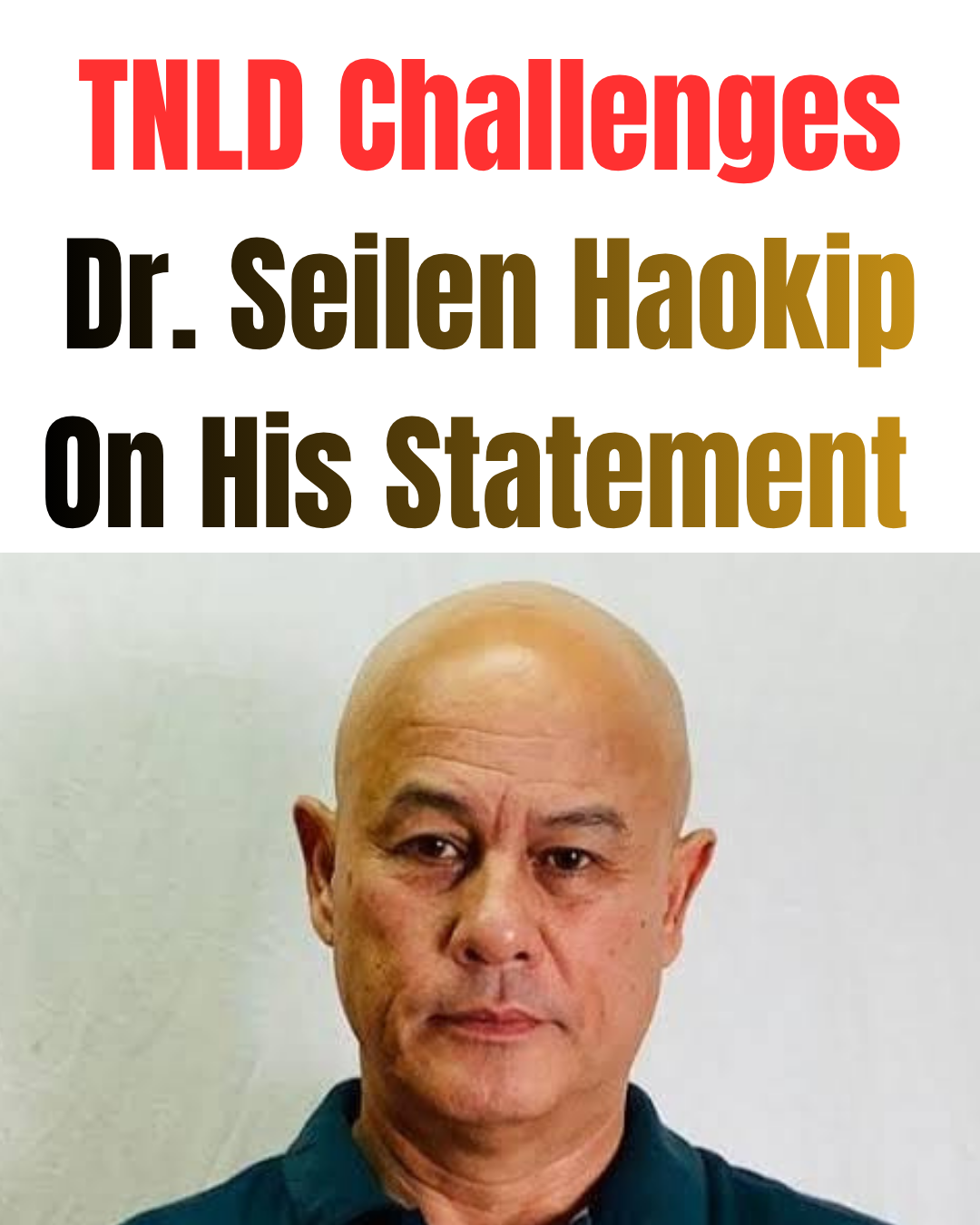
The Tangkhul Naga Longnao Delhi (TNLD)- Tangkhul Naga Council Delhi in a press release challenged Dr. Seilen Haokip, Spokesperson of the Kuki National Organisation (KNO) to substantiate his baseless claims.
The press release of TNLD stated that “the Tangkhul Naga Longnao Delhi expresses serious concern over the reported remarks made by Dr Seilen Haokip, spokesperson of the Kuki National Organisation (KNO), at the Constitution Club, New Delhi, on 16 November 2026, suggesting that Tangkhul history and identity emerged only with the arrival of Christian missionary Rev. William Pettigrew and that Kukis historically outnumbered Tangkhuls. Such assertions are historically untenable, intellectually unsubstantiated, and irresponsibly provocative. Although his statement is amusing for indigenous people of Manipur, it warrants a response because such ‘concocted fiction’ may lead to widespread public misconception, particularly during the prevailing volatile situation in Manipur.
“It is hereby reminded to Haokip and his coterie of latecomers to Manipur that the Tangkhul identity and its existence predate colonial and missionary activity. It is rooted in ancestral occupation, village institutions, customary laws, clan lineages, oral traditions, indigenous knowledge, and enduring cultural continuity. The emergence of a common language or consolidated collective identity cannot be confused with the historical origins of communities that already existed. Pettigrew’s contributions to Tangkhul education, literature, and Christianity remain significant, but missionary history cannot be equated with the origins of an entire people.
“Among several pieces of evidence of the Tangkhul, the indigenous Cheitharol Kumbaba records military encounters involving Tangkhul settlements, including Chingshong during King Thawanthaba’s reign (c. 1195-1231 CE) and the Tangkhuls of Monthou in 1404 CE. These pre-colonial records establish Tangkhul’s historical presence centuries before Pettigrew arrived in Manipur in 1894. Nathan Brown’s 1837 publication, “Comparison of Indo-Chinese Languages,” identifies Northern, Central, and Southern Tangkhul speech varieties and describes these communities among the indigenous peoples of the region.
“The demographic assertion is equally questionable. E. W. Dun’s Gazetteer of Manipur (1886), drawing on the 1881 enumeration, records 32,952 people under “Tankul and Lahupa,” historical designations associated with the Tangkhuls. The 1882 Report on the Administration of the Province of Assam explicitly identifies the Lahupa as the “Tangkhul tribe of Nagas.”
“On the contrary, historical accounts also distinguish between Old and New Kuki migration streams. Sir James Johnstone’s My Experiences in Manipur and the Naga Hills (1896) documents significant Kuki immigration from the 1830s and 1840s, while G. A. Grierson’s The Languages of India (1903) explains the designation of certain groups as New Kukis because of their later migration.
“Furthermore, demographic figures from a particular period cannot independently establish territorial ownership or invalidate another community’s customary land rights. Dr. Haokip’s own doctoral thesis, Identity, Conflict and Nationalism: The Naga and Kuki Peoples of Northeast India and Northwest Burma (Myanmar), acknowledges the historical development of a shared Tangkhul language across villages with distinct dialects. This directly challenges any suggestion that the development of collective linguistic identity marked the birth of the community itself.
“The Council challenges Dr Haokip to substantiate his fabricated and misleading claims with verifiable archival records, primary sources, census data, and credible historical scholarship. Historical facts cannot be distorted or rewritten to suit political narratives: the Tangkhul, other Naga tribes, and Meiteis inhabited present-day Manipur long before the arrival of the Kukis. While settlement creates lasting ties, it does not confer indigenous status or erase historical origins. Claims of original indigeneity distort history and disregard the Tangkhul’s goodwill in permitting Kuki settlement in their areas. The Council advises Dr Haokip to cease spreading historical falsehoods, acknowledge the original inhabitants, and respect the communities that extended them hospitality.
“Tangkhul history deserves scholarship, not speculation or fiction; historical evidence, not political invention; and respect, not erasure” added the press release issued by Prof. (Dr.) Yaruingam Awungshi, President TNLD and Dr. Pamreihor Khashimwo, General Secretary TNLD.