
𝑾𝒓𝒊𝒕𝒕𝒆𝒏 𝒃𝒚 𝑵𝒐𝒌𝒕𝒂𝒏 Konyak 𝑵𝒂𝒈𝒂, 𝒂 𝒄𝒐𝒏𝒄𝒆𝒓𝒏𝒆𝒅 𝑵𝒂𝒈𝒂 𝒇𝒓𝒐𝒎 𝑵𝒂𝒈𝒂𝒍𝒂𝒏𝒅 𝑺𝒕𝒂𝒕𝒆, 𝒊𝒏 𝒕𝒉𝒆 𝒔𝒑𝒊𝒓𝒊𝒕 𝒐𝒇 𝒃𝒓𝒐𝒕𝒉𝒆𝒓𝒉𝒐𝒐𝒅, 𝒇𝒐𝒓 𝒕𝒉𝒆 𝒍𝒐𝒗𝒆 𝒐𝒇 𝑵𝒂𝒈𝒂 𝒊𝒅𝒆𝒏𝒕𝒊𝒕𝒚, 𝒂𝒏𝒅 𝒇𝒐𝒓 𝒕𝒉𝒆 𝒔𝒂𝒌𝒆 𝒐𝒇 𝒉𝒖𝒎𝒂𝒏𝒊𝒕𝒚.
I am writing this from the other side of a line that should not exist. Somewhere in Nagaland, in the quiet that our state has chosen, I sit with my phone in my hand and a weight in my chest that will not leave. I read the news from Ukhrul. I see the names of villages I have never visited, but whose soil is as much Naga soil as the ground beneath my own feet. And I wonder, with a grief that has nowhere to go, why the elders and the leaders and the student bodies and the mothers who raised us are not tearing the sky apart with sorrow.
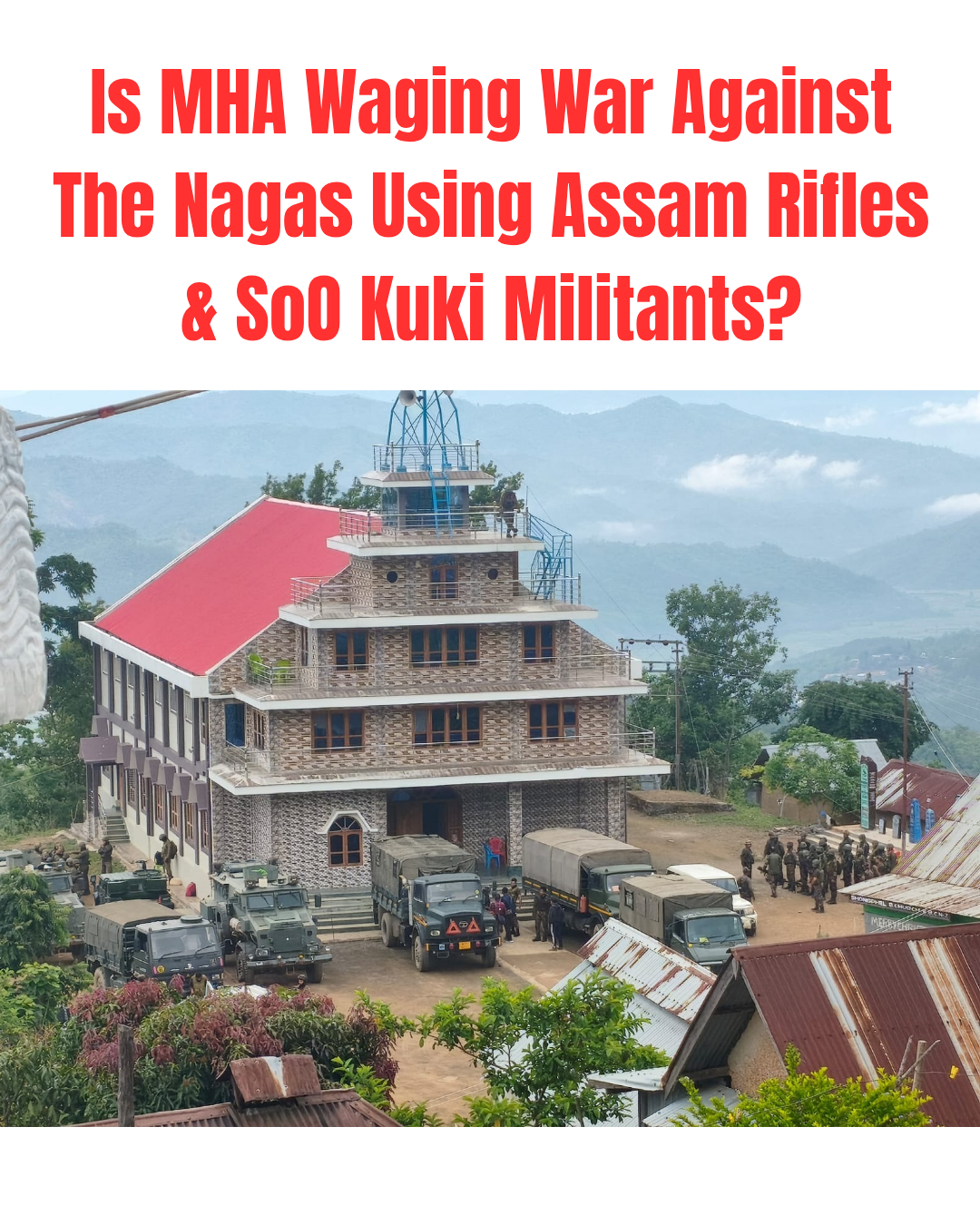
The hills of Ukhrul are burning. Not some distant, abstract hills in a troubled region. Ukhrul, the place where the Naga National Council, under the leadership of A.Z. Phizo, established its headquarters in the late 1940s and made Tangkhul soil the nerve centre of the Naga sovereignty movement for decades. This is not a minor historical footnote. It is part of who we are. The Shirui peak, the Khayang ridges, the Hungpung valley, places we read about in Naga struggle story books and articles, places our grandfathers spoke of with reverence, are now shrouded in smoke. It is the Tangkhul Naga who bleed this time. The same Tangkhuls who have been among the most consistent defenders of the Naga nation. They are being shelled, fired upon, driven from terraced fields their ancestors carved out of those hillsides centuries before the British ever drew a line on a map. Their children crouch in darkness while mortars whistle over Sinakeithei village. A mother and her son were trapped for over four hours under heavy fire while harvesting cabbage, pinned down in their own field, waiting for death or rescue. Their churches have emptied. Not because faith has died, but because gathering to pray has become an invitation to die. This has not happened over days. For over two months, dawn after dawn after dawn, the choice facing those families has been the same: flee and live, or stay and risk being erased from the land that is their identity.
I live in Nagaland. From my window, I see peace. I see markets open, children walking to school, churches filling on Sunday. And I ask myself, with a shame that burns deeper than I know how to express, whether we have purchased this peace by deciding that what happens on the other side of the artificial border is not our concern. Across the Naga homeland, from Mon to Peren, from Wokha to Zunheboto, I have not seen a collective cry for Ukhrul. The Naga Hoho has not convened an emergency session. The mothers’ associations, whose moral power we have always revered, have not issued a joint roar. The student federations have not brought towns to a halt to demand the world look at what is happening to our own flesh and blood. There is only a quiet so complete that it rings louder than the gunfire in Sinakeithei. And it shames me to say it.
And so I must ask, not in anger but in anguish: what did the Tangkhul Naga ever do to the rest of us that they must die utterly alone? When did the Naga nation become a collection of spectators, watching one of its own limbs being severed, and calling it a tribal affair?
I am not a political leader. I am not a spokesman for any organization. I am a Noktan Naga, a solitary voice from this side of the line, and I write because the silence has become unbearable. Because if the word “Naga” means anything beyond a convenient label on a government form, then the suffering of a Tangkhul child in Ukhrul should shake my living room as if it were the suffering of my own. If it does not, then we have lied to ourselves for a hundred years. All our songs about Naga unity, our declarations of sovereignty, our martyrs’ graves, they become theatre. Performance. Noise without substance. The silence we now maintain is not neutrality. It is the slow, quiet suicide of the very idea of Naga brotherhood.
I was raised on the stories of what the Tangkhul Naga have meant to our nation. They are not a peripheral tribe. It was on their soil, in Ukhrul, that the Naga National Council was headquartered, serving as the operational heart of the Naga political struggle for sovereignty. The Tangkhuls did not simply join the Naga struggle. They helped sustain it, giving it refuge when it had none. And in our collective memory, the Naga nation owes them a debt we are now dishonouring with our silence. This is not how a family treats its own.
Now these fellow Nagas are holding their ground with limited means against an adversary documented to possess sophisticated weaponry. They are blockaded, outgunned, their food coming only when brave souls run through danger to deliver what little they can. And yet they have not surrendered. They have not fled. They hold the line on those eastern ridges as the purest expression of the Naga warrior spirit, a spirit we in Nagaland have learned to romanticize in symposium speeches while they live it in blood and loss and the graves of their dead.
Why does the Naga world turn its face away from Ukhrul? I have listened. I have heard the murmurings in my own state, and they reveal a sickness in our soul.
Some say: “It is a Tangkhul-Kuki conflict, a tribal matter. We should not interfere.” This is a falsehood dressed as prudence. The forces besieging Sinakeithei are not a village militia. They operate under the open protection of the Suspension of Operations agreement, a pact the Indian state has allowed to become not a mechanism of peace but a sanctuary for armed groups. Their declared aim is not to settle a land dispute. It is to carve out a separate political territory that would fragment the living body of both Naga and Meitei homelands.
This is not a tribal feud. It is a war of territorial conquest, and in such a war every Naga, from the Angamis to the Zeliangs, is a target in waiting. To call it a tribal matter is to accept the enemy’s framing while your own house burns. It is not wisdom. It is cowardice dressed in the language of neutrality.
Some say: “The Kukis are also Nagas. We cannot take sides against our own brothers.” This hurts because it carries a grain of truth. In Nagaland, Kukis have indeed been part of our political family. Lengjang Kuki signed the 1929 memorandum of the Naga Club to the Simon Commission. Kuki representatives sat in the Naga National Council. They stood with us in the 1951 plebiscite. They have served as ministers in our legislative assembly. I do not dismiss this history. It is a testament to the inclusive spirit of the Naga people, and I honour it.
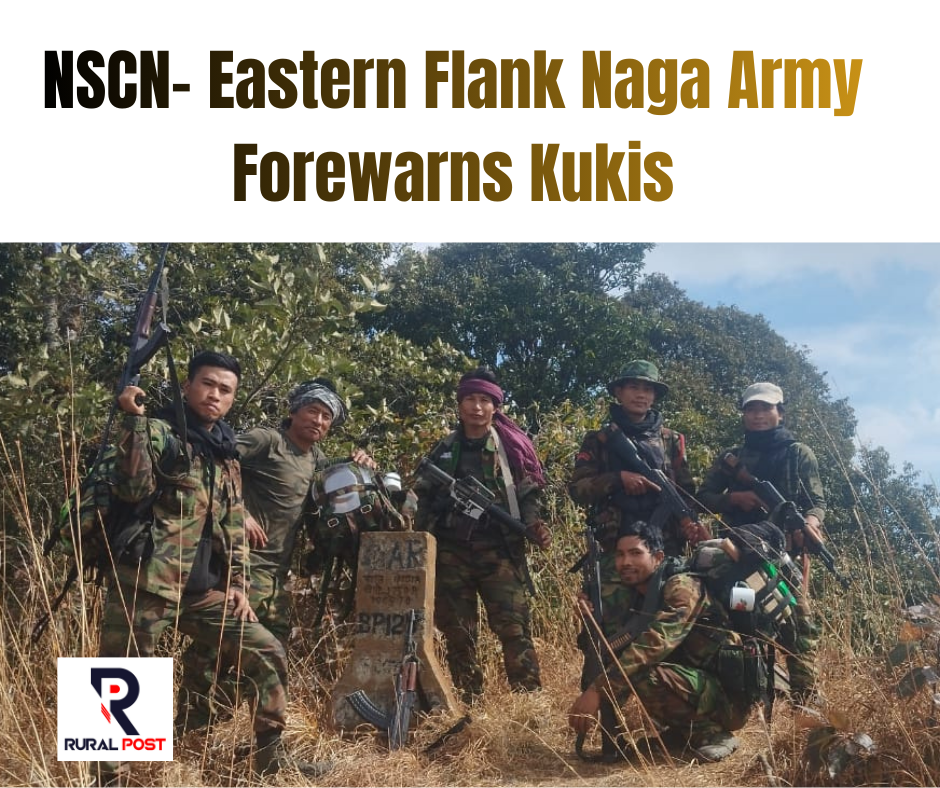
But brotherhood is a covenant of reciprocity, not a one-way obligation. The Kuki militants currently targeting Tangkhul villages do not speak the language of Naga brotherhood. Their intercepted communications, which I came across in a widely shared WhatsApp group, were not laments for lost unity. They were celebrations of violence. They were exhortations to burn down a village. They were declarations that the land would become Kuki territory. A commander known as “Tiger,” identified as a leader of the KNF-P, was reported in January 2026 to have threatened via WhatsApp to set an entire village ablaze. Are these the words of a Naga brother? Can we stretch the meaning of family so far that it covers those who would torch our homes and dance on the ashes? The Kukis of Nagaland have, by and large, chosen integration. That is a quiet victory I do not take for granted. But the armed groups in
Manipur have chosen a different path, and that choice is an assault on Naga territory and Naga lives. To use the peace in Nagaland as a shield for the violence in Manipur is to betray both the peacemakers and the dead. I cannot accept that. I will not.
And some say, with a casualness that wounds more than outright hatred: “This is a Manipur problem. Last time it was Meitei versus Kuki. Now it is Tangkhul versus Kuki. We in Nagaland should stay out of it.” This is the logic of a man who thanks the gods that the fire is only burning his neighbour’s house. It pretends that a line drawn by the Indian state, that thin administrative boundary between Nagaland and Manipur, is the limit of our moral responsibility. It forgets that the Naga nation was ancient when those borders were infant scribbles on a colonial map. Tangkhul blood is not less Naga because it soaks into the soil of
Ukhrul instead of Kohima. To argue that Nagaland can remain aloof is to accept the very partition of our people that we have resisted for over a century. It is to say, in effect, that Naga identity is a flag we wave when making political demands, but not a shroud we wrap around a fallen brother. I reject that with every fibre of my being.
This silence is not only cowardice. It is amnesia. We in Nagaland know exactly what it means to stand alone, because we have done it. We buried our dead after Kohima. We buried them during the decades of insurgency. We tasted abandonment. We know the bitterness of crying out and hearing nothing in return. How, then, can we serve that same bitter dish to the Tangkhuls? What will we tell their orphans when they grow up and ask where the Naga nation was? That we were busy? That the distance was too great? That we hoped someone else would handle it? These answers will rot in our mouths.
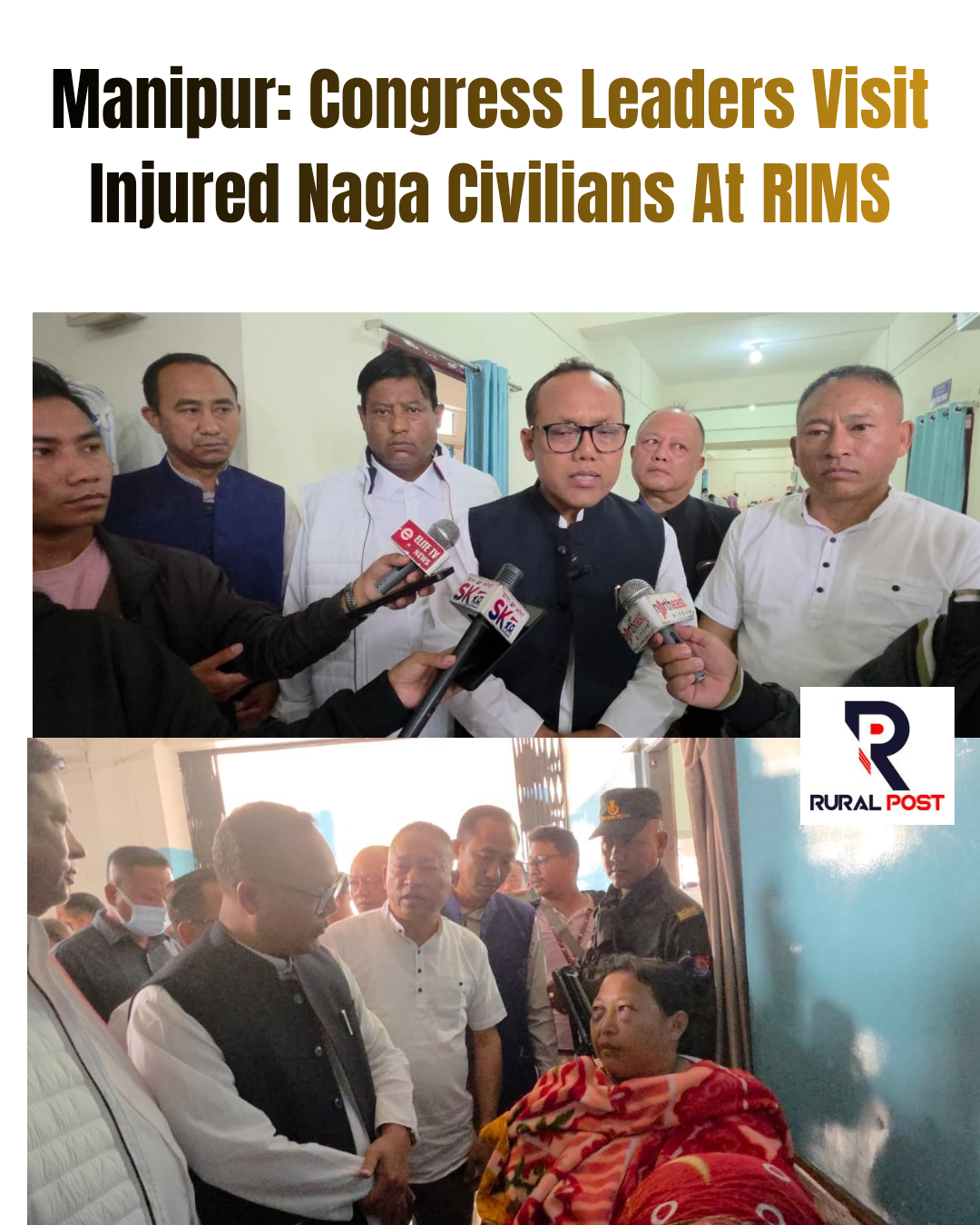
Yet in the midst of this shame, I must pause and speak of those who did not remain silent. When the news reached us on 18 April 2026, that two unarmed Tangkhul Naga civilians, Chinaoshang Shokwungnao of Tashar village, a retired soldier of the Naga Regiment, and Yaruingam Vashum of Kharasom village, had been ambushed and shot dead by suspected Kuki militants at TM Kasom on National Highway 202, a number of voices from our state rose in condemnation. I want to honour them. In a time of silence, speaking is an act of moral courage, and they showed it.
The Naga Students’ Federation, the apex student body, described the killings as a “heinous and barbaric attack on unarmed civilians” and a “direct assault on the dignity, safety, and inherent rights of the Naga people.” The Angami Students’ Union stated that “the right to live in peace is non-negotiable.” The Ao Kaketshir Mungdang described the killings as “heinous and barbaric” and called for an immediate, impartial investigation. The Zeliangrong Students’ Union Nagaland stated that “the deliberate targeting of unarmed civilians is a blatant violation of humanitarian principles.” The Naga Students’ Union, Delhi, also expressed solidarity. Beyond the student bodies, the Global Naga Forum declared that “an attack on
Tangkhul Nagas is an attack on all Nagas.” The Naga Scholars’ Association described the ambush as a “barbaric” and “premeditated” act carried out with sophisticated weaponry I am grateful to each of them. They proved that the idea of Naga brotherhood is not entirely dead in Nagaland. In the long darkness of this crisis, even a distant shout of solidarity can keep a soul from despair, and I believe the Tangkhul people heard those voices. Those voices mattered.
But I must now speak the harder truth that robs me of sleep. A press release, however strongly worded, does not stop a mortar from falling on a sleeping family. A candlelight vigil in Kohima, however heartfelt, does not put food on the table of those who have been trapped by violence. We have become fluent in the language of condemnation, typing “we strongly condemn” with the same mechanical ease our grandfathers once used to sharpen their daos. But fluency is not solidarity. A statement, once issued, can be filed away. A brother’s life, once lost, cannot. We must be honest about this. Words are cheap. Blood is not.
The Tangkhul Naga are not asking for our words alone. They are asking, in the silent suffering of their daily existence, for the Naga nation to behave as a nation. This does not mean an immediate rush of armed volunteers from Nagaland. It means something deeper and more difficult. It means the Naga Hoho must convene not for procedural formalities but because our eastern frontier is on fire and our brothers are dying. It means the Naga Mothers Association, whose moral authority has moved political mountains before, must now raise a voice that carries from Kohima to Ukhrul, a voice that does not whisper but roars with the grief of mothers who have lost their own. It means the student federations that have already spoken must now sustain their campaigns, ensuring that this crisis does not fade from memory with the next news cycle. It means humanitarian corridors must be organized. Fact-finding teams must be sent. The SoO shield, under which Kuki militants operate with impunity while Naga defenders are disarmed, must be challenged through every political and diplomatic channel available to us. This is not a request. It is the minimum that brotherhood demands.
Beyond the immediate horror, there is a deeper wound we ignore at our own peril. The silence in response to Tangkhul suffering is not simply a failure of compassion. It cuts to the very core of the Naga political struggle. For decades, we have told the world that we are one people, indivisible, with a shared history and a common political destiny. We have demanded recognition of our sovereignty on the basis of that unity. But what becomes of that demand when we cannot even summon a collective voice to defend one of our own tribes from annihilation? What becomes of our aspiration when we let a state border sever the obligations of blood? If we cannot stand together in crisis, our political claims lose their moral foundation. Every press release we issue, every negotiation we enter, every appeal we make to the international community will ring hollow if we have already demonstrated, by our silence, that Naga nationhood is a sentiment we invoke at seminars and abandon when it becomes costly. This is the test. And so far, we are failing it.
The Naga people have always been good at fighting. Our history is inscribed in the language of resistance. But the greatest battles are not always against an external enemy. The hardest fight is against the inertia of our own hearts, the quiet temptation to look away because looking is painful. The true adversary is not the armed militant behind a scope. It is the ancient imperial tactic of divide and rule, which whispers to us that we are better off tending to our own tribal gardens while our neighbour’s house burns. It is the silence that allows one limb to bleed while the rest of the body pretends it feels nothing. If we surrender to that logic, we will have defeated ourselves more thoroughly than any external force ever could. And we will deserve the fate that follows.
To the tribes and student bodies of Nagaland that have already spoken, I honour you. You have shown that conscience still breathes in our land. But let your next step be more than a press release. Let it be a delegation. Let it be a humanitarian convoy winding its way toward Ukhrul. Let it be a political commitment that does not rest until the guns fall silent and the displaced return to their ancestral homes. Words are the beginning of solidarity, not its end. Do not let your voice fade.
To those who have remained silent, I ask you, as a brother: search your heart tonight. Picture your own village. Your own fields. Your own children. Silence in the face of a brother’s suffering is not neutrality. It is a verdict. It says that Naga lives on the other side of an administrative line matter less than your own. It says that tribal boundaries are thicker than blood. It says that the Naga nation, which we sing about, which our martyrs died for, is a fiction. Is that the verdict you want recorded against your name when this chapter of our history is written? I beg you to reconsider, not for politics, but for the sake of your own soul.
I am Noktan Naga. I write this from behind the artificial border that separates our state from Manipur, but no border can separate me from the pain of my people. I do not write as a politician or a representative of any organization. I write as a man whose soul can no longer bear the weight of watching from a distance while my brothers and sisters stand alone. I write for the love of Naga identity, which means nothing if it does not mean solidarity with the besieged and the bombarded. I write for the sake of humanity, which withers whenever we turn our faces from suffering because it is inconvenient. And I write for the Naga political struggle, which will turn to dust in our mouths if we cannot prove, in this hour of crisis, that we are indeed one people, bound not by convenience but by blood, whether we live in the shadow of the Patkai or the Shirui. This is not a rhetorical exercise. This is a cry from the heart of one Naga who refuses to be silent while his family is slaughtered.
If we do not wake now, the fire that consumes the hills of Ukhrul will spread. It always does. And when it reaches our own doorsteps, who will be left to speak for us? The Tangkhuls are holding the line on the eastern frontier of the Naga homeland. They are enduring our fight without our help. They are burying our dead without our tears. The least we can do, from our quiet homes in Nagaland, is let them hear our voice. Not in a press release. But in the unmistakable sound of a nation stirring from its slumber, rising at last to defend its own.
That voice has been silent too long. Let this writing be one among the many to break it. Let it not be the last.
Kuknalim.
This message is written in the spirit of brotherhood, with no bias against any individual, organization, or group. It is a plea, from one heart to many, for the Naga conscience to awaken before the fire in the hills of Ukhrul consumes more than we can bear to lose. May it reach the peacemakers on both sides, and disturb the sleep of the silent watchers in between.
(The views and opinions in this article are solely those of the author and do not necessarily reflect the official stance of Rural Post)