
“Kachai Lemon is not just a crop; it is Manipur’s pathway to rural economic transformation and global agricultural export leadership. The time has come for a great Lemon Revolution, one that begins in the fields of Kachai, in the work of farmers, in the strength of communities, and in the belief that change is possible. This is about restoring justice, creating equality, expanding liberty, strengthening fraternity, and affirming the sovereignty of the people. There can be no compromise on lifting people out of poverty, a burden that has stayed with generations for far too long. In this moment, the lemon is not just a crop; it becomes a pathway to human development, a source of dignity, and a way for people to shape their own future with confidence and purpose.”
Kachai village in Ukhrul district stands at a defining moment. What exists here is not a theoretical opportunity, but a living economic foundation shaped over generations through land, labour, and the collective wisdom of the Tangkhul community. Economic justice for the common masses need not be imported; it can emerge from practices the community already understands and sustains.
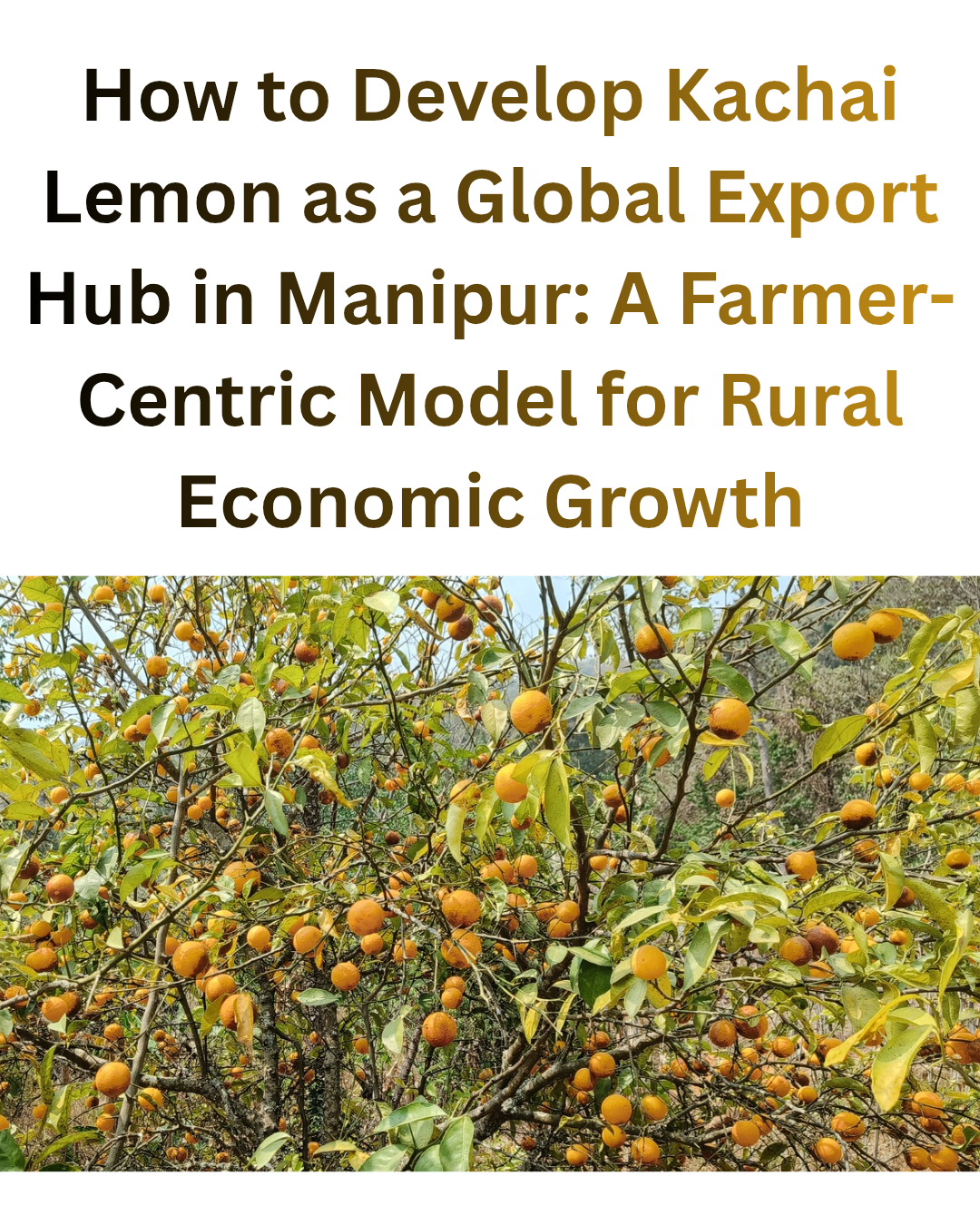
In this setting, Kachai Lemon is not merely a crop. It is a central economic asset, deeply tied to livelihood, identity, and continuity. Botanically identified as Citrus jambhiri and supported by Geographical Indication recognition, it carries both uniqueness and market value. The conditions required for transformation are already present. What is needed is alignment, discipline, and sustained effort.
The Geographical Indication status must be actively leveraged as a strategic economic instrument. It provides a foundation for premium branding, traceability, and legal protection against duplication in both domestic and international markets. When positioned effectively, this recognition can significantly enhance price realization and global identity.
This confidence is grounded in lived experience across villages in the state of Nagaland, where farmers continue to build stronger systems despite limited resources. The strength of the village lies not in geography alone, but in shared responsibility, discipline, and a deep connection to land. When opportunity aligns with this foundation, outcomes follow naturally.
Building on this experience, it becomes evident that agricultural transformation succeeds when community systems are supported by structured market access and institutional backing. Where such alignment is absent, even strong potential remains unrealized. This contrast underscores the urgency of timely and coordinated intervention in Kachai.
At the center of this model lies a simple truth: development must begin with the farmer. In Kachai, farming is a lived reality shaped by terrain, climate, and uncertainty. Every tree represents effort, and every harvest carries expectation. Discussions on exports and markets must remain grounded in this reality. Income stability, dignity, and confidence in the next season define meaningful development.
Ensuring fair price realization becomes central to this effort. Without structured pricing mechanisms, the benefits of expansion risk being absorbed by intermediaries rather than reaching the cultivator. Direct market linkages through buyer-seller agreements, Farmer Producer Organizations, and platforms such as e-NAM can improve transparency and bargaining power. When supported by aggregation and collective negotiation, increased production translates into real income for farmers.
The strength of Kachai Lemon lies in its ability to reduce poverty without disruption. It strengthens systems already practiced by the community. Even a modest number of well-maintained trees can sustain a household with dignity. This creates a low-barrier model of rural wealth generation, reducing dependence on migration while encouraging youth to remain and build within their communities. As cultivation improves and markets expand, the benefits multiply across households, strengthening the village economy.
Field estimates suggest that a mature lemon tree can yield between 800 and 1,200 fruits annually under improved management conditions. With 50 to 100 trees, income potential increases substantially when supported by efficient market access. Current price variations between local and external markets highlight untapped value, while post-harvest losses due to handling and transport inefficiencies continue to reduce farmer earnings. Addressing these gaps is essential.
A well-developed cluster model has the potential to transform the income landscape of hundreds of households in and around Kachai, creating a ripple effect across the local economy through employment, trade, and value addition.
Organizing farmers through systematic collective structures becomes the next step. Farmer Producer Organizations can enhance planning, aggregation, and market access. With cultivation already spread across thousands of hectares and production estimated at 370 to 400 metric tonnes, the foundation for expansion is strong. Improvements in spacing, pruning, nutrient management, and pest control can significantly raise both yield and quality. Institutions such as Indian Council of Agricultural Research and Central Institute of Citrus Research can support these efforts while respecting local knowledge.
Kachai also possesses a strong institutional foundation in the form of the “Kachai Fruit Farming and Processing Co operative Society”, which has historically played a central role in organizing lemon cultivation within the village. Established through collective community effort, the cooperative brought farmers together under a shared framework of production, encouraging systematic plantation and mutual accountability. It not only strengthened cultivation practices but also created a sense of collective ownership over the village economy. This existing structure provides a significant advantage for future development, as it reduces the need to build institutions from the ground up. Instead, it offers an opportunity to modernize and expand an already functional system into a more structured farmer producer network capable of handling aggregation, value addition, and market linkage at scale.
For this system to function effectively, institutional clarity is essential to avoid fragmentation and ensure sustained progress. A district level coordination mechanism anchored in Ukhrul district can provide strategic direction, operational continuity, and localized decision-making tailored to ground realities. The establishment of a dedicated Kachai Lemon Development Board, or a cluster-based coordination platform, can serve as a central institutional framework bringing together farmers, Farmer Producer Organizations, cooperative societies, technical institutions, financial agencies, and market actors into a unified system. Such a platform can facilitate convergence of government schemes and streamline planning across the horticulture value chain, covering production, post-harvest management, processing, and marketing; an approach consistent with national programmes like the Mission for Integrated Development of Horticulture, which emphasizes integrated and region specific development. In practical terms, this mechanism can enable coordinated infrastructure development including nurseries, irrigation systems, and post-harvest facilities, alongside farmer training and technology dissemination. It can also support standard setting, quality control, aggregation, and market intelligence systems required for export readiness. By clearly defining roles, responsibilities, and accountability across stakeholders, this institutional structure ensures that interventions remain coherent, scalable, and aligned with long-term development goals, transforming Kachai Lemon from a localized agricultural activity into a structured, export-oriented economic system.
Private sector participation will play a critical role in scaling the Kachai Lemon model from a localized system into a competitive, export oriented value chain. Export companies, agri-startups, and logistics providers bring specialized capabilities in aggregation, grading, packaging, cold chain logistics, and international market linkage functions that are essential for handling perishable horticultural commodities. Efficient cold chain systems, including pre-cooling, refrigerated transport, and storage, are particularly important as they extend shelf life, reduce post-harvest losses, and enable access to distant export markets. India’s experience with horticulture export clusters demonstrates this potential, with regions such as Nashik for grapes, Nagpur for oranges, and Anantapur for bananas successfully integrating into global markets through coordinated improvements in infrastructure, aggregation, quality control, and market linkage. Strategic collaboration with institutions such as “Agricultural and Processed Food Products Export Development Authority” can further strengthen export readiness by facilitating certification, quality compliance, and integration across the export supply chain, linking farmers, processors, transporters, and global buyers. Private investment can also support the development of critical infrastructure such as packhouses, integrated cold chain systems, testing laboratories, and logistics networks, all of which are essential for scaling agricultural exports. In addition, digital platforms and market intelligence systems improve price discovery, traceability, and direct engagement with international buyers, enhancing competitiveness. Well designed public-private partnership models can ensure coordinated development across production, processing, and marketing while maintaining strong institutional oversight. At the same time, it is essential that private sector engagement remains aligned with farmer centric structures such as cooperatives and Farmer Producer Organizations, ensuring that value addition and efficiency gains are equitably distributed. In this way, private sector participation complements institutional and community efforts, accelerating growth while maintaining inclusivity, accountability, and long term sustainability within the Kachai Lemon export ecosystem.
Market expansion must follow a gradual and disciplined path to ensure sustainability, quality control, and long term competitiveness. With institutional support from Agricultural and Processed Food Products Export Development Authority and alignment with India’s Foreign Trade Policy, export development can begin through small-scale pilot consignments, allowing producers and institutions to test logistics, quality compliance, and market response before scaling operations. Such phased entry reduces risk while building confidence across the value chain. Efficient post harvest systems are critical in this process, as significant losses in fruits and vegetables can occur due to gaps in cold chain and handling infrastructure. Digital traceability systems, including QR-based origin tracking, further strengthen transparency and are increasingly required in global fresh produce trade to ensure compliance with safety and quality standards. Target markets such as the Middle East and Southeast Asia offer practical entry points due to strong demand for citrus, relatively lower logistical barriers, and established trade linkages with India. Over time, as quality consistency is achieved, infrastructure strengthens, and institutional capacity improves, these initial export cycles can scale into stable, long-term trade linkages, positioning Kachai Lemon as a reliable and competitive product in global citrus markets.
At the same time, export readiness requires strict compliance with international standards, including sanitary and phytosanitary measures, maximum residue limits, and standardized packaging and labeling protocols. These requirements are legally mandated safeguards designed to protect plant health, food safety, and consumer well being in importing countries. Agricultural and Processed Food Products Export Development Authority plays a central role in enabling compliance through registration, inspection, training, and quality certification systems. Sanitary and phytosanitary measures aim to prevent the spread of pests and diseases across borders, while stringent maximum residue limits, often set at very low thresholds in international markets, require careful regulation of pesticide use and adherence to good agricultural practices. In practical terms, compliance involves laboratory testing of produce, issuance of phytosanitary certificates, and adherence to defined quality parameters such as size, maturity, and appearance, along with proper packaging and labeling that ensures traceability and product integrity. Strengthening farmer awareness through training in good agricultural practices, controlled input use, and hygienic post harvest handling is therefore essential, while institutional support in the form of testing laboratories, certification systems, and digital traceability mechanisms ensures that compliance remains consistent and verifiable. Together, these measures not only enable access to global markets but also enhance the overall quality, reliability, and competitiveness of Kachai Lemon within the international citrus trade.
As market access improves, quality becomes the foundation of trust. Clean handling, proper sorting, and disciplined input use ensure consistency. With high vitamin “C” content and strong juice recovery, Kachai Lemon holds a competitive advantage. Certification systems can be introduced gradually, supported by traceability and testing mechanisms that remain accessible to farmers. Reputation, once established, becomes a lasting asset.
Equally important is identity. Kachai Lemon is not interchangeable. Its taste, ecology, and cultural roots within the Tangkhul community create a distinct position in the market. Clear labeling and traceability strengthen both economic value and cultural recognition.
The Kachai Lemon Festival can be strategically positioned as an export-oriented platform within the broader development framework. Held annually in Kachai village, the festival was originally initiated to promote the unique Kachai Lemon and support local farmers through collective community effort. Over time, it has evolved beyond a cultural event into a structured interface for market linkage, farmer engagement, and technology dissemination. Organized by the Kachai Fruit Farming and Processing Cooperative Society in collaboration with government departments and technical institutions, it brings together farmers, scientists, policymakers, and market participants on a single platform. The presence of multiple farmer stalls, technical sessions led by agricultural experts, and buyer-seller interactions creates a practical environment for assessing product quality, standardization, and market readiness. It can also facilitate pilot export consignments and quality benchmarking during the festival period, allowing buyers to directly assess product standards and initiate trade linkages. When aligned with export promotion initiatives and supported by agencies such as the Agricultural and Processed Food Products Export Development Authority, the festival can serve as a gateway for introducing Kachai Lemon to national and international markets. Importantly, emerging policy support in the form of cold storage development, farmer training in advanced citrus cultivation, and institutional collaboration further strengthens its role in the export ecosystem. In this way, the festival transitions from a local celebration into a functional agri-business platform; enabling real-time market exposure, strengthening value chain integration, and positioning Kachai Lemon within global citrus trade networks.
Seen through this evolving framework, Kachai Lemon reflects more than a market opportunity. It points toward a model where rural economies are shaped from within, allowing value to remain embedded in the community rather than being extracted from it. The village, in this sense, moves beyond being a site of production and becomes a center of branding, value creation, and economic ownership. Rooted in the land and the Tangkhul community, each unit of produce carries not only market value but a shared identity. What emerges is not merely expansion of production, but a shift toward identity-driven economic empowerment in which the community occupies a central position within the market itself.
Infrastructure then becomes inseparable from this shift. Packhouses, cold storage, and refrigerated transport are essential to preserving quality as produce moves toward Imphal International Airport and trade routes through Moreh. Current logistical realities, however, continue to constrain this potential. Inconsistent road connectivity, procedural inefficiencies, and the absence of an integrated cold chain increase costs and post-harvest losses. Addressing these constraints is therefore fundamental to building a credible and competitive export-oriented model.
A focused approach to post-harvest management is equally critical in reducing losses and improving value realization. Scientific grading, sorting, and standardized packaging can significantly enhance market acceptability. The introduction of packhouse-level technologies such as pre-cooling, waxing, and controlled storage can extend shelf life and maintain quality during transit. Establishing aggregation centers with basic processing facilities closer to production zones can reduce handling damage and transportation inefficiencies. Strengthening this segment of the value chain ensures that the effort invested in cultivation translates into maximum economic return for farmers.
People remain central to this entire process. Training in handling, packaging, and export processes creates opportunities for youth. Women, already deeply involved in cultivation, can take stronger roles in processing and enterprise activities. Support from Agriculture Skill Council of India strengthens capability. When people grow, the system grows with them.
Financial systems play a critical role in ensuring stability and long-term growth for farmers engaged in Kachai Lemon cultivation. Government support through the “Mission for Integrated Development of Horticulture” provides both financial and technical assistance for nursery development, area expansion, rejuvenation of orchards, irrigation, post-harvest infrastructure, and farmer training; in Northeast states such as Manipur, the scheme follows a higher subsidy pattern of up to 90:10 between the Centre and State, making it particularly relevant for regional horticulture development. Similarly, the “Pradhan Mantri Formalisation of Micro Food Processing Enterprises Scheme” enables farmers, cooperatives, and local entrepreneurs to establish micro food processing units through a credit-linked capital subsidy of 35 percent, up to INR 10 lakh per unit, while promoting value addition, branding, and market linkage under the “One District One Product” approach. Access to institutional credit is further strengthened through “NABARD”, which supports banks and rural financial institutions in extending affordable credit for plantation expansion, input management, and post-harvest handling, thereby reducing dependence on informal lending systems. At the same time, risk mitigation is ensured through the “Pradhan Mantri Fasal Bima Yojana”, which provides comprehensive insurance coverage against crop loss due to natural calamities, pests, and adverse weather conditions, with low farmer premium rates typically ranging between 1.5 and 5 percent. Together, these financial instruments create an integrated support system that reduces risk, improves access to capital, strengthens value addition, and enables farmers to confidently participate in market-linked and export-oriented agricultural systems.
Building on this financial support system, ensuring long term effectiveness requires the integration of a robust monitoring and evaluation framework across all stages of the Kachai Lemon value chain. Key indicators such as farmer income growth, yield improvement per tree, reduction in post-harvest losses, quality standard compliance, and export volume should be systematically tracked at regular intervals. This can be supported through digital record-keeping, periodic field assessments, and institutional reporting mechanisms involving Farmer Producer Organizations, cooperative societies, and relevant government departments. Such a system enables real-time feedback, allowing timely identification of gaps in production, infrastructure, or market linkage. It also strengthens transparency and accountability among implementing agencies while ensuring that financial investments and policy interventions translate into measurable outcomes on the ground. Over time, this evidence-based approach supports adaptive decision-making, improves efficiency, and ensures that the Kachai Lemon model evolves as a sustainable, scalable, and export-oriented rural development framework.
Moreover, complementing this monitoring and evaluation framework, effective coordination is essential to ensure continuity and sustained progress across the system. This requires alignment between government facilitation, institutional support, and strong community ownership at the village level. Platforms such as e-NAM can improve price transparency, market awareness, and access to wider trading networks, enabling farmers and producer groups to make informed decisions. At the same time, coordinated action among Farmer Producer Organizations, cooperative societies, financial institutions, and technical agencies ensures that production, post-harvest management, and market linkage function as an integrated system rather than isolated efforts. Such alignment not only reduces inefficiencies and duplication but also strengthens implementation on the ground, ensuring that progress remains consistent, scalable, and responsive to emerging challenges.
Also, value addition expands opportunity. Processing into juice, oil, peel products, and pectin creates multiple income streams. Each part of the lemon contributes to value. This reduces waste and strengthens income stability.
The land itself remains central. Lemon cultivation supports soil health and ecological balance. At the same time, changing climate patterns are beginning to affect yield and fruit size. Adaptive practices such as water conservation and soil management become necessary.
A phased implementation approach can ensure practical and sustainable progress. The first phase focuses on farmer mobilization and capacity building. The second introduces infrastructure and pilot market linkages. The third expands into certification, value addition, and export scaling.
This model also holds the potential to serve as a replicable framework for horticulture-led rural transformation across the broader Northeast region, where similar agro-climatic advantages exist.
The path ahead requires patience and clarity. Early steps focus on strengthening existing systems. Progress builds gradually, while markets expand steadily.
Beyond systems and structures, the reality on the ground remains deeply personal. Across Kachai, there are households where a few lemon trees stand quietly near homes, producing fruit each season with minimal support. Even in their current state, they generate some income. The gap between what exists and what is possible lies in strengthening these very systems at the household level.
It must also be acknowledged that the continued underdevelopment of such a high-potential sector reflects not a lack of opportunity, but a gap in institutional prioritization and governance focus. Addressing this gap is essential.
There is also a narrowing window of opportunity that must be recognized. Global demand for traceable, high-quality agricultural produce is increasing, but markets are becoming equally competitive. Regions that organize early, establish quality standards, and build export systems tend to secure long-term advantages, while late entrants struggle to capture value. For Kachai Lemon, the present moment offers a strategic opening where identity, quality, and market demand can align. Delayed action risks losing this advantage to more organized producers, making timely intervention not just beneficial, but necessary.
It is difficult to capture the full scope and potential of Kachai Lemon within the limits of a single article, as its significance extends far beyond agriculture into areas of economic development, cultural identity, and regional transformation. However, what remains clear is that Kachai Lemon holds the capacity to evolve into a national asset. With its unique Geographical Indication status, strong community foundation, and growing relevance in both domestic and international markets, it possesses all the essential elements required for strategic development at the national level. If supported through timely policy intervention, institutional coordination, and sustained community participation, Kachai Lemon can emerge not only as a driver of rural prosperity in Manipur but also as a model for India’s broader agricultural and export-led growth
In the end, the question is not whether Kachai Lemon can transform the region. It is whether that transformation will be allowed to happen in time.
If this moment is missed, it will not be because the land failed, nor because the farmer lacked effort. It will be because the system did not respond in time.
When farmers prosper, development is not announced, it becomes visible.
The responsibility, therefore, is immediate and shared.
The trees are ready. The land is ready. The people are ready.
The only question that remains is whether the system is ready to act.
Dr. Aniruddha Babar
(Dr. Aniruddha Babar is a Senior Academician, Public Policy Expert & Social Development Specialist, Writer, and Researcher currently serving in the Department of Political Science, St. Joseph College, Ukhrul, Manipur. He is also the Co-Founder and Deputy Director of the Centre for North-East Development and Policy Research (CNEDPR), St. Joseph College, Manipur.)
(The views and opinions in this article are solely those of the author and do not necessarily reflect the official stance of Rural Post)