
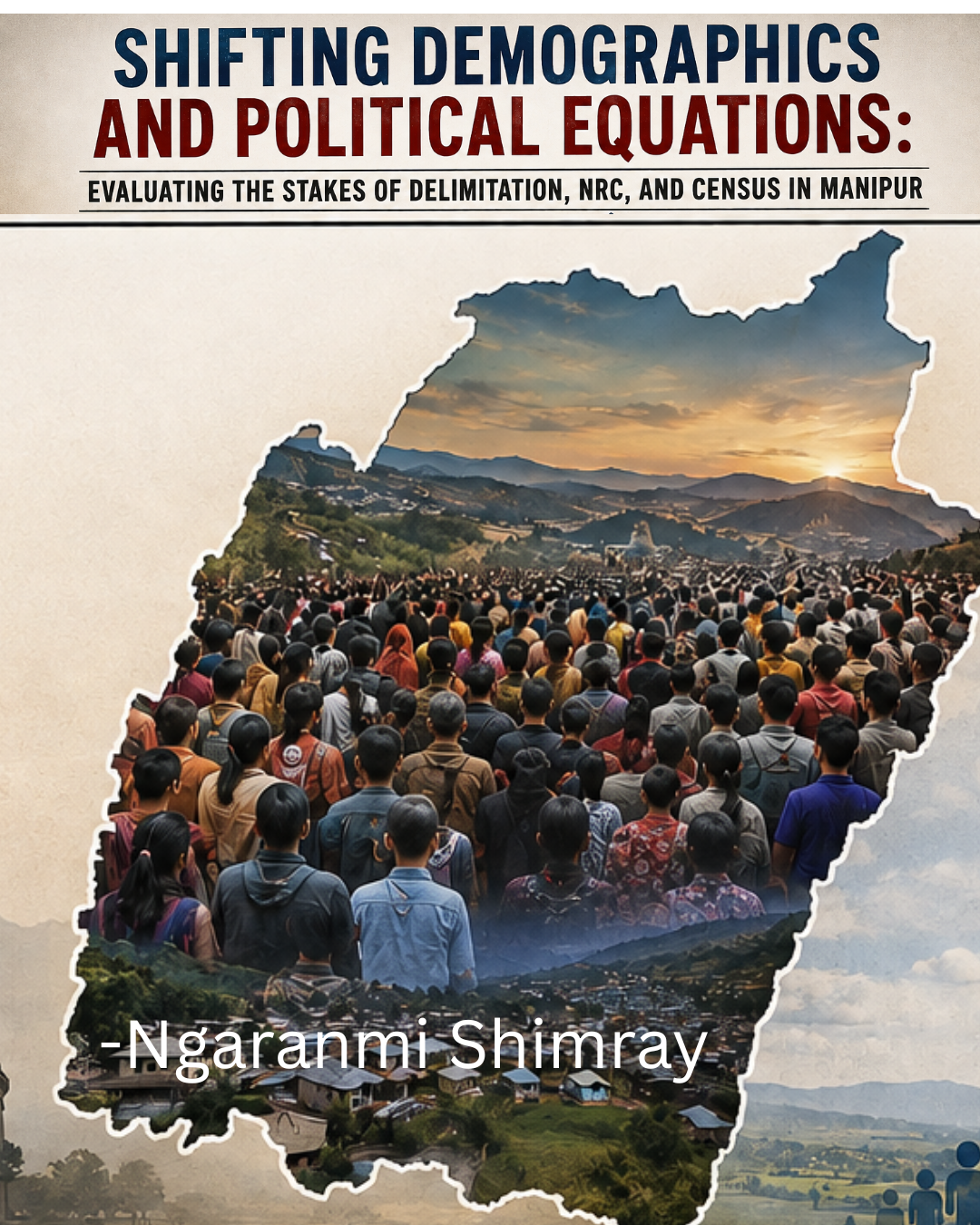
Had delimitation based on the 2001 population census figures been taken up as scheduled across India, the “Hill Areas” of Manipur could have secured 23 assembly seats, while the valley would have had a reduced number of 37 seats, with the total assembly seats remaining at 60. The hill areas would have gained additional seats at the expense of the valley.
Now, after 25 years of a higher population growth rate in the hill areas, the political equation is bound to change in favor of the hill areas when the 2027 census figures are published and delimitation based on that population is carried out. The total number of assembly seats for the Manipur Assembly may increase, which will be determined at the appropriate time.
The important question, as far as Manipur is concerned, is how narrow the difference in assembly seats between the valley and the hill areas will be if it is based on the 2027 census population figures.
Regardless of the exact number that may emerge from the 2027 figures, there is no doubt that the share of seats between the hill areas and the valley could become narrower.
However, imagine a situation for Manipur under the 2027 census figures—remote as it may seem, yet plausible—where the hill areas’ population outstrips that of the valley and thereby secures more than 50% of the assembly seats, or close to it. In such an event, all that ails the tribal people of Manipur will be resolved, as the tribes will be in a position to wield political power.
Such a scenario could drive the valley people to even allow the tribes to split from Manipur in order to retain power locally, in which case the tribes under such a scenario could form their own state or states, or join their brothers.
This is the scenario feared by the majority community if the 2027 census is allowed to be held. Appealing to the masses, the majority community has raised the issue of foreigners included in the head count and has suggested holding an NRC before the census.
In terms of strategy, it should not matter to the tribes in the hill areas how many seats the Nagas or Kukis will gain from the anticipated increase in seats based on the 2027 census; rather, they should hope for the possibility that the combined number of seats for the hill areas crosses the halfway mark. If it does, the political power dynamics of Manipur will change in favor of the tribes in the hill areas. This is what matters, as such a scenario would determine the future of Manipur.
Under the “No NRC, No Census” demand, the risk of delimitation not taking place at all is high. Everything—including the NRC, census, and delimitation—being disrupted and delayed indefinitely by the majority community, as they currently benefit more from the status quo arrangement of 40:20 seats in their favor, could be the hidden agenda. With the availability of the 2027 census population figures, the share of assembly seats between the hill areas and the valley becoming narrower is a real outcome.
The NRC is a red herring and will take considerable time to implement. Assam took more than six years to complete its NRC exercise, and that was under Supreme Court monitoring. This would mean that the census and delimitation for Manipur will be disrupted and postponed indefinitely by political decisions and litigation. Under such circumstances, the delimitation exercise for Manipur, if carried out, could be based on the 2011 census population data, which will not benefit the hill areas as much as what is anticipated with the 2027 census figures.
Since the valley gains more by maintaining the status quo of the 40:20 seat arrangement and will lose out if delimitation under the 2027 census is carried out, it becomes highly unlikely that the majority community will allow even the NRC and census to be held, creating administrative and legal problems to stall them.
This brings us to the question of whether the United Naga Council’s (UNC) stand supporting “No NRC, No Census” has been the correct stance. Knowing the majority community and their past attitude toward the tribes of the hill areas—such as refusing the Sixth Schedule, undermining the reservation policy for government jobs, and grabbing the lion’s share of development funds, infrastructure, and institutions for the valley—it is a foregone conclusion that they will leverage the UNC’s support and try to get the census postponed.
The UNC, Naga CSOs, and the Naga people will rue the day they took the decision to support “No NRC, No Census,” as the NRC, census, and delimitation may never see the light of day. The tribes in the hill areas were deprived of three seats from 2001 in the last delimitation for 25 years; now, the hill areas could be deprived of an even greater share of seats if the 2027 census is postponed indefinitely.
The Nagas already carry a pile of unfinished agenda items—namely, the Naga Peace Talks, the rollback of districts, the Sixth Schedule demand, justice for six murdered Nagas, and the termination of the Suspension of Operations (SoO) Agreement—and this will be the latest to be added to the list.
Having seen the way the majority community has operated in the past relating to issues involving the tribes in the hill areas, many lessons have been learned, and it is time the people viewed all matters proposed by them with suspicion. Let us not forget that they hold the political, administrative, legal, and resource advantage over the tribes of Manipur.
It is important to remember that the ruling dispensation at the center has a soft corner for them, making any proposition they put forward very disturbing and dangerous.
Among these is the Scheduled Tribe (ST) demand for the Meitei community, which essentially aims at grabbing the lands and jobs of the tribes.
The UNC and Naga CSOs should never forget where the tribes in the hill areas stand in terms of their relationship with the majority community, and they must temper their response by taking all these factors into consideration when arriving at decisions with far-reaching consequences for the future. They should urgently review their position on the “No NRC, No Census” stance.
Ngaranmi Shimray
New Delhi
(The views and opinions in this article are solely those of the author and do not necessarily reflect the official stance of Rural Post)