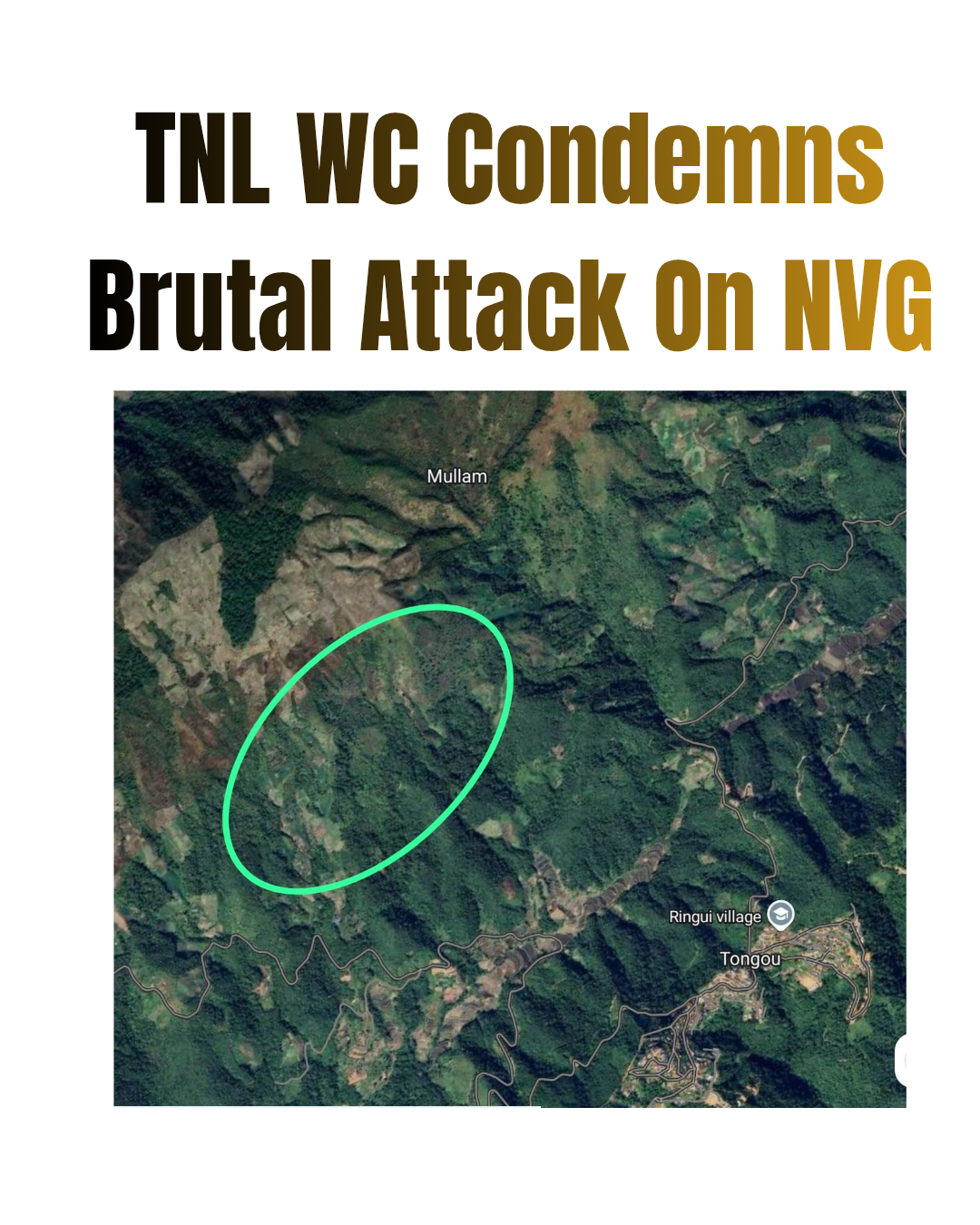

Recent escalation of tribal clashes in Ukhrul and Kamjong districts of Manipur appears to be a strategic attempt by the Kukis living in Tangkhul areas to relocate out of insecure areas and consolidate their population in Kangpokpi district. This strategy to relocate villages targets the onset of Census 2027 operations which is starting in Manipur and the timing seems to be opportune as this is not the season for opium poppy cultivation which is carried out during the winter season, typically starting with sowing in September-October and harvesting in February-March.
There appear to be two approaches for relocation of villages in Kangpokpi district. More than half a dozen Kukis villages located in remote areas of Kamjong district have reportedly relocated voluntarily to Kangpokpi district. They have taken the peaceful route voluntarily as they have everything to gain, namely security, development, and better livelihood opportunities in Kangpokpi district. However, the Kukis villages located in Ukhrul district, mainly in Litan area, some of whom engage in poppy cultivation, appear to be desirous of availing government benefits in the form of rehabilitation and welfare support as internally displaced persons. They appear to be spoiling for a fight by becoming a nuisance to the neighbouring Tangkhul villages and threatening vehicular traffic to Ukhrul district by their mere presence following the recent incidents of kidnapping and killings on the highway.
Strategic thinking indicates that the approach of voluntary relocation to safer areas makes sense as they seem to be living constantly in fear in remote, isolated, and vulnerable areas where their tribe’s presence is few and sparse. Politically too, they cannot have elected representatives from the tribe as their numbers are too few. Relocation at this juncture, before the head count of the census 2027 is started, makes a lot of sense as they will be listed in a new village and will be eligible to cast votes from the new location.
The voluntary relocation of villages is a peaceful strategy of disengagement and de-escalation from areas of potential conflict for security reasons. Considering the bloodless option in an already volatile atmosphere, the option of voluntary relocation of villages already done by half a dozen Kuki villages needs to be encouraged by the government to bring about sustainable peace and communal harmony. From the long-term point of view, removing the source of tension to ensure peace in the area appears to be a better option than to allow the source of tension and potential cause for future clashes to remain at the cost of huge resources and manpower deployment.
Historically, Manipur has been experiencing ethnic conflicts and tribal warfare since the time the Maharaj and the colonial British issued firearms to the nomadic Kukis to extend their political authority in the hill areas. Besides atrocities committed on Naga villages by Kuki levies, they had attacked many Naga villages and killed hundreds during the First World War in the 1917 period, taking advantage of the absence of able-bodied warriors when they had gone to Europe under the Labour Corps. Burdened by past historical clashes, animosity has resurfaced from time to time, mainly over scarce resources and lack of cultural and social bonding.
Against this backdrop, the strategy of voluntary disengagement and de-escalation seems to be the need of the hour and warrants the government’s consideration for implementation. If such a scheme is implemented, the relocation of villages will be carried out smoothly and quickly without bloodshed, easing tension and helping de-militarise potential sensitive areas.
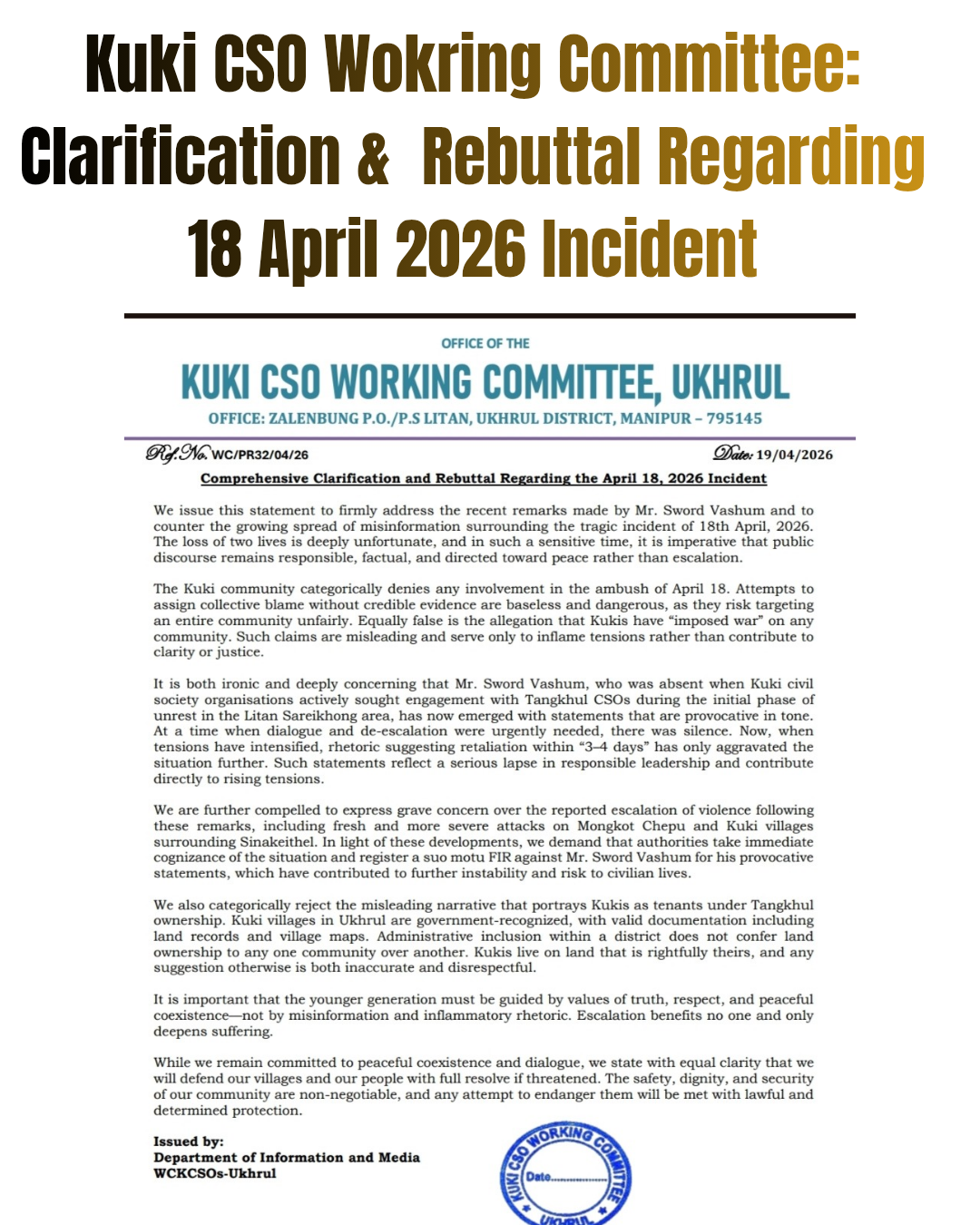
The word “relocation” has been used by the “Kuki CSO Working Committee, Ukhrul” in their press release dated 12.03.2026, and it is one of their demands following deteriorating ethnic tensions in Ukhrul district. The choice of words “relocation” seems to be deliberate given the fact that the Kukis are looking for consolidation in a geographically compact area and at the same time secure a safe environment for isolated villages amongst their own ethnic group. This approach has been espoused by them and appears to be influenced by the desire for peaceful relocation.
The government could perhaps consider enabling voluntary disengagement and de-escalation in areas having high potential for ethnic clashes by implementing a scheme of rehabilitation for voluntary relocation of villages? Even a promise will be sufficient to implement the scheme to be followed by material support subsequently to be delivered at the relocated village.
The strategy of voluntary disengagement and de-escalation could be the best approach to prevent the cycle of ethnic bloodshed and reprisals. This policy, of voluntary relocation, has long-term benefits of preventing future ethnic clashes. It needs to be implemented urgently by the government as the relocating villagers would have to be counted before the census operation for 2027 starts.
Ngaranmi Shimray
New Delhi
(The views and opinions in this article are solely those of the author and do not necessarily reflect the official stance of Rural Post)