
What Lies Ahead For The Nagas In Manipur
-Logical Conclusion of the Indo-Naga Peace Process
-FMR & Border Fencing
-Tripartite Talks
-Census Operation
As we, the Nagas from Manipur stepped into 2026, what are the biggest challenges for the Nagas in Manipur? A challenge that requires unity and determination to politically navigate and free from the shackles that binds our struggles to self determination.
1. LOGICAL CONCLUSION OF THE INDO-NAGA PEACE PROCESS
The Indo-Naga Framework Agreement was inked on 3rd August, 2015 between the Government of India and NSCN (IM). However, a full decade has elapsed since that historical day.
The unresolved Naga political issue and the uncertainty of the timeframe of the ongoing talks between Government of India and Naga political groups has continued to define the socio-political landscape of the region.
2. FMR AND BORDER FENCING
The Free Movement Regine (FMR) was conceptualized and implemented in 1950 and further restructured in 1968 allowing movement for inhabitants across both sides of the (Indo-Myanmar) border without a visa. The territorial limit of free movement of people was up to 40 km then. The limit was reduced to 16 km in 2004. In February 2024 FMR was entirely suspended.
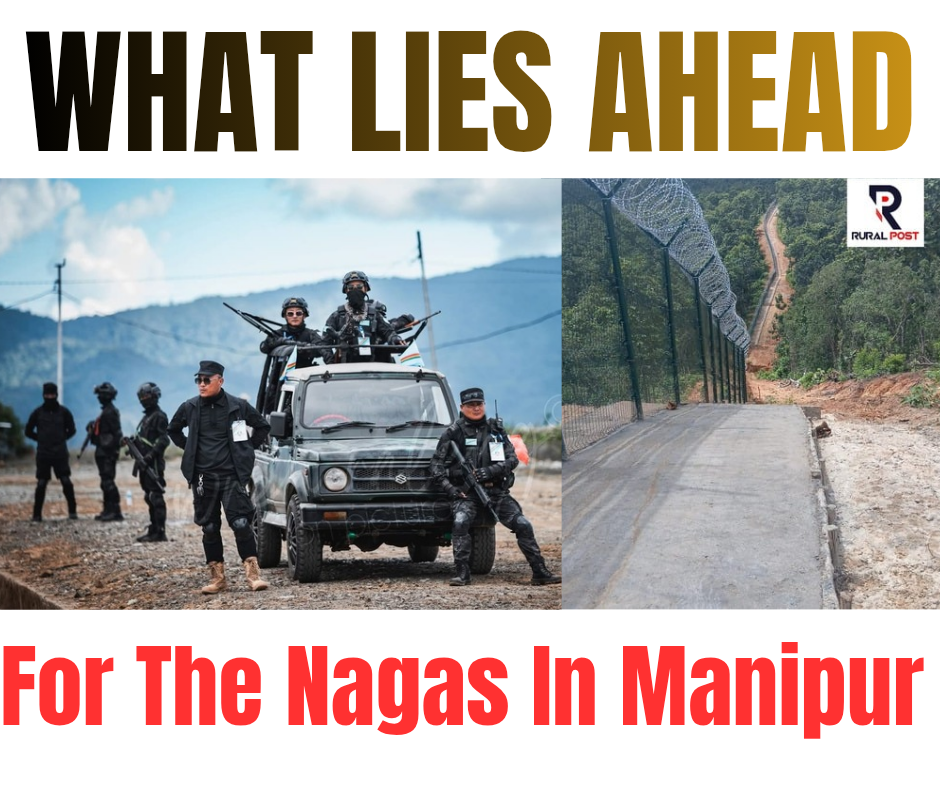
Following the February 6, 2024 decision of the Ministry of Home Affairs (MHA), Government of India to fence the 1643 km long imaginary boundary between India- Myanmar, the Nagas of Manipur under the aegis of United Naga Council (UNC) has strongly opposed the ongoing the scrapping of FMR and the construction of the Indo-Myanmar border fencing in Naga areas, calling it a violation of their traditional boundaries and an affront to their rights.
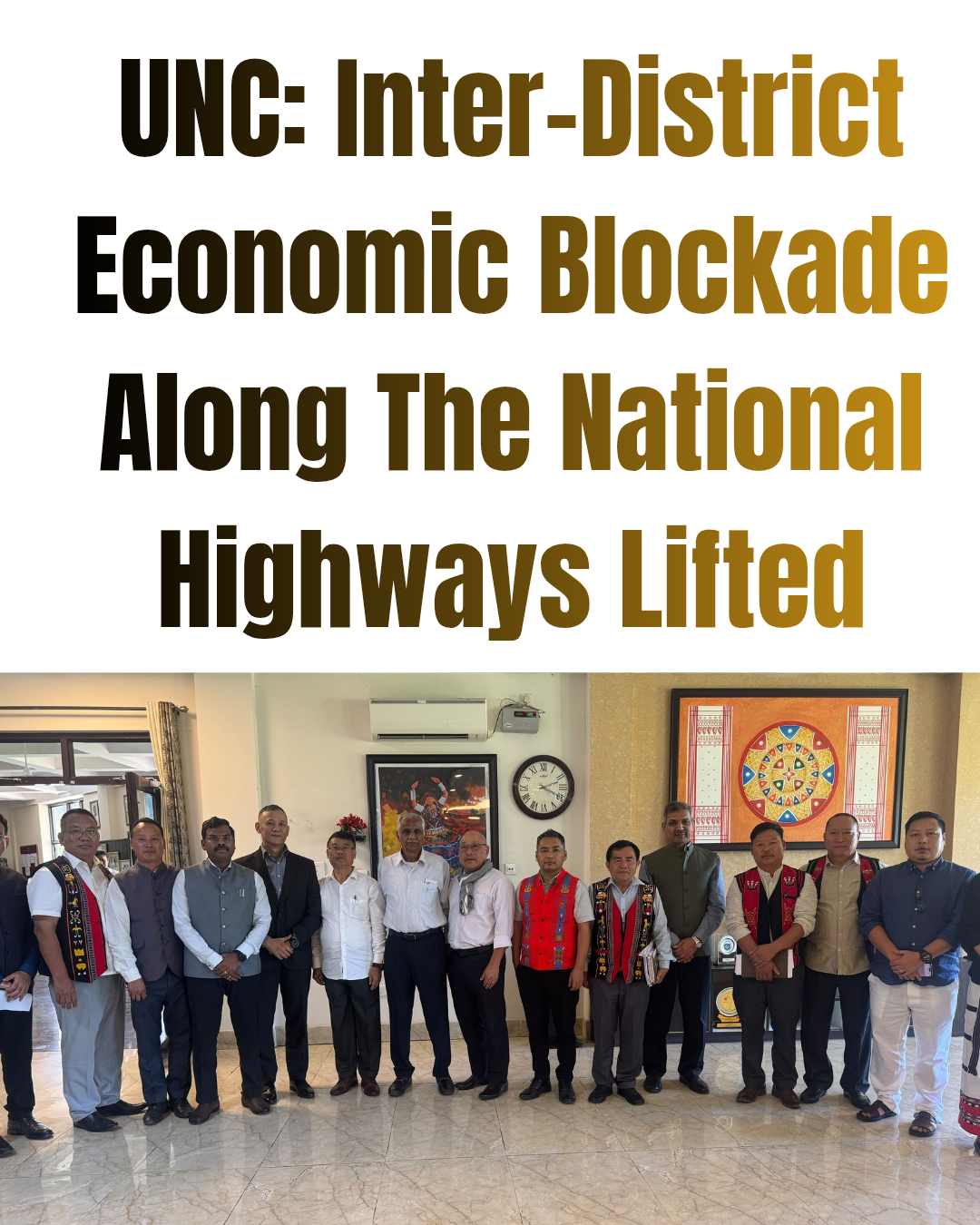
Despite repeated appeals to the Government of India and the Union Home Ministry, the construction continues, exacerbating tensions in the region. UNC enforced “Trade Embargo” from the midnight of 8 September 2025 in the Naga area.
3. TRIPARTITE TALKS
The “Trade Embargo” which was enforced in the Naga area from the midnight of 8th September, 2025 was suspended with effect from 06:00pm on 11 September 2025.
The Government of Manipur (GOM) then communicated on 10th September, 2025 that tripartite dialogue (the UNC, GOM & MHA) is being convened at New Delhi.
The meeting took place on 26 August 2025 in Delhi at the invitation of the Government of India, Ministry of Home Affairs and the meeting lasted for 2 hours. The Government of India delegation was led by AK. Mishra (Advisor North East) and other 7 officers. Naga Delegation led by the United Naga Council (UNC), could not come to a meeting point in their discussion on Free Movement Regime (FMR) and border fencing.
The Naga Delegation had put forward their two key demands:
1. Free Movement Regime (FMR) should be reinstated.
2. Construction of border fencing along the Naga homelands must stop. If at all, the Indo-Myanmar Border is to be fenced for the reason best known to the Government of India, proper demarcation of actual border line based on historical and traditional boundary should precede to any physical construction work to avoid an irreparable ramification and unprecedented uprising of the people.
On the other hand, the Naga Delegation had conveyed that it would be more practical and beneficial for India to let the Nagas take care of the security of their own land and not by erecting fencing in the Naga homeland.
4. CENSUS OPERATION
The Government of Manipur Secretariat, Home Department had issued a notification on the 31 December of 2025, “In exercise of the powers conferred by Clause (iv) of Rule 8 of the Census Rules 1990, the Governor of Manipur is pleased to notify that administrative boundaries of all districts, tehsils, villages etc., in the State of Manipur shall be frozen with effect from 1 January, 2026 to 31 March, 2027 to facilitate Census Operations.”
Apart from policy making and governance, the outcome of the Census Operation will also play a significant role for future delimitation of the Manipur state. For recording accurate population data, the exercise will include digital enumeration through mobile applications and introduce a self-enumeration option for the first time in India’s census history.
CONCLUSION
As a community, can the Nagas of Manipur overcome the challenge ahead? Only time will tell.