
𝗧𝗵𝗲 𝟭𝟵𝟰𝟬 𝗩𝗲𝗿𝗱𝗶𝗰𝘁 𝗬𝗼𝘂 𝗖𝗮𝗻𝗻𝗼𝘁 𝗜𝗴𝗻𝗼𝗿𝗲 : 𝗞𝘂𝗸𝗶𝘀 𝗪𝗲𝗿𝗲 𝗣𝗲𝗿𝗺𝗶𝘁𝘁𝗲𝗱 𝘁𝗼 𝗦𝘁𝗮𝘆. 𝗡𝗼𝘁 𝗧𝗼 𝗢𝘄𝗻.
𝑻𝒉𝒆 1940 𝑺𝑫𝑶 𝑪𝒐𝒖𝒓𝒕 𝑶𝒓𝒅𝒆𝒓. 𝑪𝒊𝒗𝒊𝒍 𝑪𝒂𝒔𝒆 𝑵𝒐. 276 𝒐𝒇 1939-40. 𝑻𝒉𝒂𝒘𝒂𝒊 𝒗𝒆𝒓𝒔𝒖𝒔 𝑩𝒖𝒏𝒈𝒃𝒊.
This archival document from the court of the Sub Divisional Officer of North East Ukhrul is dated April 22, 1940. It bears the seal of the British colonial administration. It is Civil Case No. 276 of 1939-40. In the current conflict in Manipur, where both sides invoke history as a weapon, this document is not a narrative. It is a verdict. It establishes a legal principle that the Tangkhul Naga community has relied upon for over eight decades. It explains, with forensic clarity, why the relationship between Tangkhul Naga landowners and Kuki settlers across the Ukhrul and Kamjong foothills was fundamentally one of permissive occupancy and not ownership.
To understand the violence on National Highway 202, the bunkers at Lungter, and the clashes in Sinakeithei and Thawai, we must first understand what happened in that small hill court in 1940. The Thawai case is not an outlier. It is the most thoroughly documented example of a legal pattern that governed Kuki settlement throughout the Tangkhul ancestral domain. The burden of proof now rests on those who assert a different history.
𝗧𝗵𝗲 𝗖𝗮𝘀𝗲 𝗼𝗳 𝗧𝗵𝗮𝘄𝗮𝗶 𝗩𝗲𝗿𝘀𝘂𝘀 𝗕𝘂𝗻𝗴𝗯𝗶
The plaintiff in this 1940 case was Morolong Khullakpa, the hereditary chief of Thawai, a Tangkhul Naga village. The defendant was Helmang, the Chief of Bungbi, a Kuki village. The dispute centered on a portion of land belonging to Thawai that was being occupied by the people of Bungbi. The Kuki chief did not deny that he and his people were on Thawai land. The question before the court was the nature of that occupation. Had the land become the property of the Kuki chief by virtue of his long presence there, or was his presence conditional and subordinate to the Tangkhul Khullakpa?
The ruling delivered by S. J. Duncan, the Sub Divisional Officer, was unequivocal. The court stated that even though the defendant was “allowed to occupy a part of Thawai land without Lousal, it does not mean that the land has become his.”
That single sentence contains the entire legal architecture of the Tangkhul Naga claim. The term “Lousal” is not a colonial invention. It is a specific Tangkhul customary practice. It involves a formal ceremony requiring the sacrifice of an animal, the sharing of rice beer, and the explicit blessing of the village elders and the Khullakpa. Lousal is the mechanism by which a settler is formally integrated into the village land holding system. It is the difference between being a guest with a revocable license and being a recognized holder of permanent cultivation and residence rights under the authority of the village and its customary law. The court explicitly noted that Lousal had not taken place. Therefore, regardless of how many years the Kuki chief had resided on that hill, the underlying title remained with the Khullakpa of Thawai. The Kuki presence was permissive only. It conferred no independent rights to the land.
The court went further. It prohibited the Bungbi chief from collecting “lamban” from Manipuris, meaning traders from the Imphal valley. Lamban is a form of territorial revenue or gate tax. The right to collect lamban is not a right that flows from merely standing on soil. It flows from jurisdictional authority over that soil. By reserving this right to the plaintiff and ordering the defendant to pay ten rupees to the Thawai Khullakpa, the British court was drawing a clear jurisdictional boundary. It recognized Thawai as the sovereign administrative unit and Bungbi as a dependent settlement existing within Thawai’s domain.
𝗪𝗵𝘆 𝗧𝗵𝗶𝘀 𝗥𝘂𝗹𝗶𝗻𝗴 𝗖𝗼𝗻𝘁𝗶𝗻𝘂𝗲𝘀 𝘁𝗼 𝗜𝗻𝗳𝗼𝗿𝗺 𝗟𝗮𝗻𝗱 𝗥𝗲𝗹𝗮𝘁𝗶𝗼𝗻𝘀
The Manipur Land Revenue and Land Reforms Act of 1960 was never fully implemented in the hill areas of Manipur. This is not a Naga claim. It is a documented legal reality. The Act applies primarily to the valley, and successive state governments have failed to extend its provisions to the hills due to resistance from tribal communities who view it as a threat to customary land tenure. As a result, customary law and the precedents established under colonial and early Indian administration continue to inform and shape land relations in the Ukhrul and Kamjong foothills. The 1940 SDO order was not overturned by any subsequent legislation. No statutory framework has replaced the customary system it operated within. Its evidentiary weight remains intact. This explains the sustained effort over decades to establish parallel Village Authorities and create alternative administrative facts on the ground.
The legal continuity is not merely theoretical. The Gauhati High Court in Chitui Naga vs. Onhen Kuki (AIR 1984 Gauhati 62) considered and applied the same customary framework that underlay the 1940 SDO order. The High Court did not question the validity of the earlier colonial adjudications. It treated them as part of the living customary law of the hills. This is the legal reality that the Kuki narrative must now confront: the documentary chain from 1940 to 1983 to the present has not been broken.
𝗙𝗼𝗿𝘁𝘆 𝗬𝗲𝗮𝗿𝘀 𝗼𝗳 𝗗𝗼𝗰𝘂𝗺𝗲𝗻𝘁𝗲𝗱 𝗖𝗼𝗻𝘁𝗶𝗻𝘂𝗶𝘁𝘆 𝟭𝟵𝟰𝟬 𝘁𝗼 𝟭𝟵𝟴𝟬
If this 1940 judgment were an isolated anomaly, it might be dismissed as a relic of a colonial misunderstanding. But the record shows a continuous and unbroken chain of acknowledgment that stretches from the British era into the modern Indian Republic.
Thirteen years after Duncan’s ruling, in the early years of Indian independence, the same principle was tested again. In Miscellaneous Case No. 232 of 1952-53, a Kuki petitioner named Shri Povom alias Khupzalam Kuki formally appeared before the Court of the Sub-Divisional Officer, Ukhrul, and agreed to the following terms, signed by SDO T.C. Tiankham:
• Khupzalam Kuki has agreed to settle under the patta of Kuingai Khullakpa of Thawai Village.
• If I were ever to harass the Khullakpa in respect of the land and the village, I have no objection to being turned out.
• If I am turned out on account of my misbehavior, all my properties, houses, fields, gardens, etc., will be forfeited to the farmer of the village.
• The member to be settled is six, who is a member of Khupzalam Kuki’s family.
Read those terms carefully. This is not a land lease. This is not a rental agreement between equals. This is a suzerainty contract. The Kuki petitioner acknowledged the Tangkhul Khullakpa’s right to evict him. He acknowledged that his property would be forfeited upon eviction. No one signs such terms unless they recognize the other party as the superior title holder. This document alone makes the claim that Thawai Kuki was an “independent chieftainship” exceedingly difficult to sustain. A sovereign chief does not agree to forfeit his property to another chief upon eviction. A tenant does.
This pattern held true even into recent memory. As late as 1980, forty years after the original court case, six Kuki families led by Yamkhuhem Haokip signed a fresh agreement with the village authorities of Thawai. This 1980 document reaffirmed Thawai’s ownership and included explicit prohibitions on the formation of a new Village Authority or the entry of additional settlers without the express permission of the Tangkhul landowners. The fact that such an agreement was necessary and executed in 1980 demonstrates that the Naga community has been actively and continuously managing this tenancy relationship for generations. It was not a dead letter of colonial law. It was living customary law.
𝗧𝗵𝗲 𝗘𝘃𝗶𝗱𝗲𝗻𝗰𝗲 𝗧𝗵𝗮𝘁 𝗕𝗿𝗶𝗻𝗴𝘀 𝗨𝘀 𝘁𝗼 𝘁𝗵𝗲 𝗣𝗿𝗲𝘀𝗲𝗻𝘁 𝗗𝗮𝘆
The Thawai Village Authority has publicly confirmed that the Kuki residents of the settlement continue to pay their Hill House Tax under the name of Ng Khathing, the Headman of Thawai Village. This is not a matter of interpretation. This is a government record. Hill House Tax is the basic administrative recognition of a village unit. If the Kuki settlement were truly an independent village, it would possess its own tax registration. It does not. The Manipur government does not recognize any “Thawai Kuki Village Authority.” The settlement exists solely as a hamlet within the jurisdiction of Thawai Tangkhul. The Kuki residents themselves, through their tax payments, acknowledge this arrangement every year. This is not history. This is the present administrative reality.
This administrative fact has direct legal consequences. Under the Manipur (Village Authorities in Hill Areas) Act, 1956, a Village Authority is the recognized unit of local governance. The absence of a separate Village Authority for the Kuki settlement means that, in the eyes of the state, the settlement is not an independent village. It is a dependent hamlet within Thawai Tangkhul. The Kuki narrative of independent chieftainship is contradicted not only by historical documents but by the present administrative structure of the state itself.
𝗧𝗵𝗲 𝗗𝗼𝗰𝘂𝗺𝗲𝗻𝘁𝗲𝗱 𝗣𝗮𝘁𝘁𝗲𝗿𝗻 𝗮𝗻𝗱 𝗜𝘁𝘀 𝗜𝗺𝗽𝗹𝗶𝗰𝗮𝘁𝗶𝗼𝗻𝘀
The importance of Civil Case No. 276 of 1939-40 extends far beyond the boundary stones of Thawai and Bungbi. It establishes a legal and administrative pattern that is documented in multiple adjudications across the Naga foothills.
Following the Anglo-Kuki War of 1917 to 1919, the British administration pursued a deliberate policy of demographic management. To prevent the consolidation of Kuki armed resistance, Kuki populations were resettled in scattered locations. Many of these new sites were placed squarely within the recognized territorial jurisdiction of Tangkhul Naga Khullakpas. This was not an act of conquest by the Nagas. It was an administrative decision by the colonial state to make the Kuki settlers tenants of the Naga chiefs. The British records from the 1920s through the 1940s, including the typed ethnographic notes of S. J. Duncan himself, reflect this understanding. The Tangkhul chiefs were the landowners. The Kuki settlements were satellite hamlets granted permission to cultivate and reside.
The strategic purpose of this policy was clear. By scattering Kuki populations and placing them under Naga administrative authority, the British sought to prevent the re-emergence of a unified Kuki armed resistance. The policy succeeded. The Kuki settlements in the Ukhrul and Kamjong foothills never coalesced into an independent territorial bloc. They remained, in law and in administrative practice, dependent hamlets within Naga jurisdictions. This is the historical and legal reality that the modern Kuki demand for a contiguous “Zalengam” or “Kukiland” seeks to overturn.
𝗧𝗵𝗲 𝗣𝗮𝘁𝘁𝗲𝗿𝗻 𝗜𝘀 𝗡𝗼𝘁 𝗦𝗽𝗲𝗰𝘂𝗹𝗮𝘁𝗶𝗼𝗻 𝗜𝘁 𝗜𝘀 𝗗𝗼𝗰𝘂𝗺𝗲𝗻𝘁𝗲𝗱
The 1940 Thawai-Bungbi case is not an isolated incident. It is one of a series of adjudications spanning more than fifty years, all of which establish the same legal principle. Kuki settlement in these documented Naga foothills cases was permissive, not sovereign.
In Civil Case No. 7 of 1930-31, heard in the Court of the S.D.O., Tamenglong, a dispute between Samthingng Khullakpa of Tamah village and Manglen Chief of Chalva village was adjudicated. The case established a boundary line between Naga and Kuki territories, with the court recognizing the Naga Khullakpa’s jurisdictional claims. This case was later cited as precedent in the Gauhati High Court in 1983.
In that 1983 case, Chitui Naga vs. Onhen Kuki, the Gauhati High Court considered a second appeal arising from a boundary dispute between Chalva, a Kuki settlement, and Tamah, a Naga village. The High Court examined the trial court record, which included evidence that villagers had paid lamban (territorial revenue) to Tamah, and that Chalva’s claim to the disputed land was contested on that basis. The appeal was ultimately dismissed. The case demonstrates that the legal framework governing Naga jurisdiction and Kuki tenancy survived independence and was litigated before a constitutional court of the Indian Union. The question of independent Kuki sovereignty in that specific interface was tested and resolved through judicial process.
The documentation for Thawai and Tamah is the most complete and publicly available. The same administrative logic governed Kuki settlements established in the post-1919 resettlement period. The burden of proof now rests on those who assert a different history for any specific village. To date, no equivalent documentary chain has been produced publicly to establish independent Kuki title over these contested foothills settlements.
The Shangkai ultimatum of March 2026 explicitly invoked the “guest” framework that originated in these court rulings. Tangkhul Naga civil society organizations and youth groups, drawing on the collective authority of the Tangkhul Naga Long, the Tangkhul Naga Foothills Organisation, and village authorities across the foothills, have consistently articulated the legal and historical position that Kuki residents are “guests on Tangkhul ancestral land, and that status is a privilege, not a right.” This is not a new political slogan. It is the direct descendant of the legal language established in 1940, reaffirmed in 1953, and validated in subsequent judicial proceedings. It represents the unified voice of Tangkhul civil society, grounded in documentary evidence and customary law.
This is the crucial context that is often missing from modern narratives. When claims are advanced that villages like Bungbi, Sinakeithei, or the settlements near Mahadev are “ancestral homelands” with independent sovereign histories, those claims must be weighed against the land revenue and judicial records of both the colonial and post-colonial eras. The Naga position is not that Kuki people have not lived there for a long time. The Naga position is that their living there was predicated on a documented legal relationship of tenancy. The landowner-tenant relationship is fundamentally different from a relationship between two equal sovereign entities.
𝗧𝗵𝗲 𝗣𝗼𝗹𝗶𝘁𝗶𝗰𝗮𝗹 𝗦𝘁𝗮𝗸𝗲𝘀 𝗼𝗳 𝘁𝗵𝗲 𝗟𝗮𝗻𝗱 𝗤𝘂𝗲𝘀𝘁𝗶𝗼𝗻
This is not ancient history being re-litigated for its own sake. The demand for a “Separate Administration” or Union Territory for the Kuki people requires contiguous territory. Scattered settlements across multiple districts weaken the political argument for such an arrangement. This is why the demographic composition of interface zones like the Ukhrul and Kamjong foothills has become so intensely contested.
The logic is straightforward. A political map is drawn based on territorial contiguity. If Kuki settlements in the Ukhrul and Kamjong foothills can successfully assert independence from Naga jurisdiction, the territorial basis for a separate Kuki political entity expands eastward into areas that have historically been under Tangkhul administration. This is not speculation. It is the explicit objective of Kuki political organizations. The demand for the relocation of all Kuki villages from Ukhrul district to Kangpokpi district, articulated by the Kuki CSOs Working Committee in March 2026, is a recognition of this territorial reality. They understand that scattered tenant hamlets cannot form the basis of a contiguous political territory. They seek to consolidate their population in areas where they can assert sovereign control.
If, however, these settlements remain legally classified as tenants on Naga land, the contiguity argument faces significant documentary obstacles. A political demand for a separate territory cannot be built on land to which the claimants hold no documented title. The 1940 verdict, the 1953 agreement, the 1980 reaffirmation, and the present Hill House Tax records all stand as legal barriers to the territorial ambitions that underlie the current violence.
The violence on NH-202, the establishment of bunkers, and the aggressive assertion of territorial claims are not random acts of ethnic hatred. They represent a coordinated effort to alter the legal and administrative facts on the ground before any political map is redrawn. The Kuki side understands that if they can establish de facto control over the contested interface zones, the documentary record may be rendered politically irrelevant. The Naga side understands that if they allow the documentary record to be erased by violence, they will lose the legal foundation of their territorial claims. This is why the conflict is so intense. It is not a dispute over ancient grievances. It is a battle over the future political map of Manipur.
𝗪𝗵𝘆 𝗧𝗵𝗶𝘀 𝗠𝗮𝘁𝘁𝗲𝗿𝘀 𝗼𝗻 𝗡𝗛-𝟮𝟬𝟮 𝗶𝗻 𝟮𝟬𝟮𝟲
This is not an abstract debate for historians. This legal precedent is the reason Naga women stand on the highway with peace flags and torches. It is the reason village volunteers defend the ridges of Sinakeithei.
The violence that has engulfed NH-202 since early 2026 is not spontaneous. It follows a documented escalation that directly targets the territorial integrity established by the 1940 verdict and its progeny.
On February 8, armed Kuki militants entered Sikibung and Sharkaphung villages and torched more than 23 houses belonging to Tangkhul Nagas, including the residence of the village headman. Shots were fired toward populated areas. This was not a border skirmish. It was an attack on the heart of a Naga village that sits on land governed by the same customary and legal framework as Thawai.
On February 23, portions of the Lungter Hill Range of Sinakeithei village were set on fire and a villager was abducted at gunpoint. The Lungter ridge is one of the contested interface zones where Kuki bunkers have been established on land to which no independent Kuki title has ever been documented.
On March 19, armed Kuki militants attempted to enter Sirarakhong village, triggering a gunfight with Tangkhul Naga village volunteers. Sirarakhong is not a border village. It lies well within the recognized Tangkhul territory. The incursion was a test of Naga defensive resolve.
On March 24, coordinated firing from Shangkai and Mangkot Chepu targeted Naga villages including Kamjong, Sharkaphung, and Thoyee, leaving two civilians injured. The coordination of the attack demonstrates that this is not a spontaneous communal clash. It is an organized military campaign.
On April 5, armed Kuki militants launched heavy gunfire toward civilian settlements in Thoyee and Sharkaphung beginning around 6 pm. Firing continued throughout the night. At least six houses in Thoyee were struck by bullets. The attack was sustained and indiscriminate.
On April 7, at S. Laho, Naga women peacekeepers were reportedly subjected to lathi charges, dazzle rods, and chemical sprays by security forces. The women were not armed. They were not rioting. They were standing on the highway to protest the failure of the state to protect their villages and to demand that the legal and territorial integrity established by the 1940 verdict be respected.
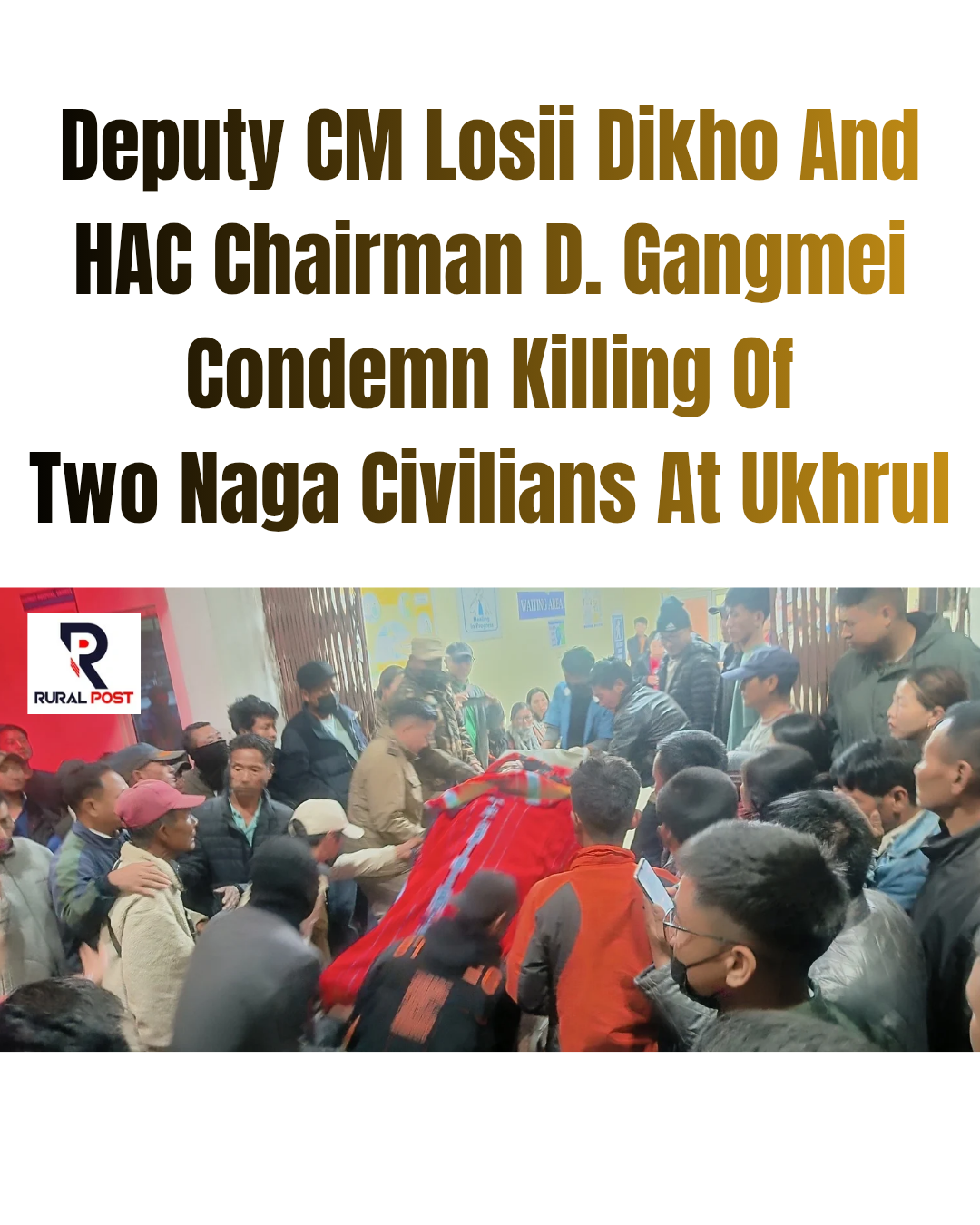
On April 18, armed Kuki militants ambushed a civilian vehicle at TM Kasom along the NH-202 corridor at approximately 2:35 PM. Using sniper fire and INSAS or M-16 rifles, the militants opened fire without warning on unarmed civilians traveling home. Two Tangkhul Naga civilians were killed in the attack. Mr. SW. Chinaoshang, son of SW Ruichumhao of Tushar (Tashar) Village, and Mr. Yaruingam Vashum, son of Thuimi Vashum of Kharasom Village, were murdered in broad daylight on a public highway. Security forces had reportedly withdrawn from the area approximately one to two miles prior to the ambush. The Chief Minister had concluded his road visit to Ukhrul and returned to Imphal shortly before the attack. The ambush occurred on a road that the documentary record confirms lies within Tangkhul Naga territorial jurisdiction. It is the latest and most lethal manifestation of the campaign to render NH-202 impassable and to assert de facto control over territory to which no independent Kuki title has ever been established. The weapons used in the attack, if properly matched to the numbered and recorded arsenal maintained under the Suspension of Operations agreement, can identify the perpetrators. The failure to do so constitutes deliberate complicity.
Only after this sustained assault did village defenders respond. The Sinakeithei Village Authority has publicly stated that their volunteers fired warning shots solely to deter armed Kuki militants from further encroachment into Naga territory. For months, the same village authority has reported that Kuki bunkers at Lungter and surrounding ridges have remained intact and operational, while women and children in Sinakeithei have been pinned down by fire from these very positions. Yet security forces have not dismantled these offensive bunkers. Instead, on March 25-26, security forces dismantled 52 illegal bunkers on Mahadev Thoyee ridge and Zalengbung ridge. Many of these were Naga defensive positions. The pattern of selective enforcement is documented and undeniable.
When Tangkhul civil society groups like the Tangkhul Naga Foothills Organisation document the existence of bunkers on contested ridges, they view these bunkers not just as military threats but as a legal trespass on land to which no independent title has been documented. When armed groups collect illegal taxes on NH-202, a practice documented by village authorities and civil society organizations, the Naga community sees this as a direct challenge to the jurisdictional authority established by the 1940 court order and affirmed by the 1953 patta agreement. The kidnapping of 21 Nagas on NH-202, which took place in full view of security forces who did not intervene, is not an isolated crime. It is a manifestation of the same effort to assert control over territory and movement that the documentary record denies.
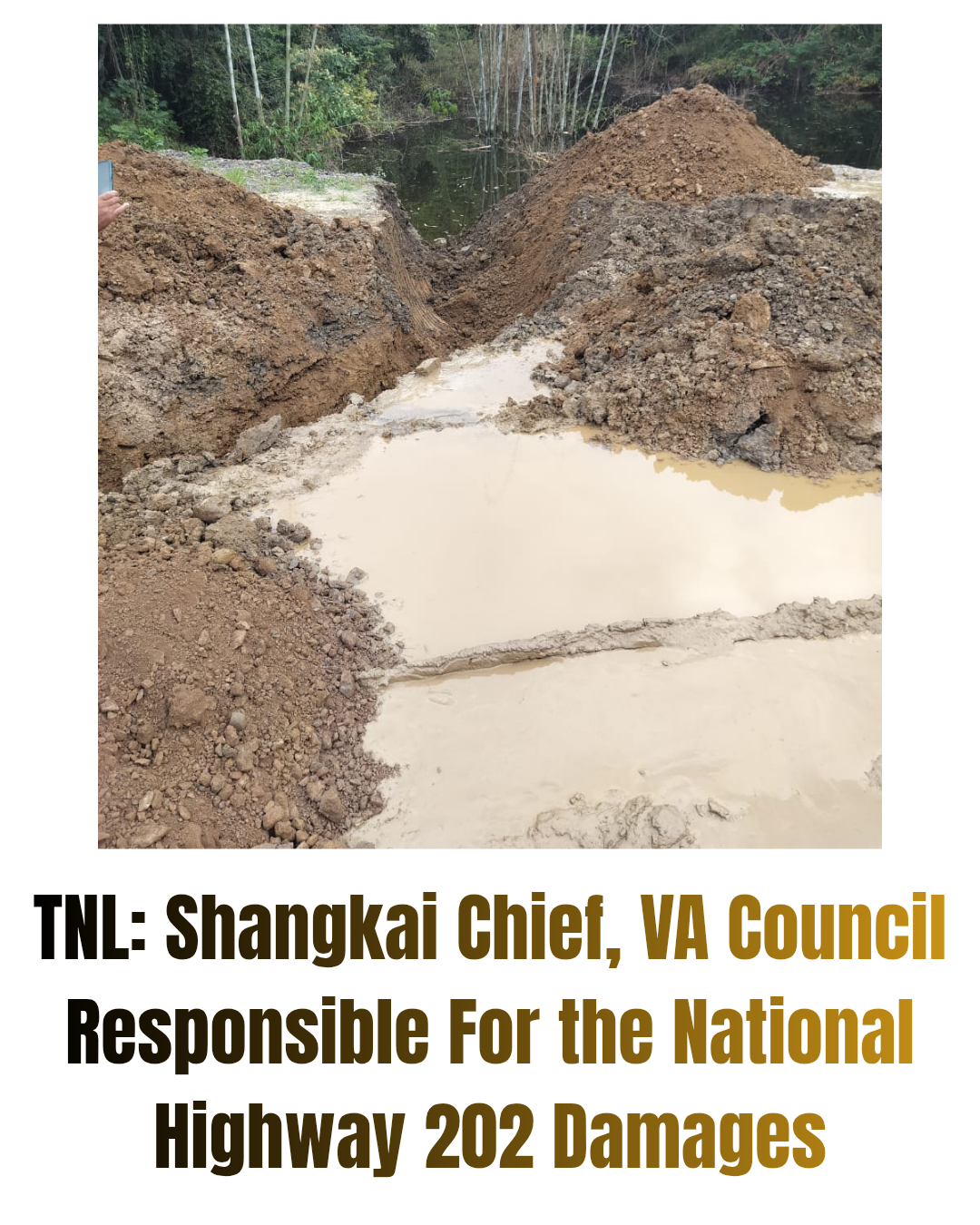
Civilian vehicles now require armed escorts to travel on NH-202. Ambulances have been fired upon. Two civilians were murdered at TM Kasom on April 18. A road that is “open” on paper is not safe in reality. This is the direct result of months of attacks on this highway, attacks documented by the Tangkhul Naga Foothills Organisation, the Tangkhul Aze Katamnao Long, and village authorities.
The Naga women who stand on the highway are not obstructing lawful operations. They are responding to a documented pattern. Their villages burn. Their defensive bunkers are dismantled. Offensive Kuki positions remain untouched. Their civilians are ambushed and killed on the highway. And when they protest, they are met with force. Protest is not obstruction. It is the last resort of a community that has lost faith in the neutrality of the state and is determined to defend the legal and territorial integrity established by the records that begin with the 1940 verdict.
𝗪𝗵𝘆 𝗟𝗼𝗻𝗴 𝗥𝗲𝘀𝗶𝗱𝗲𝗻𝗰𝗲 𝗗𝗼𝗲𝘀 𝗡𝗼𝘁 𝗔𝘂𝘁𝗼𝗺𝗮𝘁𝗶𝗰𝗮𝗹𝗹𝘆 𝗖𝗿𝗲𝗮𝘁𝗲 𝗢𝘄𝗻𝗲𝗿𝘀𝗵𝗶𝗽
A counter-argument will be made that decades of residence have transformed tenancy into ownership through adverse possession or evolving customary rights. This argument faces several documentary obstacles.
First, adverse possession requires hostile, uninterrupted possession without permission. The 1940 order, the 1953 agreement, and the 1980 agreement all prove that the presence was permissive, not hostile. Land that the owner has explicitly permitted occupation of cannot be adversely possessed under standard legal doctrine.
Second, the Tangkhul community has continuously asserted its ownership through these very documents. The 1980 agreement was an active reaffirmation of the tenancy relationship. The Hill House Tax payments continue to this day. The legal relationship has never lapsed, never been abandoned, and never been extinguished.
Third, customary law does not evolve unilaterally or in secret. It evolves through practice that is recognized and accepted by both parties. The 1953 and 1980 agreements are signed acknowledgments of Tangkhul ownership. A claim that custom has silently transformed occupants into owners is difficult to reconcile with signed documents affirming the opposite. Customary evolution requires mutual consent or at least mutual acquiescence. The documents provide no evidence that the Tangkhul side ever consented to any transfer of title.
Even if a court were to find that some customary rights have accrued to long-term occupants, those rights would be usufructuary, not proprietary. The right to cultivate is not the right to sell. The right to reside is not the right to secede. The 1940 order establishes the foundational title. Everything else flows from that. The claim being advanced is not for usufructuary rights. It is for ancestral sovereignty and independent chieftainship. That claim the documents flatly contradict.
The court in 1940 specifically addressed the argument that long residence confers ownership and dismissed it, noting that “after he has been here more years, it may be necessary to grant him more right than he is leaving now.” This line suggests that while the court recognized the need for stability, it refused to convert the passage of time into a transfer of title. The rights could be expanded perhaps, but the underlying ownership of the Tangkhul Khullakpa remained the foundation.
The document dated April 22, 1940, signed by S. J. Duncan, is a recorded decision. The agreements of 1953 and 1980 are signed acknowledgments. The Gauhati High Court proceedings of 1983 confirm that this legal framework was litigated before a constitutional court. The present administrative records reflect continuing practice.
Taken together, they form a continuous documentary chain that has not been shown to be broken, withdrawn, or replaced.
If a different history is asserted, it must be supported at the same level. It must produce court records, signed agreements, and judicial determinations establishing independent title with comparable continuity and weight. No such documentary chain has been placed in the public domain to date.
Claims of sovereignty require evidence. Repetition does not substitute for record. Assertion does not establish title. This is not a contest of rhetoric. It is a question of documentation.
Until a verifiable counter-record is produced, the position established in 1940, reaffirmed in 1953 and 1980, litigated before the Gauhati High Court in 1983, and reflected in present administrative practice remains the most substantiated account available. The burden therefore rests on those who seek to contradict the record.
𝗗𝗼𝗰𝘂𝗺𝗲𝗻𝘁𝗮𝗿𝘆 𝗥𝗲𝗰𝗼𝗿𝗱 𝗮𝗻𝗱 𝗩𝗲𝗿𝗶𝗳𝗶𝗰𝗮𝘁𝗶𝗼𝗻
• The documents cited in this post are matters of public record and can be verified through the following sources:
• Civil Case No. 276 of 1939-40: Court of the S.D.O., North East Area, Ukhrul. Dated 22 April 1940. Signed by S.J. Duncan.
• Civil Case No. 7 of 1930-31: Court of the S.D.O., Tamenglong. Referenced in Gauhati High Court judgment, Chitui Naga vs. Onhen Kuki, AIR 1984 Gauhati 62 (16 September 1983).
• Miscellaneous Case No. 232 of 1952-53: Court of the Sub-Divisional Officer, Ukhrul. Signed by T.C. Tiankham, SDO. Full text published by Thawai Village Authority, March 2026.
• Agreement dated 24 March 1980: Between six Kuki families led by Yamkhuhem Haokip and Thawai Village Authority. Full terms published by Thawai Village Authority, March 2026.
• Gauhati High Court: Chitui Naga vs. Onhen Kuki, AIR 1984 Gauhati 62 (16 September 1983). The case file is available in the Gauhati High Court archives for independent verification.
• The Thawai Village Authority press statements of March 2026 are archived and available for public inspection. The Hill House Tax records are maintained by the Government of Manipur.
• This post presents documented records for public consideration. Readers are encouraged to verify all cited sources independently.
Markson V Luikham
Disclaimer: This article is based on publicly available records and documented proceedings. It does not claim that all cases or villages are identical. Readers are encouraged to verify the cited sources independently.
(The views and opinions in this article are solely those of the author and do not necessarily reflect the official stance of Rural Post)