
A literary voice that faced hostility, a conscience that stood firm
“Today our thoughts are polluted. I believe salvation is where the knowledge is. People must rise above the societal and religious divides and focus more towards humanity.”
– Fr. Francis D’Britto
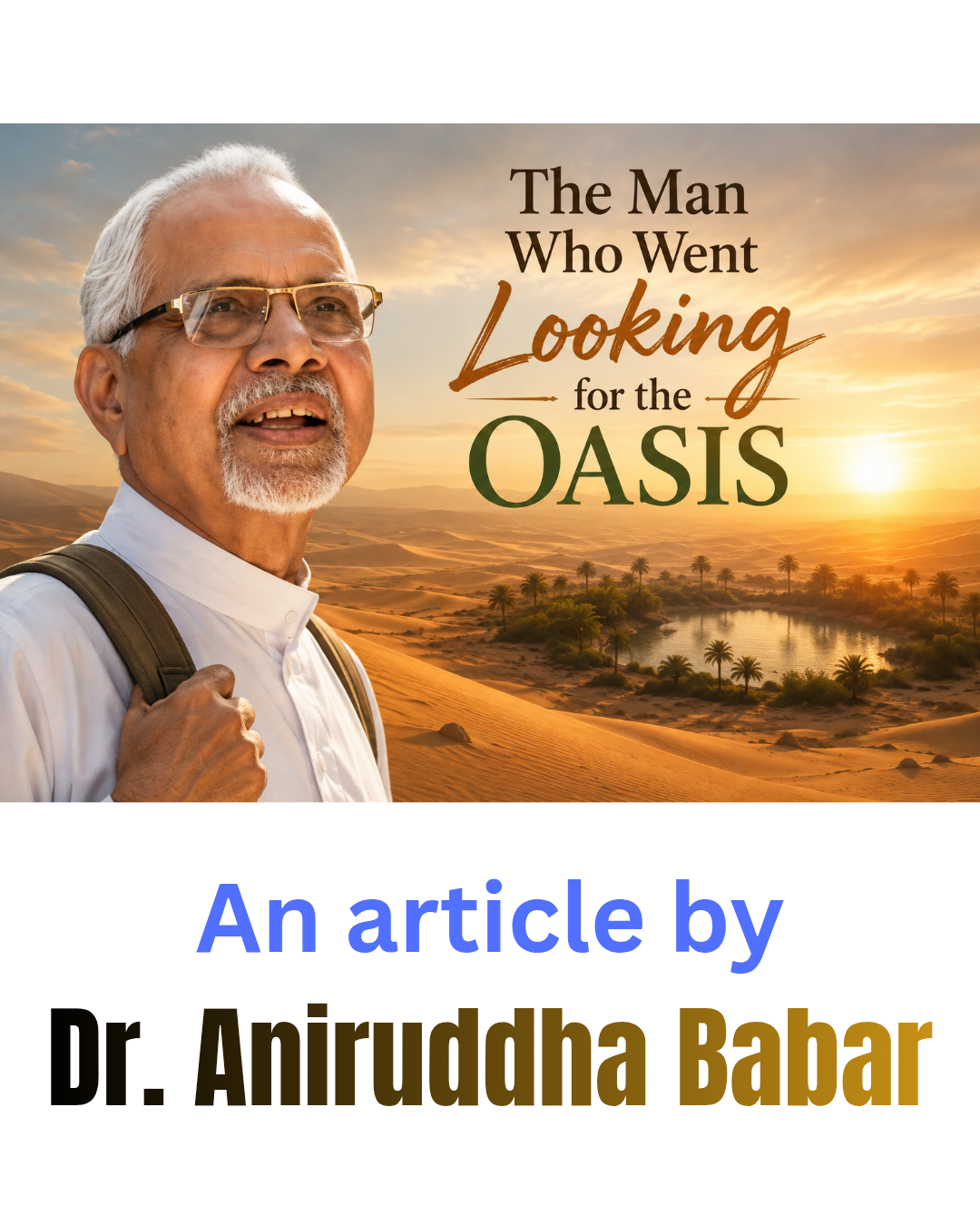
Some people enter our lives through great events. Some arrive through classrooms, conversations or public occasions. Some enter quietly, through a book placed in our hands by someone we love. Father Francis D’Britto entered my life in precisely that way. I was twelve when my father gifted me a Marathi book titled Oasischya Shodhat, In Search of an Oasis, on the occasion of my birthday. I remember the book, I remember my father giving it to me and I remember the name printed on its cover: Father Francis D’Britto. At twelve, I knew nothing about the man behind the name. I simply received a book from my father. I could not have known then that the name on its cover would remain with me for decades.
Oasischya Shodhat was first published in February 1996. The book grew out of D’Britto’s journey to Europe and his search for the foundations of human existence. He travelled through European countries, met people and listened to their experiences. Their lives became part of his own reflection. The journey became an encounter with people, their suffering and the questions that accompany human existence.
The title has acquired a different meaning for me with the passage of time. An oasis is a place where life gathers in the midst of a difficult landscape. As one grows older, one discovers that deserts are not always made of sand. They can exist in loneliness, indifference, injustice or the absence of compassion. We encounter our oases in unexpected places: in books, in friendship, in faith, in nature and sometimes in the presence of another human being.
Years later, as a first year college student, I met Father D’Britto personally on several occasions in Vasai. The name I had first encountered on a birthday gift became the name of a person I could speak with, sit with and remember. I came to know his warmth, simplicity, intellectual depth and genuine concern for people. His conversations stayed with me. His manner of listening stayed with me. The man behind the book became someone whose presence I valued deeply.
What stayed with me most was the quality of his presence. Father D’Britto possessed the rare ability to make conversation feel like an invitation to think. He could speak about faith without making it narrow, about society without making it abstract and about literature without making it distant from ordinary life. There was an openness in his intellectual world that encouraged one to look beyond inherited boundaries and listen to the human being standing before us. Perhaps that was the real meaning of the oasis he spent his life seeking: a place within the human heart where knowledge becomes wisdom, faith becomes compassion and conviction becomes a selfless service.
When I first set foot on the campus of St. Joseph College, Ukhrul as a Professor of Political Science my first experience of a Catholic academic institution immediately brought Father Francis D’Britto to my mind. I found myself thinking of a man who brought together faith, scholarship, literature, social responsibility and a deep concern for the human person. Standing in a place dedicated to the education of young minds, I felt a connection with the values he represented. For me, education has always carried a larger national purpose: to cultivate informed and compassionate citizens who understand the diversity of India, respect its plural character and place their knowledge, conscience and abilities in the service of the nation. Father D’Britto’s life reminds me that education becomes meaningful when learning shapes character, character leads to service and service contributes to the common good.
To understand Father D’Britto, one must understand his relationship with Vasai. He was born on 4 December 1942 to Marathi speaking parents in the Vasai region and remained deeply connected to its people, culture and landscape. He studied at St Pius College in Goregaon and later pursued theological studies in Rome. He served as a priest in Vasai and became one of the region’s most recognisable literary and public voices.
Vasai, around 60 kilometres north of Mumbai, has a distinctive historical and cultural character. It was once under Portuguese rule and developed a deep Christian presence that became intertwined with the local Marathi world. The Vasai Diocese has a long history and the region remains home to numerous churches and a substantial Christian population. This meeting of Christianity, Marathi language and local culture formed an important part of the world in which Father D’Britto grew up and worked.
Vasai was more than the place where he lived. Its villages, farms, churches, wetlands and people became part of his life and eventually part of his public work. He saw the changing landscape around him and understood that the future of a place was inseparable from the lives of its people.
Maharashtra carries within its history a remarkable tradition of social reformers, warriors, public intellectuals, spiritual thinkers and leaders who devoted their lives to shaping society and expanding human possibilities. Chhatrapati Shivaji Maharaj gave the idea of Swarajya a powerful political and ethical expression. The Bhakti saints brought devotion, compassion and spiritual fellowship into the lives of ordinary people. Jyotirao and Savitribai Phule made education a powerful instrument of social emancipation. Justice M. G. Ranade advanced social and institutional reform through scholarship and public life. Chhatrapati Shahu Maharaj used state authority to open access to education and opportunity for downtrodden and untouchables. Maharshi Dhondo Keshav Karve dedicated his life to women’s education and social advancement. Dr B. R. Ambedkar transformed the struggle for human dignity into a constitutional vision of equality, liberty and justice. Together, these remarkable lives form an inspiring inheritance of courage, intellect, compassion, public service and social responsibility. They remind every generation that a meaningful life can become a force for the advancement of society.
It was within this larger cultural inheritance that Father D’Britto found his own place. His source was Christian faith, his language was Marathi and his field of engagement was society. He became part of Maharashtra in which literature, spirituality and public responsibility have long crossed paths.
That responsibility found one of its strongest expressions in language. D’Britto wrote in Marathi as someone who regarded the language as a home. His bibliography encompasses literary, religious, intellectual, biographical and travel writing. Among his works are Parivartanasaathi Dharma (Religion for Transformation), Tejachi Paaule (Footsteps of Light), Oasischya Shodhat (In Search of an Oasis), Khristachi Goshta (The Story of Christ), Mulanche Bible (The Children’s Bible), Khristi San ani Utsav (Christian Festivals and Celebrations), Srujanacha Mohar, Parvatavaril Pravachan (The Sermon on the Mount), Sangharshayatra Khristabhumichi (A Journey Through the Land of Christ), Pope Dusre John Paul: Jeevangatha (Pope John Paul II: A Life Story), Tarang (Waves), Srujanacha Mala, Nahi Mi Ekala (I Am Not Alone) and Anahat Christ.
The range of these books tells us something about the man. He wrote about travel, faith, society, people, history and the questions that trouble the human mind. His travel writing took him towards unfamiliar places. His literary prose explored feelings and experiences. His intellectual works examined religion and society. His spiritual writings explored faith. His biographies entered the lives of other people.
His books trace a long journey of thought. A place led him to a person. A person led him to a question. A question led him to reflection. Reflection led him towards faith, society, history and human responsibility.
Perhaps that is why Oasischya Shodhat was such a fitting first book through which I encountered him. He travelled, but he also listened. He observed, but he also allowed the experiences of people to touch him. He travelled through Europe, while his attention remained fixed on the human being. The journey across countries became a journey into the human heart.
His relationship with Marathi became still more significant through his editorship of Suvarta. He served as its chief editor from 1983 to 2007. Through the publication, he addressed questions of religion, society, culture and public life, helping it acquire a wider social and literary significance within Marathi Catholic life..
His Christianity was deeply rooted in the Marathi world in which he lived. He engaged with the spiritual inheritance of Maharashtra and with figures such as Sant Tukaram. His faith gave him a foundation from which he could engage with literature, society, culture and public life.
His work on the Bible brought his relationship with language and faith into sharp focus. Subodh Bible Nava Karar, his Marathi translation of the New Testament, received the Sahitya Akademi Translation Prize for 2013, formally recognised in 2014. He worked on the project for nearly fifteen years.
The complete Subodh Bible became an ambitious effort to bring the Bible closer to Marathi readers. The work included extensive introductory material, explanations of difficult Biblical concepts, photographs and maps. It was intended to make the text more accessible to readers within the Marathi linguistic and cultural world.
Such translation requires patience, scholarship and a deep understanding of two cultures. Words have histories. Ideas have histories. Religious texts carry landscapes, customs, memories and ways of seeing the world. D’Britto worked to bring that world closer to Marathi readers. His translation became a meeting place between Biblical tradition and Marathi language.
His literary work received important recognition. He became the first Catholic priest to receive the “Dnyanoba-Tukaram Puraskar”, an honour instituted for literary contribution. He also received the Maharashtra Government’s literary award for best translation in 2013, followed by the Sahitya Akademi Translation Prize.
His other books show the same breadth. Anahat Christ explored Christ through the Biblical narrative and questions of human existence. Pope Dusre John Paul: Jeevangatha examined the life and personality of Pope John Paul II. Nahi Mi Ekala turned towards his own life and the people and experiences that shaped him. His bibliography reveals a writer constantly moving between the personal and the universal.
It would therefore be difficult to remember Father D’Britto through a single description. He wrote travel literature, literary prose, intellectual works, spiritual works and biographies. He translated. He edited. He spoke. He entered public life. Through all of it, he remained deeply interested in people and in the questions that give human life meaning.
His writing eventually led him into public action. In Vasai, the landscape he loved was changing rapidly. Agricultural land, wetlands, villages and green spaces faced increasing pressure from urbanisation. D’Britto became a leading figure in the Harit Vasai movement and headed the Harit Vasai Sanrakshan Samiti, campaigning to protect the region’s villages, farms, forests, fishing grounds and wetlands from uncontrolled urban development.
For him, environmental protection was about people. A field meant livelihood. A wetland meant ecological balance. A water body formed part of a community’s life. A landscape carried memory. His concern for nature was therefore also a concern for the people who belonged to that landscape..
He was willing to take his convictions beyond books and into public life. He organised, persuaded and stood with citizens. His faith found an expression in service to the community. His concern for creation became a concern for the land and people of Vasai.
His public positions also brought difficulties. His environmental activism placed him in opposition to powerful interests. His election as president of the Marathi literary conference also drew opposition, including objections from some conservative voices. D’Britto responded with characteristic calm, defending democratic freedom of expression while insisting that disagreement should remain thoughtful and within the law. He said plainly that he was an Indian Christian and proud of both parts of his identity.
That sentence deserves to be remembered because it captures something essential about him. His identity was not a problem to be solved. He carried his Christianity, his Marathi language, his Maharashtra and his Indian soul together.
In September 2019, Father D’Britto was unanimously elected president of the 93rd Akhil Bharatiya Marathi Sahitya Sammelan, held at Osmanabad in January 2020. His election was significant because a Catholic priest from Vasai had been entrusted with one of the most prominent positions in Marathi literary life.
For me, Father D’Britto’s election as president of the 93rd Akhil Bharatiya Marathi Sahitya Sammelan carried a deeply personal resonance. The writer whose name I had first encountered on a birthday book at twelve had become a major figure in Marathi literary life, and I had been fortunate enough to know him personally in Vasai. His public stature mattered to me, while my strongest memories remained those of the person I encountered in conversation.
His presidential address in Osmanabad also revealed the breadth of his civic imagination. He spoke of the importance of keeping one’s scripture in one hand and the Constitution in the other. For a priest and writer, it was a striking formulation of citizenship: faith could remain deeply personal while constitutional responsibility belonged equally to every citizen.
I remember receiving a call from my mother on 25 July informing me of Father Francis D’Brito’s death. The news immediately brought back the book my father had given me on my twelfth birthday and the name I had first read on its cover. I thought of the years that had passed since then and of the occasions on which I had met Father D’Britto personally in Vasai. A childhood memory and an adult relationship seemed to meet in a single moment.
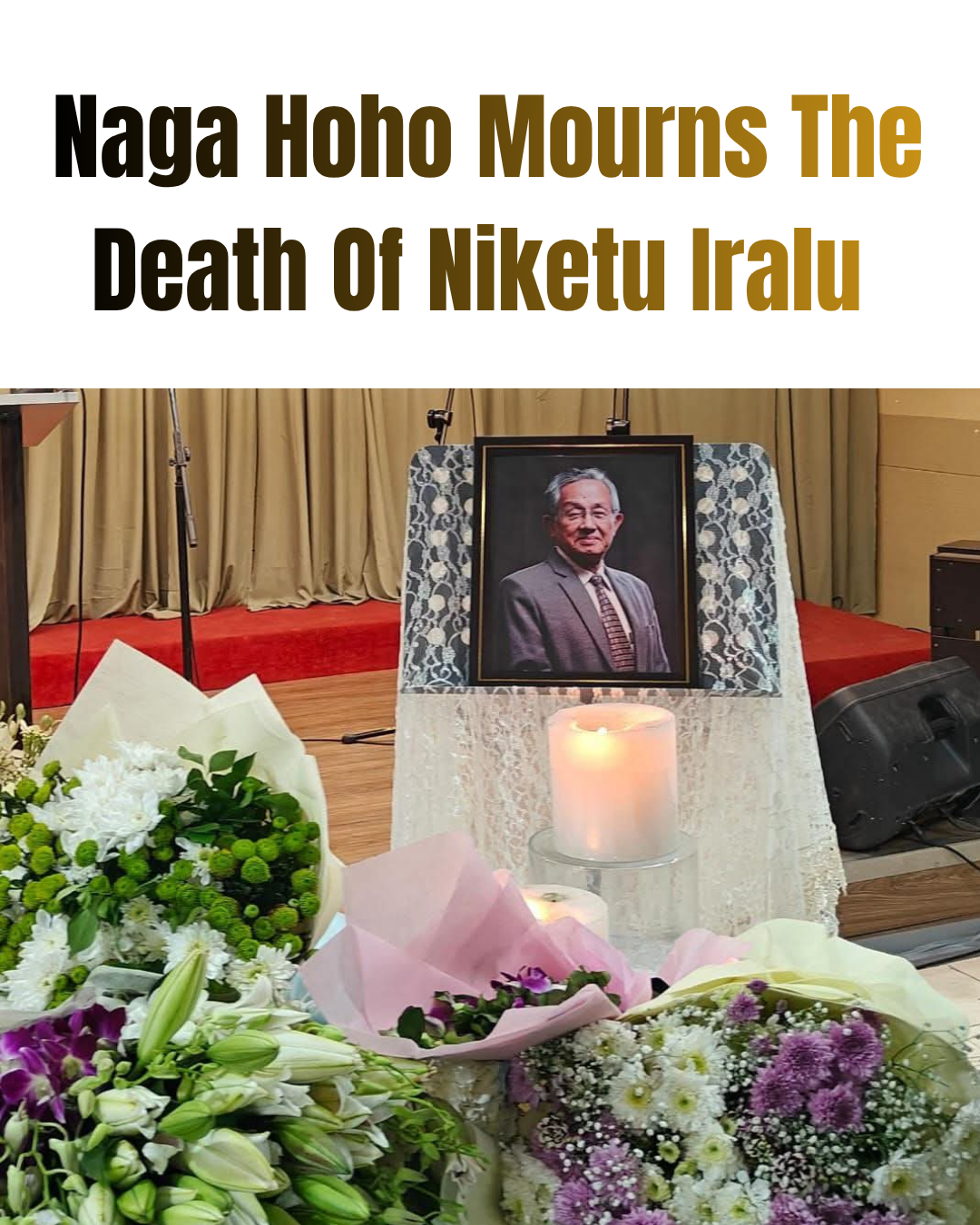
Father D’Britto died at his home in Vasai on 25 July 2024 at the age of 81 after a prolonged illness. He left behind a body of literary work, a major contribution to Marathi Biblical translation, a record of environmental activism and a lasting place in Maharashtra’s literary and public life. He was among the progressive leaders of Maharashtra.
For me, those achievements can never fully contain the person I knew. His books reveal the breadth of his mind. His literary work reveals his imagination. His environmental work reveals his courage. His public life reveals his convictions. My meetings with him revealed the warmth of the human being behind all these achievements.
He became one of those extraordinary men who opened the doors of my heart.
That is the memory I carry.
Perhaps this is why I continue to return to the book my father gave me. Oasischya Shodhat began with a question about the foundation of human existence. D’Britto went looking for the answer across Europe, meeting people and allowing their lives to enter his own journey. For me, the journey eventually became personal. The book introduced me to a writer. The writer became someone I met. Those meetings became memories. Those memories became part of my own life.
Perhaps, in the end, Father D’Britto’s life leaves me with a thought larger than literature, religion or even memory. He showed that a person can be deeply rooted in a faith, a language and a place while carrying an affection large enough to embrace an entire nation. He was a Christian priest, a Marathi writer, a son of Maharashtra and a servant of people. All these identities lived together in him.
That, to me, is the beauty of India. We do not have to erase where we come from to belong to the larger whole. We carry our languages, our faiths, our histories and our memories into the great Indian
story. A nation becomes truly strong when its people can remain deeply rooted and yet keep their hearts open to one another. Father D’Britto’s call to rise above social and religious divisions and place humanity at the centre therefore feels deeply relevant to India. It is a message of citizenship as much as compassion, of belonging as much as humanity.
My father gave me that book when I was twelve. Years later, I met its author. I could not have understood the significance of that birthday gift then. I understand it differently today. Some books remain on shelves. Some remain in memory.
And some introduce us to people who become part of our lives. For me, Oasischya Shodhat did exactly that.
Father Francis D’Britto remains in my memory as the man whose name first came to me through a book and whose presence later became part of my life. Perhaps that is the most fitting oasis he left behind.
(Dr. Aniruddha Babar is a Senior Academician, Public Policy Expert & Social Development Specialist, Writer, and Researcher currently serving in the Department of Political Science, St. Joseph College, Ukhrul, Manipur. He is also the Co-Founder and Deputy Director of the Centre for North-East Development and Policy Research (CNEDPR), St. Joseph College, Manipur.)