
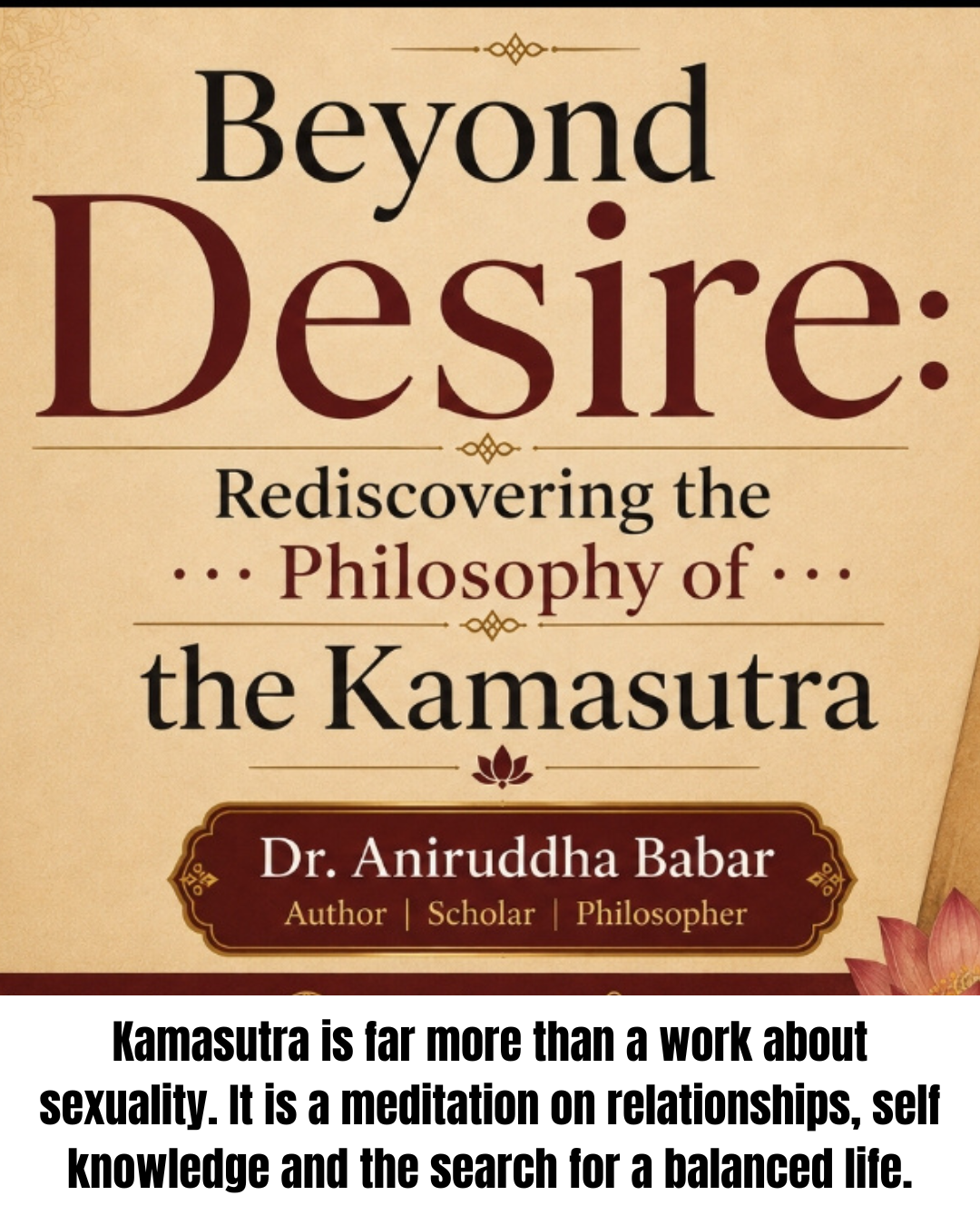
Growing up, I spent countless afternoons in my parents’ small library, where shelves were filled with well worn books collected over many years. It was my favourite corner of the house. I would pull out one book after another, often choosing them simply because the title caught my attention. One day, among books on history, philosophy and literature, I came across a copy of the Kamasutra. I remember holding it with curiosity and a little hesitation, sensing that it was different from the others. At the time, I was too young to understand its significance, so I placed it back on the shelf. Years later, I found the same book again and read it with a more mature mind. To my surprise, it was far more than its popular reputation suggested. I discovered a thoughtful exploration of love, companionship, human relationships and the art of living. That unexpected rediscovery remains one of the most memorable reading experiences of my life.
Every great book waits patiently for the right moment in a reader’s life. The words remain unchanged, yet the reader returns transformed. Perhaps no other classical work has been so widely known and so rarely understood.
Like many readers, I had grown up with the common belief that the Kamasutra was simply an ancient book about sex. Popular culture had reduced it to that single idea, leaving little room for its philosophical depth. Reading it carefully revealed something very different. Beneath its fame lay a rich reflection on human relationships, emotional intimacy, aesthetics, companionship and the place of desire within a balanced life. It encouraged me to think about sexuality with seriousness, curiosity and an open mind.
Behind one of history’s most misunderstood books stands one of India’s least understood philosophers. Vātsyāyana, the scholar traditionally credited with composing the Kamasutra, is generally believed to have lived in India between the third and fifth centuries CE, although the precise dates of his life remain uncertain. Very little is known about him as a historical figure, and there is no reliable evidence to confirm whether he was married. In the closing passages of the Kamasutra, he describes himself as living the disciplined life of a religious student while composing the work, a statement that has led some scholars to suggest that he may have been celibate at that time. Whatever his personal circumstances, his lasting contribution lay in bringing together earlier traditions on love, relationships, courtship and the pursuit of pleasure into a systematic treatise. The Kamasutra extends far beyond sexuality, offering reflections on companionship, marriage, aesthetics, social conduct and the place of desire within a balanced and ethical life. More than fifteen centuries after it was written, it continues to be studied as one of the major works of classical Indian thought.
To understand the Kamasutra, it is important to appreciate the wider framework of classical Indian philosophy. Hindu thought describes four Puruṣārthas, or aims of human life: dharma (ethical duty), artha (material well being), kāma (love, pleasure and desire) and moksha (spiritual liberation). Vātsyāyana did not present pleasure as an invitation to excess. He understood kāma as one dimension of a balanced life, guided by ethical responsibility, wisdom and social order. Within this framework, desire is neither glorified nor condemned. It is recognised as a natural part of human life that should exist in harmony with moral duty, material well being and the search for spiritual fulfilment.
The Kamasutra has travelled a long and unusual journey. It has been translated into dozens of languages, studied by historians, philosophers, literary scholars and social scientists, and debated across cultures. Yet its public image has remained remarkably narrow. For many people, its title immediately evokes sexuality, while its broader reflections on relationships, ethics and social life remain largely overlooked. Few classical works have attracted such widespread recognition while being so selectively understood.
A careful reading quickly dispels the popular belief that the Kamasutra consists mainly of descriptions of physical intimacy. Much of the work discusses courtship, choosing a partner, marriage, household life, friendship, social conduct and the responsibilities that accompany relationships. The well known descriptions of sexual positions form only one part of a much broader exploration of human relationships and the art of living. The work asks readers to understand people before it asks them to understand desire.
One of the striking features of the modern world is that conversations about sexuality often swing between silence and sensationalism. Commercial advertising, films, digital platforms and popular entertainment frequently use sexual imagery to attract attention, yet thoughtful discussions about intimacy, emotional responsibility and mutual respect remain comparatively uncommon. The Kamasutra approaches the subject from a different direction. It treats love, desire and companionship as subjects worthy of careful reflection and disciplined understanding.
India’s relationship with the Kamasutra is itself an interesting subject of reflection. The civilisation that produced the Kamasutra, the temple sculptures of Khajuraho and Konark, and a rich tradition of literature on love and aesthetics also witnessed periods in which public conversations on sexuality became increasingly restrained under changing social, political and colonial influences. As a result, many people today encounter the Kamasutra through modern myths rather than through the text itself. Rediscovering it requires setting aside inherited assumptions and reading it within the intellectual world from which it emerged.
Perhaps the greatest challenge presented by the Kamasutra is not whether one agrees with every aspect of its contents. Its deeper invitation is to approach one of the most intimate dimensions of human life with maturity, honesty and intellectual curiosity. Human relationships shape families, communities and societies. They influence happiness, stability and emotional well being. A civilisation that could discuss these questions openly and philosophically still has something worth saying to the present generation.
Among all human experiences, few have inspired as much curiosity as sexuality. It has shaped civilisations, influenced literature, inspired art and challenged philosophers across centuries. Every society has attempted to understand its place in human life because sexuality reaches far beyond biology. It touches emotions, relationships, family, identity and culture. It reveals how human beings connect with one another in ways that words alone often cannot express.
Because sexuality is a universal aspect of human life, every major civilisation and religious tradition has sought to understand and regulate it. Hindu thought, reflected in the Kamasutra, recognises kāma, or desire, as one of the recognised aims of human life when guided by ethics and self restraint. Christianity generally teaches that sexual intimacy is a sacred gift from God, intended for the covenant of marriage and expressed through love, fidelity and mutual self giving. Islam likewise regards sexual relations within marriage as lawful and honourable. The Qur’an describes spouses as “garments” for one another, a metaphor understood by many scholars as expressing intimacy, protection, dignity and mutual comfort. Islamic teaching also places strong emphasis on modesty, mutual rights and responsibilities between spouses and the protection of family life. Although these traditions differ in their theological foundations and moral teachings, they share the conviction that sexuality carries ethical responsibilities and should contribute to loving relationships, stable families and the well being of society.
The significance of the Kamasutra lies in its refusal to isolate sexuality from the rest of life. It views intimacy as one part of a larger philosophy of living. Love, friendship, conversation, emotional understanding, mutual respect and social responsibility belong to the same moral landscape. Physical intimacy acquires meaning through the quality of the relationship that surrounds it. Every embrace carries the history of shared experiences, trust and affection built over time.
Desire is one of the oldest forces in human existence. It begins with curiosity and admiration. It grows through conversation, shared experiences and emotional closeness. Attraction opens the door, while trust invites people to walk through it together. Love develops gradually through everyday acts of kindness, patience and understanding. Intimacy becomes the natural continuation of that emotional journey, reflecting the confidence that two people place in one another.
The human body holds deep philosophical meaning. It carries memory, emotion and identity. It celebrates joy, expresses grief and communicates affection. A gentle touch offers reassurance. A warm embrace provides comfort. A loving presence eases loneliness. Through the body, emotions become visible and relationships acquire another form of expression. Physical intimacy belongs to a larger language of human communication.
Every meaningful relationship rests upon trust. Trust cannot be demanded. It develops through honesty, reliability and emotional openness. It grows through countless ordinary moments that strengthen confidence between two individuals. Every promise honoured, every act of kindness remembered and every difficulty faced together deepens that invisible bond. Physical intimacy reflects this accumulated trust and gives it another form of expression.
Love matures through companionship. Shared conversations become shared memories. Shared struggles become shared strength. Shared dreams create shared purpose. Relationships grow through ordinary moments that gradually shape a shared life. Affection deepens through presence, encouragement and consistency. Time strengthens understanding and transforms attraction into lasting companionship.
The Kamasutra also recognises the importance of beauty in human life. Beauty awakens admiration and enriches emotional experience. Beauty appears in kindness, compassion, generosity, wisdom and gentle conduct as much as it appears in physical appearance. Character gives depth to attraction. Emotional maturity strengthens affection. Loyalty builds confidence. Compassion nurtures intimacy. Together these qualities sustain relationships throughout life.
The philosophy of the Kamasutra continues to invite reflection in the modern world, yet every reading of a classical work should also be informed by contemporary ethical principles. Today, mutual consent, personal autonomy and respect for human dignity are widely recognised as essential foundations of healthy relationships. Reading the Kamasutra through this lens allows its reflections on companionship and intimacy to remain meaningful while affirming values that are central to modern society.
Like every classical text, the Kamasutra reflects the society in which it was written. Some discussions on social hierarchy, gender roles and customs belong to ancient India and should be understood within their historical context. They should neither be ignored nor treated as universal standards for every age. At the same time, its reflections on companionship, communication, mutual respect, emotional understanding and the search for a balanced life continue to resonate across cultures and generations. Distinguishing between timeless insights and historically specific ideas allows modern readers to appreciate the work with both intellectual honesty and historical awareness.
Another reason the Kamasutra continues to attract scholarly attention is that it offers a window into the social world of ancient India. Alongside its reflections on love and intimacy, it discusses education, marriage, family life, urban society, friendship and the customs that shaped everyday relationships. For historians, literary scholars and philosophers, it remains an important source for understanding how people in classical India thought about human relationships and social life.
The work also presents women as participants in many aspects of courtship, marriage and domestic life, although its discussions naturally reflect the customs and social expectations of the period in which it was written. Modern readers may disagree with some of those assumptions, yet the text repeatedly returns to the importance of mutual affection, understanding and companionship. Reading it today requires recognising both its historical setting and the insights that continue to speak across time.
Perhaps the greatest contribution of the Kamasutra lies in its insistence that intimacy cannot be separated from character. Desire without respect is incomplete. Affection without trust is fragile. Companionship without understanding cannot endure. Vātsyāyana invites readers to see love as a discipline that calls for patience, self knowledge, emotional maturity and consideration for another person.
This perspective explains why the Kamasutra has remained relevant for centuries. It is more than a manual on physical intimacy. It is a philosophical reflection on how human beings build meaningful relationships and how those relationships contribute to a balanced and fulfilling life. Read in its entirety, the work challenges many popular assumptions and reveals a thoughtful conversation about love, ethics and the responsibilities that accompany human desire.
With these ideas in mind, the Kamasutra can be appreciated not simply as an ancient Sanskrit text but as a work that continues to encourage reflection on the values that sustain healthy relationships. Its questions remain familiar because every generation seeks to understand love, desire, companionship and the search for a life lived with wisdom, dignity and mutual respect.
Communication remains one of the greatest expressions of love. Listening communicates respect. Honest conversation builds confidence. Gentle words offer comfort during moments of uncertainty. Gratitude strengthens emotional bonds. Forgiveness restores harmony after disagreement. Every meaningful conversation deepens companionship because understanding grows through patient dialogue. Emotional intimacy develops whenever two people feel heard, valued and accepted.
Equality gives dignity to love. Every healthy relationship flourishes through mutual respect, emotional freedom and shared responsibility. Affection grows where both individuals feel secure, appreciated and valued. Happiness becomes a shared experience because each person’s well being naturally becomes important to the other. Genuine intimacy strengthens the dignity of both individuals and creates relationships marked by confidence and emotional security.
Patience allows love to flourish naturally. Every individual carries different experiences, hopes and fears. Every relationship develops according to its own rhythm. Emotional closeness grows through time, understanding and continued presence. Confidence emerges gradually as trust deepens through repeated acts of care. The strongest relationships are built through ordinary days shared with commitment, consistency and quiet acts of affection.
Self discipline also occupies an important place within the philosophy of intimacy. Emotional awareness encourages thoughtful choices. Patience gives direction to affection. Wisdom protects relationships from impulsive decisions. Responsibility strengthens commitment. Love grows steadily whenever people choose understanding, generosity and compassion. These choices shape the emotional quality of shared life.
Physical intimacy reveals the openness that exists between two people who trust one another completely. In those moments, human beings experience acceptance, vulnerability and emotional closeness together. Every gesture expresses confidence. Every embrace reflects companionship. Every act of affection carries emotional meaning beyond physical sensation. Human intimacy becomes one of the clearest expressions of mutual trust and shared belonging.
The passage of time transforms every relationship. Youth gradually gives way to maturity. Excitement evolves into confidence. Familiarity develops into deep companionship. Shared experiences become treasured memories. Love acquires greater richness with every stage of life because understanding continues to grow. Couples who journey together through decades often discover that affection becomes calmer, steadier and deeper as the years pass.
One of the greatest lessons offered by the Kamasutra is that love is learned. It develops through observation, patience, sensitivity and continuous self improvement. Every relationship invites people to become kinder, wiser and more understanding. Love shapes character because it teaches responsibility, generosity and emotional maturity. It encourages individuals to see the world through another person’s hopes, fears and aspirations.
The philosophy of the Kamasutra also reminds us that intimacy belongs to the wider experience of being human. It strengthens families, nurtures communities and enriches society by encouraging relationships built upon trust and mutual respect. Human well being depends not only upon material success or intellectual achievement but also upon the quality of the relationships that sustain everyday life. A society that values healthy relationships is better equipped to foster empathy, stability and social harmony.
In an age of instant communication, lasting relationships still depend upon qualities that no technology can replace: trust, honesty, patience, kindness and the willingness to understand another human being. These values remain as relevant today as they were when Vātsyāyana composed the Kamasutra. Human nature has changed far less than the world around it.
Perhaps the greatest misunderstanding surrounding the Kamasutra is that many people approach it expecting instruction about physical intimacy alone. They discover instead a work that reflects upon friendship, conversation, emotional intelligence, beauty, companionship and the responsibilities that accompany love. Its lasting value lies in recognising that the body, the mind and the emotions are deeply interconnected. The true legacy of the Kamasutra lies not merely in what it says about intimacy but in what it reveals about the human search for meaningful relationships.
Whenever I think back to my parents’ library, I remember far more than an old book resting on a shelf. I remember the curiosity of childhood and the joy of rediscovering forgotten pages years later. That rediscovery taught me that great books reveal themselves differently at different stages of life. I no longer remember the exact shelf on which I first found the Kamasutra. What I remember is the journey that began the day I finally opened it with an open mind.
Some books answer questions. A few teach us how to ask better ones. The Kamasutra belongs to the latter. Long after the myths surrounding it have faded, it continues to invite readers to reflect on love with wisdom, desire with responsibility, freedom with self discipline and intimacy with mutual respect. Perhaps that is why, after more than fifteen centuries, it still deserves to be read for what it truly is: one of the world’s most thoughtful reflections on the art of living with another human being.
Every civilisation leaves behind certain works that continue to speak long after the societies that produced them have changed. Their value lies not in providing permanent answers but in encouraging thoughtful questions. The Kamasutra belongs to this small group of classical texts. It reminds us that the study of love deserves the same seriousness that we give to politics, law, economics or religion because relationships shape every aspect of human life.
Its greatest lesson is perhaps its refusal to divide human existence into isolated compartments. Body and mind, reason and emotion, affection and responsibility, individual happiness and social well being all influence one another. A fulfilling life cannot be built by neglecting any one of them. The search for balance remains as relevant today as it was in ancient India.
The Kamasutra also challenges us to move beyond shallow assumptions. Books, like people, are often judged by reputation instead of careful understanding. A title becomes a stereotype. A civilisation becomes reduced to a single image. Genuine learning begins when curiosity replaces prejudice and careful reading replaces popular opinion.
For me, that lesson began in a silent corner of my parents’ library. What first appeared to be a mysterious book gradually became an invitation to think more deeply about love, companionship and the responsibilities that accompany freedom. Returning to its pages years later reminded me that maturity changes the reader as much as it changes the meaning of a book.
Whether one approaches the Kamasutra as literature, philosophy, history or cultural heritage, it offers an opportunity to reflect on questions that remain universal. How do we build trust? What sustains companionship over a lifetime? How should desire be guided by wisdom and ethical responsibility? These questions belong to every generation because they lie at the heart of the human experience.
In the end, the Kamasutra is far more than a work about sexuality. It is a meditation on relationships, self knowledge and the search for a balanced life. Read with historical awareness and an open mind, it continues to offer insights into the ways human beings seek love, express affection and create lives of meaning together.
Some books answer questions. A few teach us how to ask better ones. The Kamasutra belongs to the latter. Its lasting contribution lies not in the myths that surround it but in the invitation to understand ourselves and one another with greater wisdom, compassion and honesty.
(Dr. Aniruddha Babar is a Senior Academician, Public Policy Expert & Social Development Specialist, Writer, and Researcher currently serving in the Department of Political Science, St. Joseph College, Ukhrul, Manipur. He is also the Co-Founder and Deputy Director of the Centre for North-East Development and Policy Research (CNEDPR), St. Joseph College, Manipur.)
(The views and opinions in this article are solely those of the author and do not necessarily reflect the official stance of Rural Post)