
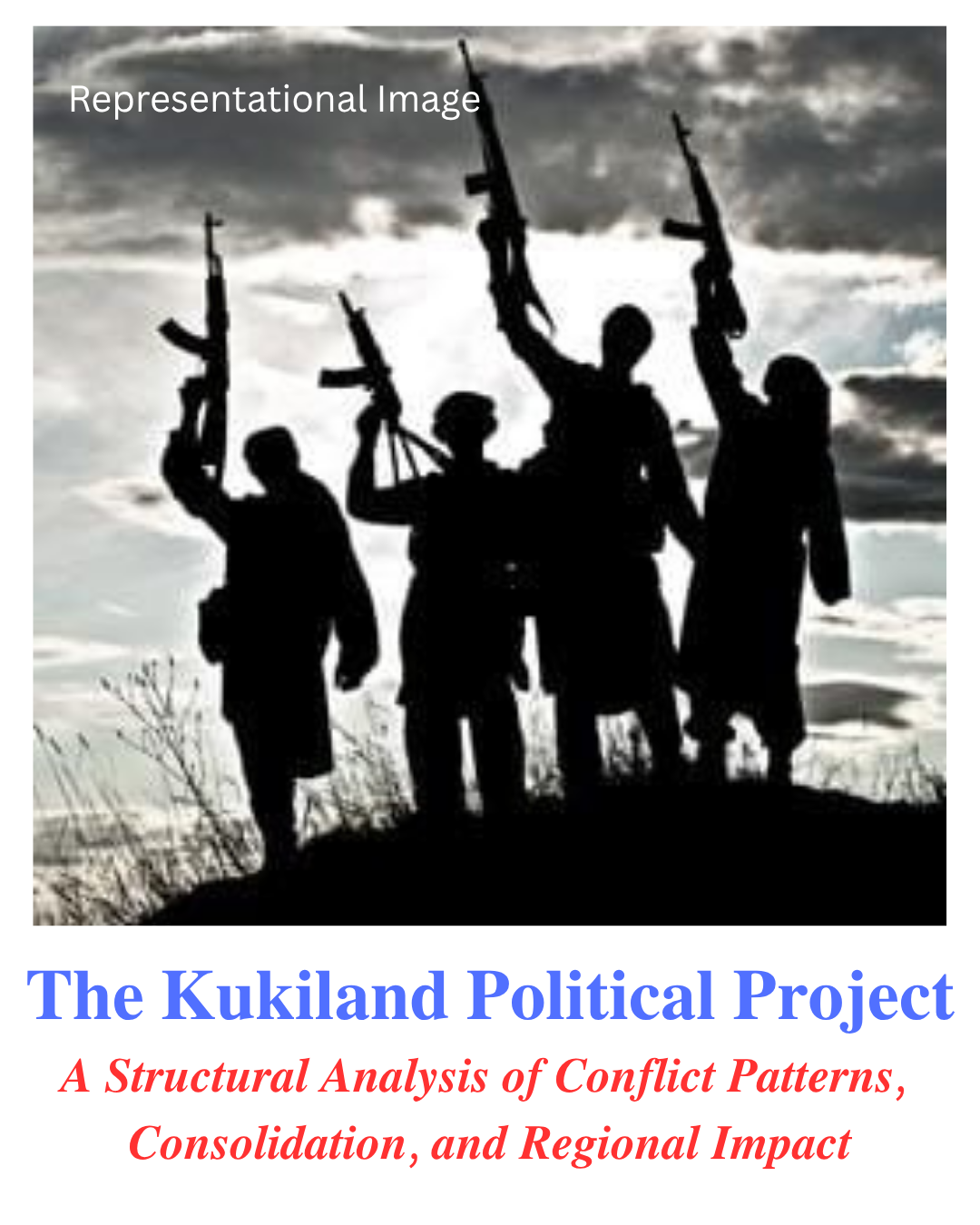
𝐓𝐡𝐞 𝐊𝐮𝐤𝐢𝐥𝐚𝐧𝐝 𝐏𝐨𝐥𝐢𝐭𝐢𝐜𝐚𝐥 𝐏𝐫𝐨𝐣𝐞𝐜𝐭
𝑨 𝑺𝒕𝒓𝒖𝒄𝒕𝒖𝒓𝒂𝒍 𝑨𝒏𝒂𝒍𝒚𝒔𝒊𝒔 𝒐𝒇 𝑪𝒐𝒏𝒇𝒍𝒊𝒄𝒕 𝑷𝒂𝒕𝒕𝒆𝒓𝒏𝒔, 𝑪𝒐𝒏𝒔𝒐𝒍𝒊𝒅𝒂𝒕𝒊𝒐𝒏, 𝒂𝒏𝒅 𝑹𝒆𝒈𝒊𝒐𝒏𝒂𝒍 𝑰𝒎𝒑𝒂𝒄𝒕
𝐈𝐧𝐭𝐫𝐨𝐝𝐮𝐜𝐭𝐢𝐨𝐧: 𝐓𝐡𝐞 𝐀𝐫𝐜𝐡𝐢𝐭𝐞𝐜𝐭𝐮𝐫𝐞 𝐨𝐟 𝐚 𝐏𝐨𝐥𝐢𝐭𝐢𝐜𝐚𝐥 𝐏𝐫𝐨𝐣𝐞𝐜𝐭
There are moments when patterns become visible. What appears as a series of isolated incidents, scattered grievances, and community‑specific tensions, when examined closely, reveals a coherent structure of political intent. This paper examines whether these incidents collectively reflect an underlying pattern.
For decades, communities across Northeast India have faced recurring conflicts involving Kuki militant groups. With Meiteis, Nagas, and Zeliangrong. With Paite (Zomi) and Karbi. Even within groups placed under the Kuki umbrella, such as the Thadou. Each episode has been treated as a localized or bilateral dispute. The Meitei community has addressed Meitei–Kuki violence. Tangkhul Nagas have focused on Tangkhul–Kuki tensions. Zeliangrong communities have confronted encroachment within their own territories. The Paite, Karbi, and Thadou have each grappled with Kuki militancy in isolation. The result is a cumulative fragmentation of response, and the absence of a unified analytical framework across affected groups.
This analysis draws on a combination of archival records, administrative documents, publicly reported incidents, and secondary research. It does not claim exhaustive coverage of all events but seeks to identify recurring structural patterns across time and regions. Where direct evidence is limited, observations are framed as reported trends or areas requiring further investigation.
This paper proceeds chronologically: from nineteenth‑century settlement and colonial frontier policy, through the 1917–1919 violence, post‑colonial administrative classification, insurgent consolidation after 1962, the conflict decade of the 1990s, the Suspension of Operations regime from 2008 onward, to the recent phases of diaspora mobilisation, foreign involvement, and digital warfare. Recognizing this shared structural dimension is essential for any meaningful analysis.
𝐂𝐨𝐥𝐨𝐧𝐢𝐚𝐥 𝐅𝐨𝐮𝐧𝐝𝐚𝐭𝐢𝐨𝐧𝐬: 𝐒𝐭𝐫𝐚𝐭𝐞𝐠𝐢𝐜 𝐒𝐞𝐭𝐭𝐥𝐞𝐦𝐞𝐧𝐭 𝐢𝐧 𝐭𝐡𝐞 𝐍𝐢𝐧𝐞𝐭𝐞𝐞𝐧𝐭𝐡 𝐂𝐞𝐧𝐭𝐮𝐫𝐲
Sir James Johnstone, Political Agent of Manipur (1877–1886), wrote: “The Kookies… were first heard of as Kukis, in Manipur, between 1830 and 1840” (Johnstone, 1896, p. 25). This places documented visibility within a specific colonial‑era context.
Administrative records indicate that, under British Political Agent Colonel William McCulloch, Maharaja Nara Singh permitted the settlement of Kuki groups in frontier regions around 1844. These settlements were located along vulnerable border zones, particularly adjoining Naga‑inhabited areas, aligning with documented British frontier management practices that relied on buffer populations in contested zones.
The 1881 census reflects this demographic composition: approximately 25,000 Kukis, including around 8,000 categorized as “Old Kukis” and approximately 17,000 identified as more recent arrivals.
The United Naga Council later summarized this historical process: “The advent of British rule… brought about… the planting of the Kuki tribe in the Naga hills” (UNC, 2018).
𝐑𝐞𝐚𝐬𝐬𝐞𝐬𝐬𝐢𝐧𝐠 𝐭𝐡𝐞 𝟏𝟗𝟏𝟕–𝟏𝟗𝟏𝟗 𝐔𝐩𝐫𝐢𝐬𝐢𝐧𝐠
The events of 1917–1919 are often described in Kuki narratives as an anti‑colonial uprising. Archival records present a more complex and contested picture.
On October 17, 1917, J.C. Higgins, President of the Manipur State Durbar, led a small force to Mombi village in response to the refusal of labour recruitment for World War I. When compliance was not secured, punitive action was taken, including the burning of the village.
What followed escalated into widespread violence. Available records, including administrative reports and later accounts, document attacks on multiple villages, including Naga settlements where significant civilian casualties occurred. Affected villages included Ngahui (Awangkasom), Goitang, Kharam, Makoi, Dailong, and Mongjarong Khunou, with varying levels of destruction and loss of life (Allen, 1893; Reid, 1942; Kharay, 2018).
Many of these attacks were directed at civilian settlements rather than British military positions. This distinction complicates interpretations that frame the events purely as anti‑colonial resistance.
The uprising involved multiple actors. Evidence indicates that individuals from the Meitei community were also involved in instigating or supporting resistance to state authority. When the conflict ended in 1919, approximately 1,000 firearms were surrendered, a substantial number of which were traced to Manipur State armouries.
𝐏𝐨𝐬𝐭-𝐂𝐨𝐥𝐨𝐧𝐢𝐚𝐥 𝐀𝐝𝐦𝐢𝐧𝐢𝐬𝐭𝐫𝐚𝐭𝐢𝐯𝐞 𝐑𝐞𝐜𝐨𝐫𝐝𝐬 𝐚𝐧𝐝 𝐂𝐥𝐚𝐬𝐬𝐢𝐟𝐢𝐜𝐚𝐭𝐢𝐨𝐧
Government of India documents show that between 1956 and 1973, relief funds were disbursed under the designation “Kuki Foreigner Refugees Fund” (Memo No. P3/9/66). These disbursements followed formal requests and were released in multiple phases. Such terminology reflects the official administrative classification of that period and how certain populations were formally categorized by the state.
Manipur State Darbar Standing Order No. 2 (1941) stipulated that Kuki settlements in Naga areas required permission from local village authorities and were subject to taxation. These classifications were not neutral; they shaped how identity and legitimacy were officially understood.
𝐏𝐨𝐬𝐭-𝐂𝐨𝐥𝐨𝐧𝐢𝐚𝐥 𝐂𝐨𝐧𝐭𝐢𝐧𝐮𝐢𝐭𝐢𝐞𝐬: 𝐄𝐚𝐫𝐥𝐲 𝐒𝐞𝐜𝐞𝐬𝐬𝐢𝐨𝐧𝐢𝐬𝐭 𝐌𝐨𝐯𝐞𝐦𝐞𝐧𝐭𝐬
The post‑independence period saw the emergence of organized political and militant movements. Tunkhopum Baite played a central role in early efforts to mobilize transnational ethnic identities across India, Myanmar, and Bangladesh. The Chin Liberation Army (1962) represented one such attempt at political consolidation through armed struggle.
Subsequent organizations, the Kuki National Army (KNA) and Zomi Revolutionary Army (ZRA), articulated similar territorial visions under different nomenclatures, such as Zalengam and Zogam. These early movements established the transnational ideological framework that continues today.
𝐀 𝐂𝐞𝐧𝐭𝐮𝐫𝐲 𝐨𝐟 𝐂𝐨𝐧𝐟𝐥𝐢𝐜𝐭: 𝐏𝐚𝐭𝐭𝐞𝐫𝐧 𝐀𝐧𝐚𝐥𝐲𝐬𝐢𝐬 𝐟𝐫𝐨𝐦 𝐭𝐡𝐞 𝟏𝟗𝟗𝟎𝐬
The documented timeline of conflicts involving Kuki militant groups across multiple regions reveals a recurring pattern that warrants systematic analysis.
1992–1997: Kuki vs Naga
The brutal Kuki‑Naga conflict of the 1990s left deep scars across Manipur’s hills. It began in June 1992 when a Kuki youth was kidnapped at Moreh Bazar and later found dead, leading to spiraling violence. Over the course of the conflict, approximately 1,000 Kukis and over 200 Nagas were killed, with more than 5,000 houses destroyed across both communities. The September 13, 1993 massacre at Joupi and surrounding villages, where over 100 Kuki villagers were killed, is commemorated annually as “Sahnit Ni” (Kuki Black Day).
1993: Kuki vs Thadou and the Identity Dimension
The same year saw conflict between groups that both fall under the broader “Kuki” umbrella. The Thadou community, the largest of the “New Kuki” tribes, has long resisted being subsumed under the Kuki label. This resistance predates the violence: on June 26, 1942, multiple tribes, including Hmar, Vaiphei, Gangte, Kom, Chiru, Anal, and Maring, met at Pamzal/Mongon‑on village and collectively rejected the imposition of the term “Kuki” upon them. The 1993 conflict reflected these unresolved tensions, with the Thadou Inpi Manipur (TIM) later asserting that “the peace‑loving Thadou people are the greatest victims of this violence, which is driven by a Kuki supremacist agenda.”
The Thadou Convention 2024 declared: “Thadou is not Kuki, or underneath Kuki, or part of Kuki, but a separate, independent entity.” In August 2025, during a meeting with Meitei civil groups in Imphal, TIM further clarified: “Historically and culturally, there is no community known as ‘Kuki’ indigenous to Manipur.” The Hmar community has similarly maintained a distinct identity, expressing unwillingness to be grouped under either “Kuki” or “Zomi.”
These internal contestations reveal a fundamental structural dynamic: elements within the Kuki political project operate through the imposition of a political label on diverse communities. Evidence suggests that groups resisting this classification have, in some cases, become sites of conflict.
1997–1998: Kuki vs Zomi (Paite)
The Kuki‑Zomi conflict of 1997–1998 was one of the most devastating inter‑ethnic conflicts in Manipur’s history. It began on June 24, 1997, when militants of the Kuki National Front (KNF) lined up 20 villagers in Saikul and shot them, killing nine and wounding four. The violence spiraled over the next fifteen months, with official records documenting 352 deaths, 136 injuries, and 4,670 houses destroyed. Over 50 villages were destroyed and approximately 13,000 people displaced.
The conflict was rooted in identity politics. Seven “New Kuki” tribes other than Thadou had formed the Zomi Re‑unification Organisation (ZRO) in 1995, with an armed wing called the Zomi Revolutionary Army (ZRA), causing unease among Kuki groups who began levying taxes on Zomi communities and demanding they accept the Kuki label.
The peace accord signed on October 1, 1998 explicitly stated: “That, the nomenclatures Kuki and Zomi shall be mutually respected by all Zomis and Kukis. Every individual or group of persons shall be at liberty to call himself or themselves by any name, and the nomenclature KUKI and ZOMI shall not in any way be imposed upon any person or group against his/their will at any point of time.” The agreement further stipulated that “no Kuki or Zomi militant shall indulge themselves in any forcible collection of funds, taxes etc., against their counterpart nomenclature.”
2000–2005: Kuki vs Karbi (Assam)
The conflict expanded beyond Manipur into Assam’s Karbi Anglong and Dima Hasao districts. The Karbi‑Kuki clashes of 2003–2004 resulted in an estimated 85 deaths, including at least 23 Kukis and 54 Karbis. On March 24, 2004, Kuki militants killed 34 Karbi tribals in separate incidents, claiming retaliation for earlier Karbi attacks. Between 2001 and 2015, Assam witnessed eight major ethnic clashes, with more than 500 persons killed and 1.5 lakh people rendered homeless.
2023: Kuki vs Meitei
The ethnic violence that erupted on May 3, 2023, marked a catastrophic escalation. The conflict followed a protest by tribal groups opposing Meitei efforts to attain Scheduled Tribe status. Violence rapidly spiraled, leaving over 260 people dead, more than 1,500 injured, and at least 70,000 displaced. Entire villages were razed, over 3,000 weapons were looted from police stations, and Meiteis living in the hills fled to the valley while Kuki‑Zos living in the valley were forced to the hills.
2026: Kuki vs Naga
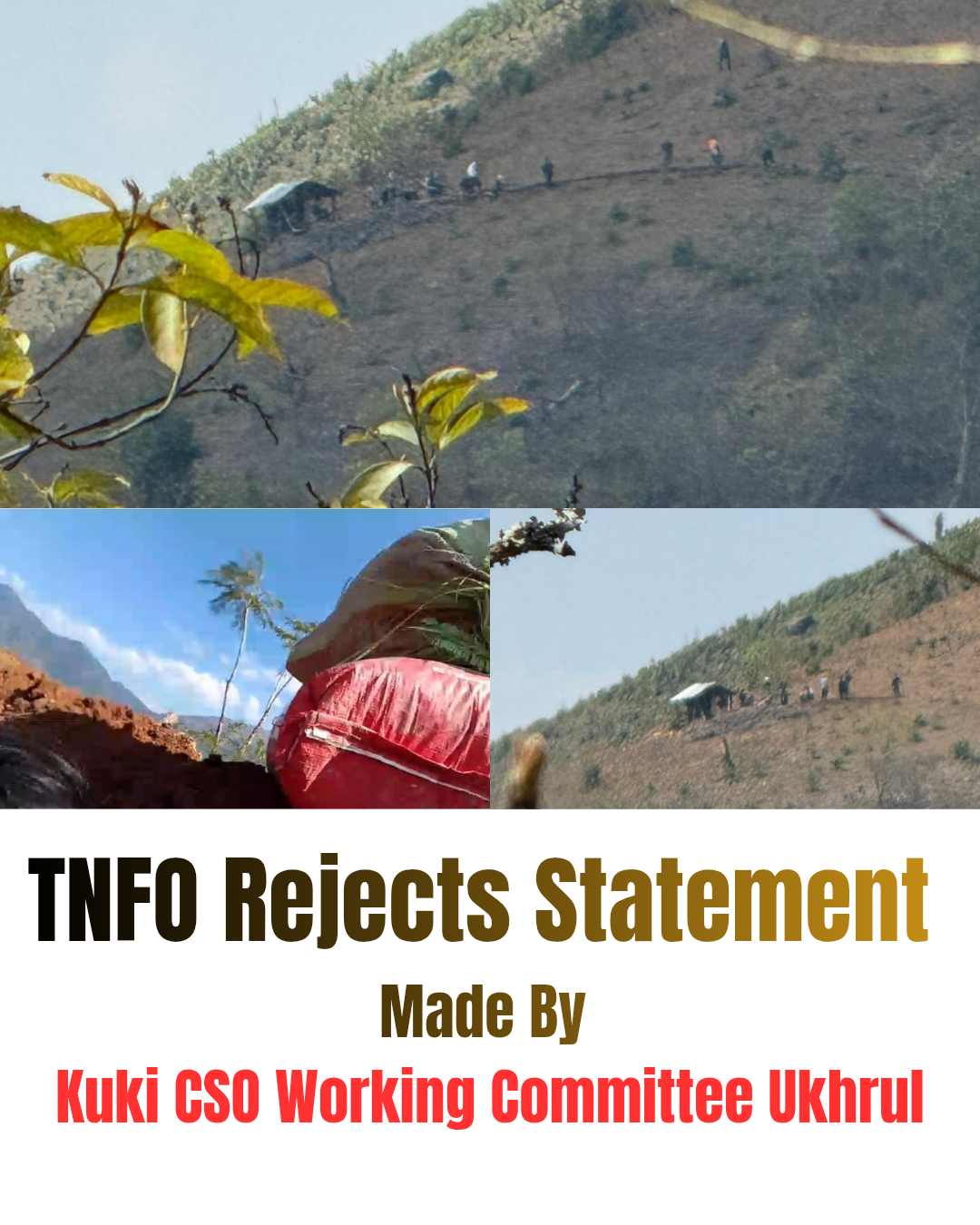
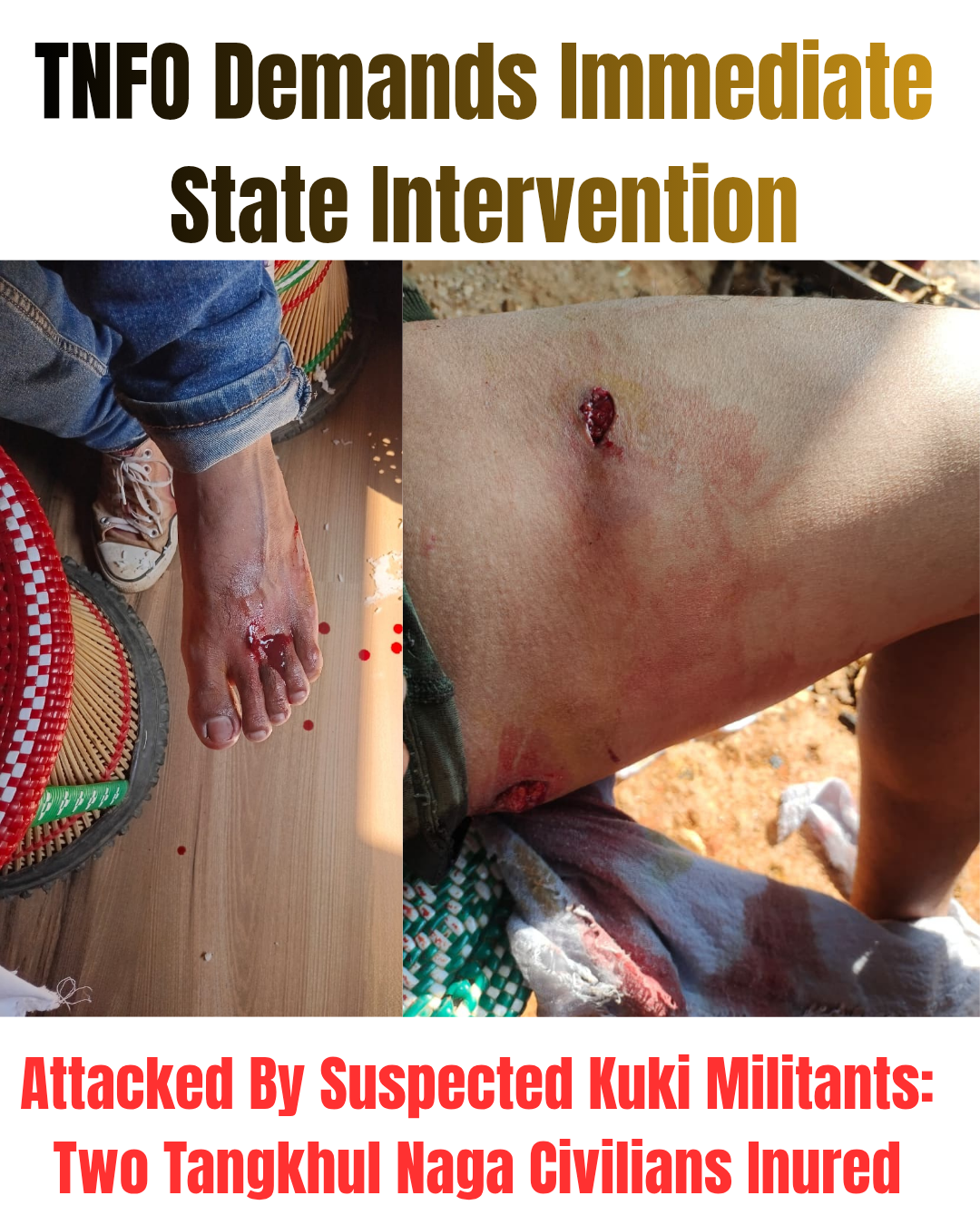
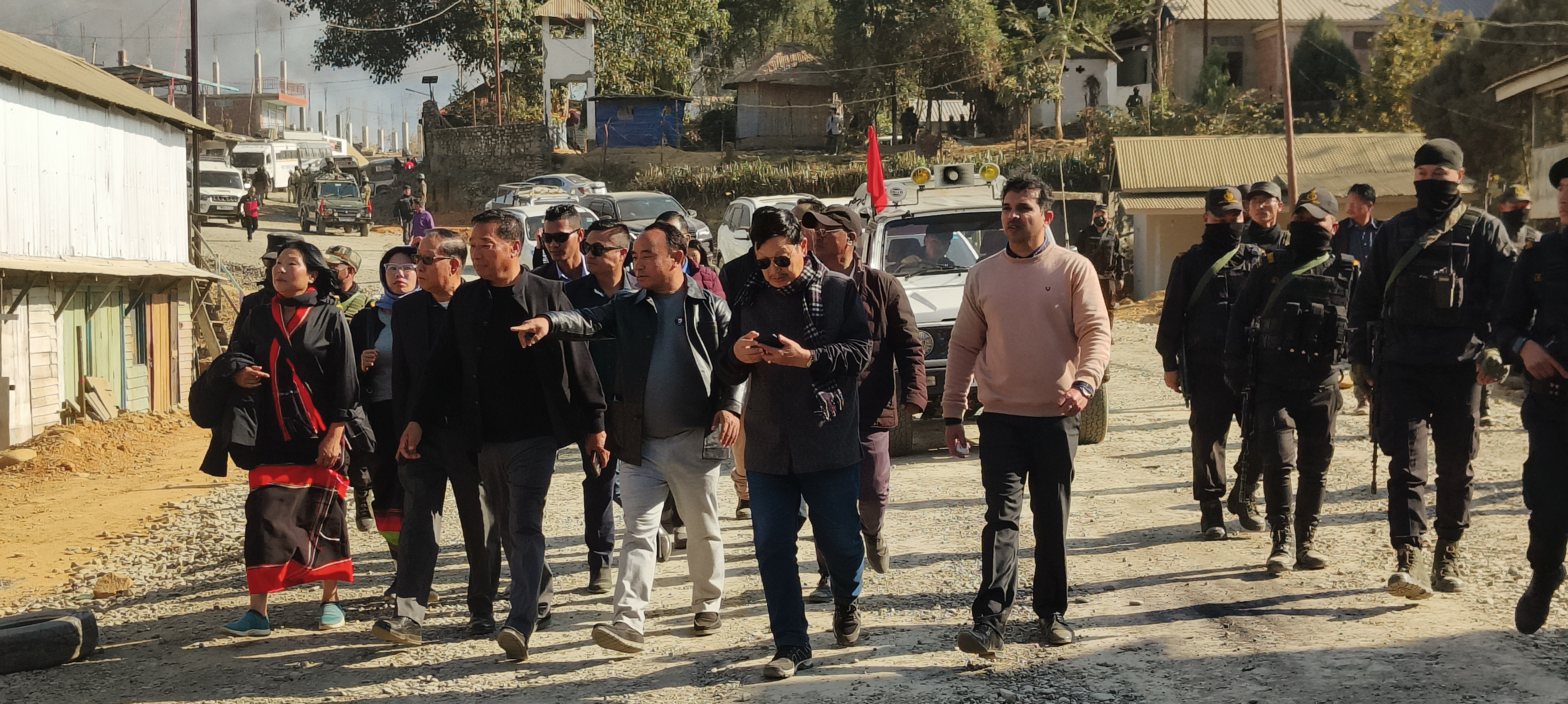
The current escalation began in February 2026 with clashes at Litan‑Sareikhong in Ukhrul district. On March 11, 2026, armed Kuki groups stopped three vehicles on the Imphal‑Ukhrul highway near Shangkai and abducted approximately twenty‑one Tangkhul Naga civilians. The captives remained in custody for hours despite the presence of security forces. By morning, two Kuki men, Thengin Baite (42) and Thangboimang Khongsai (35), were found dead near Thawai in Kamjong district.
𝐓𝐡𝐞 𝐒𝐮𝐬𝐩𝐞𝐧𝐬𝐢𝐨𝐧 𝐨𝐟 𝐎𝐩𝐞𝐫𝐚𝐭𝐢𝐨𝐧𝐬 𝐅𝐫𝐚𝐦𝐞𝐰𝐨𝐫𝐤
The Suspension of Operations (SoO) agreement, initiated in 2008 and renewed on September 4, 2025, was intended to regulate insurgent activity through structured arrangements.
Available data shows that over 2,000 cadres are currently housed across designated camps in multiple districts. A total of 2,167 cadres belonging to various SoO groups are accommodated across five districts of Manipur: 551 cadres in Churachandpur district across six camps; 204 cadres in Tengnoupal district; 807 cadres in Kangpokpi district housed at four camps; 178 cadres in Chandel district; and 427 cadres in Pherzawl district located at three camps.
In theory, the SoO framework was designed to contain militancy. Critics argue that in practice, it has produced destabilizing outcomes. Kuki militants now operate bunkers at village entry points, control movement on highways, and dictate terms to the state. The Indigenous People’s Forum Manipur (IPFM) and Foothills Naga Coordinating Committee (FNCC) have jointly submitted a representation to Union Home Minister Amit Shah seeking a comprehensive review of the SoO agreement, questioning whether the modifications made in 2025 have been fully implemented, whether the number of SoO camps has been reduced to seven as reportedly decided, and whether registered SoO cadres are stationed strictly within their designated camps.
The Meitei Alliance has pointed out fundamental flaws in the SoO framework: insurgent groups are part of the Joint Monitoring Group (JMG), creating a conflict of interest and shielding them from accountability; the state government cannot act against SoO ground rules violators without the JMG’s approval; and there is a “farce of the two‑key arrangement” where insurgents themselves hold access to weapons in camps.
𝐃𝐢𝐚𝐬𝐩𝐨𝐫𝐚 𝐍𝐞𝐭𝐰𝐨𝐫𝐤𝐬 𝐚𝐧𝐝 𝐈𝐧𝐭𝐞𝐫𝐧𝐚𝐭𝐢𝐨𝐧𝐚𝐥 𝐀𝐝𝐯𝐨𝐜𝐚𝐜𝐲
The Kuki project has successfully internationalized its grievances, developing advocacy networks across North America and Europe while forging alliances with other separatist movements.
The Surrey Mobilization
A defining moment came in August 2023 when Lien Gangte, Canada chapter chief of the North American Manipur Tribal Association (NAMTA), a Kuki advocacy group, addressed the Guru Nanak Sikh Gurdwara in Surrey, British Columbia. That same gurdwara had been led by Khalistani separatist Hardeep Singh Nijjar until his assassination just two months earlier. In his speech, Lien Gangte decried alleged “attacks on minorities in India,” openly called for “all possible help” from Canada, and spotlighted the unfolding ethnic violence in Manipur. NAMTA proudly shared videos of the event on social media on August 7, 2023, then quietly deleted them months later as diplomatic fallout over Nijjar’s killing strained India‑Canada ties.
Separatist Linkages and External Campaigns
Reports revealed NAMTA members engaging with Nijjar’s supporters, while the organization’s US chapter publicly thanked the “Sikh family” for solidarity with the Kuki cause. According to intelligence inputs, there were early 2023 meetings between US‑based Kuki leaders and Gurpatwant Singh Pannun, designated terrorist and head of the banned Sikhs for Justice (SFJ), coinciding with the outbreak of Manipur violence. By January 2025, when the Union Home Ministry extended the ban on SFJ for another five years, intelligence inputs reportedly stated that Pannun’s outfit had been “inciting the Christian community in Manipur to raise their voices for a separate country,” alongside provocative calls for “Dravidstan” in Tamil Nadu and “Urduistan” for Muslims.
The “Trump Land” Proposal
The outcome of this nexus became clear on December 27, 2025, when Pannun unveiled a map proposing “Trump Land,” an autonomous Christian‑majority enclave to be carved from Nagaland, Mizoram, Meghalaya, Manipur, Tripura, and Assam. Timed deliberately with Christmas, the announcement alleged systematic persecution of Christians under the Modi government: burned churches, criminalized Bible preaching, violent assaults, and mass displacement. Pannun’s direct appeal to US President Donald Trump and invocation of UN self‑determination rights represented a calculated effort to internationalize a domestic conflict. The propaganda machinery amplifying this proposal has used websites with Pakistani‑registered (.pk) domains, a classic indicator of hybrid warfare aimed at exploiting India’s internal fault lines.
International Lobbying Initiatives
Kuki‑Zo organizations have repeatedly approached international forums with one‑sided narratives. In December 2025, the Kuki Alliance for Nampi Awakening Movement (KANAM) sent letters to the UN Environment Programme, the UN High Commissioner for Human Rights, and the US embassy in New Delhi, attempting to internationalize a National Green Tribunal order that had halted illegal road construction through forest areas. The letters portrayed a judicial decision as “institutional violence” and “collective punishment,” seeking foreign intervention in India’s internal affairs. The Meitei Heritage Society rightly noted that these communications “undermine India’s sovereignty and the authority of its constitutional and quasi‑judicial institutions.”
The Meitei Heritage Society memorandum further alleged that “Chin Kuki Zo organisations and individuals have, in the past, approached the United Nations, the US, Israel, and other foreign actors with what it described as ‘fabricated, one‑sided narratives,’ while ‘masquerading as tribal bodies by using misleading tribal names.'” It also claimed that such groups have received financial and logistical support, training and backing from foreign Christian organisations and former US military personnel.
𝐅𝐨𝐫𝐞𝐢𝐠𝐧 𝐀𝐜𝐭𝐨𝐫𝐬 𝐚𝐧𝐝 𝐄𝐱𝐭𝐞𝐫𝐧𝐚𝐥 𝐈𝐧𝐯𝐨𝐥𝐯𝐞𝐦𝐞𝐧𝐭
The presence of foreign nationals in Manipur’s conflict zones has been documented through multiple sources and visual evidence. The following section draws on a combination of official reports, media investigations, and open‑source analysis. Given the evolving nature of these developments, some findings remain subject to verification.
The Daniel Courney Episode
At the center of foreign involvement is Daniel Stephen Courney, a 40‑year‑old US missionary and Army veteran reported to have provided Kuki armed groups with military‑grade equipment. A video of him distributing drones and bulletproof jackets among Kuki militants in Manipur surfaced online, uploaded on his YouTube channel “Fool for Christ” in March 2024, though it was likely shot between August 16 and September 3, 2023.
His activities have drawn intense scrutiny. He was observed providing Kuki groups with bulletproof vests, long‑range surveillance drones capable of operating over five kilometers, helmets, boots, socks, sleeping bags, and clothing. In a recorded statement, he reportedly referenced “drones used by US Special Forces,” stating, “To monitor the enemy, we have drones like these,” seemingly identifying Indian security forces and Meitei groups as personal enemies. He advised Kuki terrorists, “Protect your homes from the Meiteis, but don’t let hatred drive you to murder. There’s a difference between killing in self‑defense and killing out of malice.” Such statements, cloaked in moral distinctions, appear to legitimize violence under the guise of defense, contradicting the peaceful mission expected of a preacher.
At a Kuki refugee camp in Churachandpur, he delivered an incendiary sermon branding the Indian government and Meitei Hindus as “enemies.” His speech, captured on video and circulated online, stoked ethnic tensions and added fuel to an already volatile situation.
The March 2026 Foreign Agents Arrests
A significant escalation occurred in March 2026, when the National Investigation Agency (NIA) arrested seven foreign nationals across multiple Indian airports in a coordinated operation. Those arrested include Matthew Aaron VanDyke, a 46‑year‑old American citizen and self‑described veteran of the Libyan Revolution, and six Ukrainian nationals: Hurba Petro, Slyviak Taras, Ivan Sukmanovskyi, Stefankiv Marian, Honcharuk Maksim, and Kaminskyi Viktor.
According to the NIA’s First Information Report, the group entered India on tourist visas before traveling to Guwahati in Assam and then to Mizoram without obtaining the requisite Restricted Area Permit (RAP) or Protected Area Permit (PAP). From there, they illegally crossed into Myanmar to conduct pre‑scheduled training for Myanmar‑based Ethnic Armed Groups (EAGs) in the domain of drone warfare, operations, assembly, and jamming technology. The NIA has alleged that these EAGs are known to support proscribed Indian insurgent groups by supplying weapons and terrorist hardware, directly affecting India’s national security.
The arrests followed a specific intelligence tip‑off. Reports indicate that the arrests were triggered by intelligence inputs, with some sources suggesting foreign intelligence involvement. However, the full details remain in the domain of ongoing investigation.
VanDyke is the founder of Sons of Liberty International (SOLI), a 501(c)(3) non‑profit security contracting firm that provides military training to forces fighting authoritarian regimes. He has fought in Libya’s 2011 civil war, spent six months as a prisoner of war under Muammar Gaddafi, trained Iraqi Christians against ISIS, and trained Ukrainian civilians against Russia from 2022 onward. Investigators believe he recruited Ukrainian war veterans for operations in Chin State.
Open‑source analysis has linked several of the Ukrainian detainees to military intelligence units. Ivan Sukmanovskyi has been linked through leaked data to a Ukrainian military unit with electronic warfare and reconnaissance capabilities. Marian Stefankiv has been linked to the “Aratta” unit, which specializes in assault and sabotage operations, reconnaissance missions, and the use of unmanned systems in modern warfare.
Investigators have pointed to the existence of transnational networks operating across the India‑Myanmar border, involving arms movement, training exchanges, and logistical coordination. Some reports reference the role of actors linked to Chin‑based armed groups in facilitating such networks. However, the full structure, financing mechanisms, and external linkages of these networks remain subject to ongoing investigation and require further independent verification.
The implications for Manipur’s conflict are significant and warrant careful examination. In September 2024, weaponized drones were used in attacks on civilian areas in Manipur, an unprecedented development in the region. Manipur Police noted at the time that “the involvement of highly trained professionals with technical expertise could not be ruled out.” The emergence of foreign nationals specializing in drone warfare within the same cross‑border conflict zone raises serious questions about possible knowledge transfer, even if a direct operational link remains under investigation.
The tactics observed bear resemblance to capabilities associated with trained drone operators. Myanmar’s civil war has become a testing ground for low‑cost drone innovations used in asymmetric warfare, and the porous India‑Myanmar border, with its shared ethnic ties and historical militant sanctuaries, has served as a conduit for arms, training, and ideas. Investigators believe the group had been making repeated trips since 2024, and eight more Ukrainian nationals, part of a larger group of 14 who entered India on tourist visas, remain untraceable.
The Ukrainian government has denied involvement, calling the allegations “baseless and incompatible with the country’s official policy.” The Ukrainian Embassy in India has expressed “serious concern” over what it described as the potentially “orchestrated and politically motivated nature” of the case. The US Embassy has stated only that it is “aware of the situation” and cannot comment due to privacy considerations.
𝐏𝐚𝐭𝐭𝐞𝐫𝐧𝐬 𝐨𝐟 𝐄𝐱𝐭𝐞𝐫𝐧𝐚𝐥 𝐄𝐧𝐠𝐚𝐠𝐞𝐦𝐞𝐧𝐭
Courney is not alone, and the March 2026 arrests reinforce concerns that foreign technical expertise may be intersecting with regional conflict dynamics. The recovery of US‑made M16‑series rifles in Kuki‑dominated areas of Manipur, such as Churachandpur, Kangpokpi, and Tengnoupal, suggests an international arms network. A source claimed Courney contacted Myanmar’s Arakan Army, a rebel group, potentially linking Manipur’s violence to the civil war in Myanmar.
Across the border, a civil war rages between Myanmar’s military junta and anti‑coup forces, including Ethnic Armed Organizations (EAOs) like the Chin, Naga, and Karen, many of whom are predominantly Christian. Reports indicate that foreign volunteers, including a former British soldier and an American named Azad, are training and fighting alongside groups like the People’s Defence Force Zoland in Chin State. Some observers have described Mizoram as a transit route for individuals moving into Myanmar’s conflict zones, a pattern that has raised security concerns.
𝐑𝐞𝐠𝐢𝐨𝐧𝐚𝐥 𝐚𝐧𝐝 𝐆𝐞𝐨𝐩𝐨𝐥𝐢𝐭𝐢𝐜𝐚𝐥 𝐂𝐨𝐧𝐭𝐞𝐱𝐭
Retired Colonel RSN Singh, a former officer of India’s Research and Analysis Wing (RAW), has claimed that Manipur is a battleground for a “proxy war” where religion is a key factor. According to him, Christian terrorists, potentially backed by the US Baptist Church and the CIA, are leveraging ethnic ties between Myanmar’s Christian communities and Northeast India’s Kuki and Naga communities.
Former Bangladeshi Prime Minister Sheikh Hasina also alleged a plot to carve out a Christian enclave from parts of Bangladesh and Myanmar, with potential implications for Manipur and Mizoram. BJP leader Savio Rodrigues has hinted that Daniel Courney’s actions are part of a CIA strategy to create a Christian state in the region, encompassing parts of Myanmar, Bangladesh, and India’s Northeast, to counter China’s influence.
Shortly after Courney’s departure from Manipur, Kuki militants reportedly encroached on sacred Meitei sites at Thangjing and Koubru peaks, erecting crosses and conducting prayers, an act perceived as provocative. A former NIA officer, speaking to the press, suggested that such activities could have broader strategic implications for India’s internal security. These assessments reflect emerging concerns within security circles, though the long‑term objectives and affiliations of the individuals involved remain under investigation.
𝐈𝐧𝐟𝐨𝐫𝐦𝐚𝐭𝐢𝐨𝐧 𝐖𝐚𝐫𝐟𝐚𝐫𝐞 𝐚𝐧𝐝 𝐍𝐚𝐫𝐫𝐚𝐭𝐢𝐯𝐞 𝐂𝐨𝐧𝐬𝐭𝐫𝐮𝐜𝐭𝐢𝐨𝐧
The conflict has expanded from physical terrain to digital platforms, with online spaces becoming the primary battleground for shaping public perception.
As the Ukhrul Times has documented, “The terrain of conflict has shifted. What was once a contest of arms is now a war of archives. From the ridgelines of Ukhrul and the stone terraces of Khonoma to the valleys of Chandel, Moreh, Tengnoupal, and parts of Tamenglong, the battlefield has moved to screens, servers, and AI datasets. The new arsenal includes forged maps, falsified metadata, synthetic genealogies, and hashtags designed to erase oral tradition. The past is no longer remembered. It is manufactured.”
While Kuki‑linked networks have developed a digital infrastructure of narrative projection, the indigenous peoples of Northeast India, including Nagas, Meiteis, Mizos, Tripuris, and Bodos, remain scattered in oral tradition, underrepresented online, and fragmented in scholarly presence. Indigenous knowledge systems, etched in hearth songs, granary marks, and ancestor stones, now face erasure by search engines and revisionist PDFs.
Kuki ethnolinguistic categories historically distinguished between ram (land temporarily inhabited) and khankhual (ancestral soil in the Chin Hills). Shakespeare recorded: “Ram is land of use, but khankhual is land of origin, always Burma.” This clear and internally affirmed boundary between temporary use and ancestral claim has now been systematically blurred. Modern ethnogenesis projects obscure the ram–khankhual division and recast temporary shelter as eternal belonging.
𝐌𝐢𝐠𝐫𝐚𝐭𝐢𝐨𝐧, 𝐒𝐞𝐭𝐭𝐥𝐞𝐦𝐞𝐧𝐭, 𝐚𝐧𝐝 𝐃𝐞𝐦𝐨𝐠𝐫𝐚𝐩𝐡𝐢𝐜 𝐏𝐫𝐞𝐬𝐬𝐮𝐫𝐞𝐬
The demographic transformation of Manipur’s hill districts through undocumented migration and unauthorized settlement has created conditions for long‑term conflict.
The United Naga Council has warned that Manipur is now experiencing a significant influx of undocumented individuals from Myanmar and Bangladesh. Villages are expanding and new settlements are being built at a rapid pace. “Columns of illegal camps are being built at an alarming rate near the town of Moreh and its surrounding areas to facilitate the settlement of those intruding Kukis from Myanmar. If the flow of illegal immigrants is not stopped by the Government of India and the Government of Manipur, the day will not be long when the indigenous population will be reduced to a minority.”
Migration from Myanmar’s Chin State into Manipur is not new. It began during the colonial period and intensified after Myanmar’s 1962 military coup. Many of these migrants have settled without authorization, building unrecognized villages in forest reserves and claiming Scheduled Tribe status to avail of constitutional benefits. These settlements have been associated with poppy cultivation and used as strategic bases by militant groups under the SoO.
In early 2023, the Manipur State Cabinet sub‑committee detected 2,480 undocumented individuals before halting the campaign due to the May 3 violence. In line with the Ministry of Home Affairs’ directive dated May 29, 2023, the Biometric Capture Campaign was initiated across several districts. Biometrics were taken in ten villages of Chandel, where 1,165 undocumented individuals were found. In 13 villages of Tengnoupal, 1,147. In Churachandpur, 154. In Kamjong district, 5,457 undocumented individuals had biometrics taken for 5,173 people, while 329 returned voluntarily after the situation improved in the neighboring country.
Official communications confirm the entry of 718 Myanmar nationals on July 23, 2023, and the involvement of 11 others in violence in Churachandpur. Additionally, 10 Myanmar‑based militants were killed in an encounter in Chandel District. These developments show continued settlement patterns and underscore the need for systematic verification and enforcement.
𝐑𝐞𝐠𝐢𝐨𝐧𝐚𝐥 𝐈𝐦𝐩𝐥𝐢𝐜𝐚𝐭𝐢𝐨𝐧𝐬 𝐚𝐧𝐝 𝐭𝐡𝐞 𝐐𝐮𝐞𝐬𝐭𝐢𝐨𝐧 𝐓𝐡𝐚𝐭 𝐂𝐚𝐧𝐧𝐨𝐭 𝐁𝐞 𝐀𝐯𝐨𝐢𝐝𝐞𝐝
The evolving trajectory of the Kuki project has implications for multiple indigenous communities across Northeast India. Their maps claim Meitei lands, Naga lands, Zeliangrong lands, Mizo lands, Assam Lands and many others in Northeast India including the Myanmar’s. Their militants operate across traditional boundaries. Their foreign backers seek to destabilize the entire region. Their narrative machine distorts history to delegitimize every indigenous claim.
This is not a Tangkhul problem. It is not a Meitei problem. It is not a Zeliangrong problem. These developments suggest a shared structural challenge that we all face, yet we allow ourselves to be singled out and neutralized one by one.
When Kukis attack Meiteis, Nagas stay neutral. When Kukis attack Nagas, Meiteis look away. The operational pattern is structurally consistent: ensure that no community ever unites against the common threat. And it is working.
The timeline ends with a haunting question: “Kuki vs … next?” It is a question every indigenous community in Northeast India must answer. Will the next conflict be with your community? Will you wait until armed groups arrive at your village before recognizing that this pattern affects everyone?
Breaking this pattern requires recognizing that the threat is not to any single community but to every indigenous people of this region. The question “Kuki vs … next?” will be answered by our response today.
𝐏𝐨𝐥𝐢𝐜𝐲 𝐂𝐨𝐧𝐬𝐢𝐝𝐞𝐫𝐚𝐭𝐢𝐨𝐧𝐬
The path forward requires several simultaneous responses.
First, document and secure the archival record. The colonial documents, administrative orders, census records, court judgments, relief fund memoranda, all of this evidence must be digitized, preserved, and made accessible to counter the narrative of distortion.
Second, build bridges between indigenous communities across Northeast India. Meitei scholars must speak with Naga scholars. Tangkhul elders must meet with Zeliangrong leaders. Student bodies, women’s organizations, and other key stakeholders across all Naga tribes must come together to share information, coordinate responses, and present a united front. The division among us is not natural; it is manufactured. The only way to break the Kuki strategy is to refuse to be isolated.
Third, engage with the state and central governments to demand consistent application of the law. The SoO framework must be strictly enforced. Undocumented individuals must be identified and deported. Arms networks must be dismantled. Foreign interference must be exposed and countered. The Meitei Alliance has rightly pointed out that the SoO agreement itself is fundamentally flawed, and the government must act with resolve, for “peace cannot be built on appeasement.”
On May 19, 2025, the Union Ministry of Home Affairs issued a firm directive to all States and Union Territories to verify within 30 days the credentials of individuals suspected to be undocumented. Those whose documents remain unverified may face deportation. Manipur now stands at a critical juncture. State‑level and district‑level task forces must be established to coordinate verification and deportation. Community‑based organizations should be engaged to assist in identification and verification.
Fourth, develop our own digital infrastructure to counter the narrative war. Our stories, our histories, our genealogies must be preserved online in forms that cannot be easily distorted or erased.
Ultimately, the conflict unfolding in Manipur is not a series of isolated incidents but part of a broader and evolving political trajectory. The archival records, administrative documents, insurgent structures, diaspora networks, and narrative campaigns discussed above reveal patterns that deserve careful scrutiny rather than dismissal. Whether the region moves toward deeper instability or toward a more durable peace will depend on the ability of institutions, scholars, and indigenous communities to confront these realities with clarity, cooperation, and adherence to the rule of law.
Markson V Luikham
(Independent Writer)
Disclaimer
This analysis is based on publicly available records, archival materials, media reports, and secondary research. It examines patterns, narratives, and documented developments within a complex conflict environment. The intent is not to target any community or individuals but to critically assess structures, strategies, and claims that shape regional dynamics. Certain findings may require further verification through official records and independent investigation. Readers are encouraged to engage with the material analytically and in the broader interest of historical accuracy, institutional accountability, and informed public discourse.
(The views and opinions in this article are solely those of the author and do not necessarily reflect the official stance of Rural Post)