
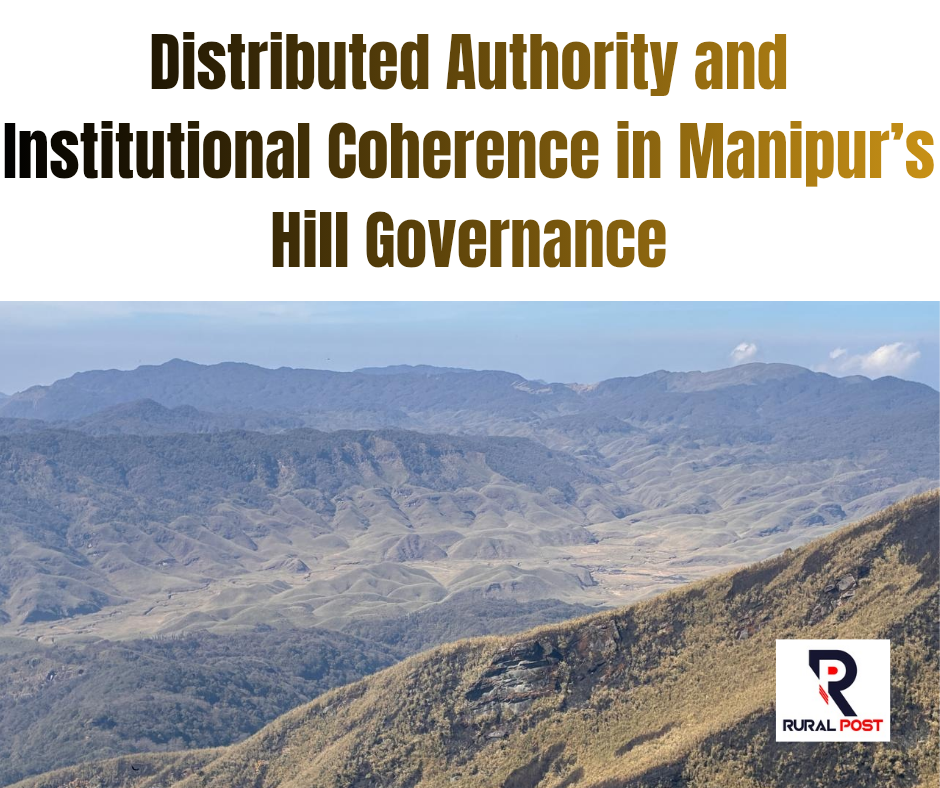
A fragmented institutional framework limits the effectiveness of local governance in Manipur’s hill areas, bringing renewed focus on the need for a more coherent constitutional arrangement.
The question of governance in Manipur’s hill areas is often framed in terms of autonomy, yet the deeper issue lies in the structure through which that autonomy is organised and exercised. The existing arrangement reflects a pattern of distributed authority across multiple institutions, raising a fundamental question of institutional coherence within the State’s constitutional framework. Shaped by Article 371C of the Constitution of India and the Autonomous District Councils under the Manipur (Hill Areas) District Councils Act, 1971, this framework places legislative initiative, legislative authority, and administrative execution in separate institutional spaces. Article 371C, inserted by the Constitution (Twenty seventh Amendment) Act, 1971, provides for the constitution of a Hill Areas Committee within the State Legislative Assembly and assigns a special responsibility to the Governor to ensure the proper administration of the hill areas, including reporting to the President and enabling Union direction where necessary. Within this framework, autonomy exists in form while its effective exercise remains limited by institutional design. The issue, therefore, lies not in the absence of decentralisation, but in the absence of an integrated structure through which decentralised governance can function with clarity and consistency.
Six Autonomous District Councils operate across Manipur’s hill districts, including Ukhrul, Senapati, Tamenglong, Churachandpur, Chandel and Kangpokpi. These councils were constituted in the early 1970s as part of the post statehood institutional arrangement intended to provide local governance in tribal dominated regions. Their powers, however, remain statutory in character and do not derive directly from constitutional conferment.
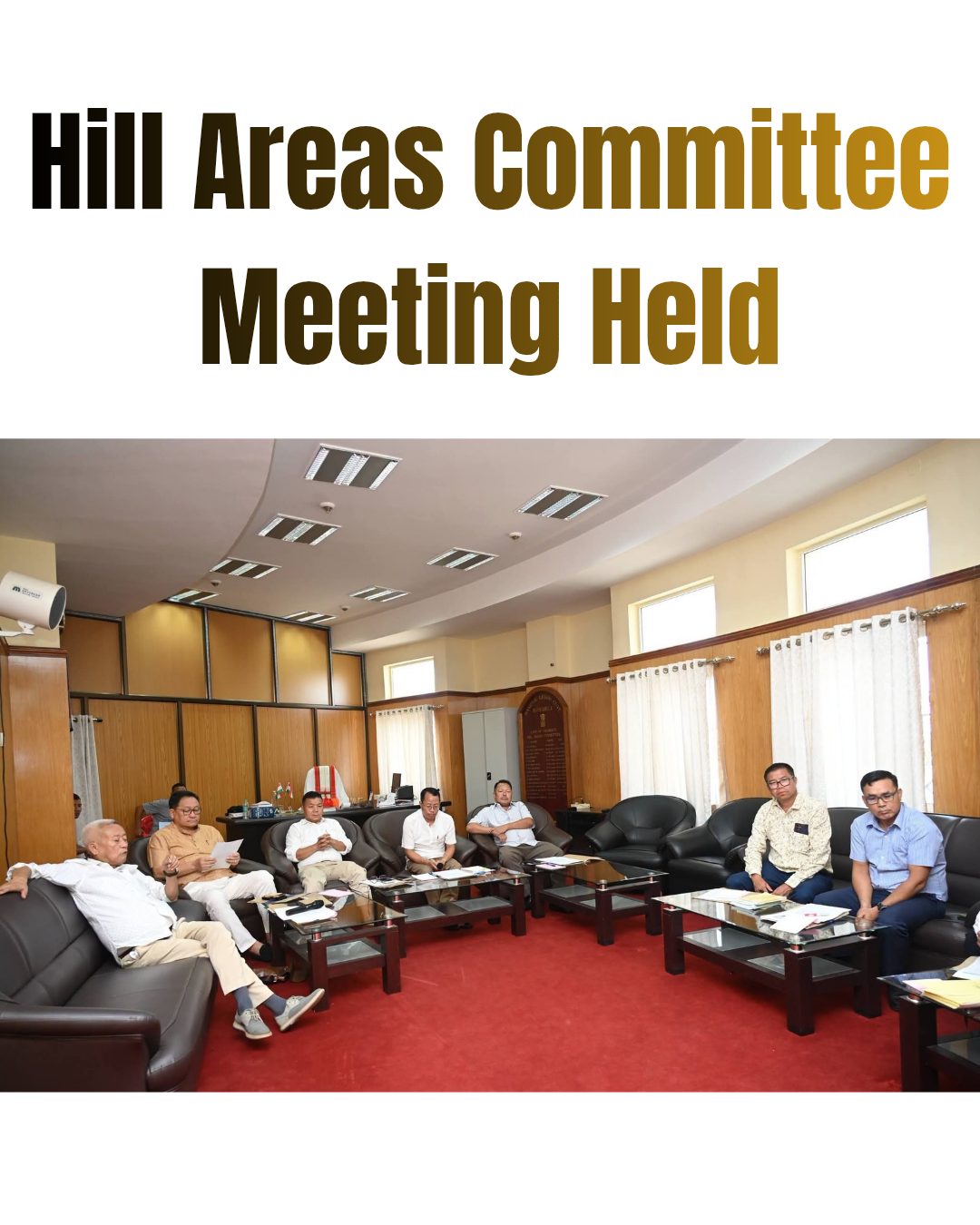
Under Article 371C, the Hill Areas Committee, consisting of legislators elected from the hill constituencies, is entrusted with responsibility over key subjects such as land, forests, and customary practices. The Presidential Order of 20 June 1972 further defines these as Scheduled Matters and establishes a procedure in which the Committee considers proposals relating to these subjects. The Hill Areas Committee exercises a recommendatory role in relation to legislation on Scheduled Matters, with final authority resting in the State Legislative Assembly. Such proposals are processed through the executive and placed before the Assembly for enactment. The Autonomous District Councils enter this process only at the stage of implementation.
This arrangement creates a segmented chain of governance. The Hill Areas Committee initiates, the Assembly legislates, and the councils implement. The councils do not possess independent legislative authority of substantive scope, and their limited regulatory powers remain subject to approval within the state legislative framework. This separation weakens institutional accountability and constrains the capacity of the councils to respond to local concerns within their own jurisdictions. The present arrangement also reflects a gap between constitutional intent and institutional practice, as provisions designed to safeguard local participation operate within a structure that limits their effective translation into autonomous decision making.
The institutional limitations extend further in the absence of judicial powers. Unlike councils operating under the Sixth Schedule, the Autonomous District Councils in Manipur do not exercise formal judicial authority over customary disputes. Such matters are addressed within the state judicial system, creating a disconnect between customary norms and their institutional enforcement.
These structural constraints are reinforced by financial dependence, which limits functional autonomy and planning capacity. The councils rely largely on allocations from the State Government and do not possess substantial independent taxation powers. Administrative authority is also shared with state departments, while district administration remains under the authority of the Deputy Commissioner appointed by the State Government, placing core executive control outside the institutional reach of the councils. These structural constraints have direct implications for service delivery, local development, and the ability of institutions to respond effectively to the everyday needs of communities in the hill areas. The cumulative effect is not merely institutional but developmental, as fragmented authority often translates into delays, inefficiencies, and uneven implementation of public programmes.
The democratic functioning of these institutions has also faced interruptions. Delays in Autonomous District Council elections, including the period between 2015 and 2020 when administrative arrangements replaced elected councils, indicate challenges in maintaining continuity of representative governance. The institutional history of the councils has also been marked by earlier periods of electoral boycott and non functioning, pointing to deeper concerns regarding institutional legitimacy.
A more integrated model of autonomy is reflected in the Sixth Schedule. Operating under Article 244(2) of the Constitution of India, it provides for Autonomous District Councils with legislative, executive, judicial, and financial powers over specified subjects, including land, agriculture, forest management, village administration, and customary law. These councils are empowered to constitute courts, levy taxes, and maintain district funds, thereby enabling autonomous financial administration alongside legislative and adjudicatory functions.
The difference between these arrangements reflects a broader pattern of constitutional asymmetry within the Northeast. In Manipur, authority remains distributed across institutions, while under the Sixth Schedule it is consolidated within a single constitutional framework. This distinction has informed ongoing discussions on institutional reform. Organisations such as the All Tribal Students’ Union Manipur and members of the Hill Areas Committee have articulated the question of extending the Sixth Schedule to the State within this broader context.
Concerns are sometimes expressed regarding the implications of such a move for the territorial integrity of Manipur. Constitutional practice across the Northeast indicates that such concerns do not arise within the existing framework. The Sixth Schedule operates within states and does not alter their territorial boundaries, which may be changed only under Article 3 of the Constitution of India. Autonomous districts remain part of the State, and the Schedule functions as a mechanism of decentralisation within the constitutional order.
Taken together, the present system in Manipur is characterised by distributed authority across legislative, administrative, and financial domains. Legislative powers lie outside the councils, judicial functions remain external, financial capacity is limited, and administrative control is shared. These features define the structural limits of the current arrangement. The distinction is not merely institutional but constitutional in character, as one framework derives authority from statute while the other draws its legitimacy directly from the Constitution.
The consideration of alternative frameworks must therefore be situated within a broader constitutional dialogue that balances local aspirations with the institutional integrity of the State. A more coherent framework would bring these functions together within a single institutional structure, enabling local bodies to legislate, administer, and adjudicate within clearly defined limits. The Sixth Schedule offers such a model within the Constitution.
The relevance of this discussion lies in the need to move beyond incremental adjustments. The question is not of introducing autonomy, but of completing it through an institutional design that allows it to function with coherence, responsibility, and practical effect.
Dr. Aniruddha Babar
(Dr. Aniruddha Babar is a Senior Academician, Public Policy Expert & Social Development Specialist, Writer, and Researcher currently serving in the Department of Political Science, St. Joseph College, Ukhrul, Manipur. He is also the Co-Founder and Deputy Director of the Centre for North-East Development and Policy Research (CNEDPR), St. Joseph College, Manipur)
(The views and opinions in this article are solely those of the author and do not necessarily reflect the official stance of Rural Post)