
Onkatho Mirin: A Review
–Worngachan A Shatsang
Genre and Release Date:
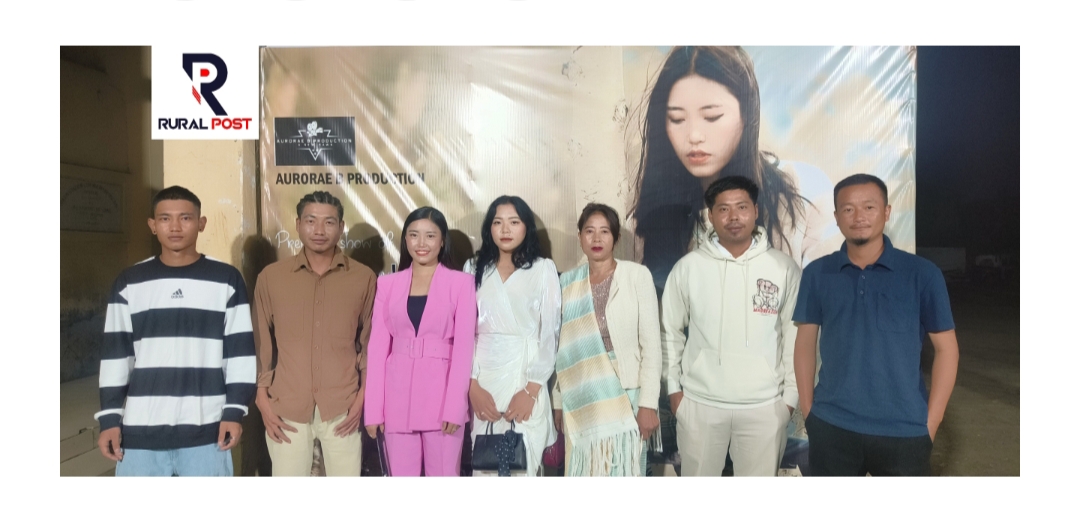
Onkatho Mirin is a Tangkhul feature film written and directed by Chipemmi Shatsang who is also the protagonist of the movie. The quirky romantic comedy produced by Aurorae B Productions has a run time of 2 hours and 9 minutes and was first released on 23rd August 2025 in Ukhrul.
Plot:
The film starts with the protagonist, Khanrin (Chipemmi Shatsang), a reckless and an easy-going guy, visiting Challou village along with his mother who is posted as a teacher at the village school. There, Khanrin is smitten by Yamphi (Shimreiwon Wungrei), his mother’s young colleague. Khanrin, persuasive as he is, convinces his mother to allow him to teach in her stead for the rest of the year in a bid to win Yamphi’s affection. However, Khanrin doesn’t make the best first impression on Yamphi or his colleagues. Soon, he finds himself grappling with addiction once again and swings back and forth between sobriety and inebriation as he tries to juggle his addiction and his responsibility as a son, a friend, and a lover.
Acting and Directing:
Onkatho Mirin continuously shifts between a first-person retrospective narration from the protagonist and a linear storytelling of the present where the lives of the character are being played out. The idea of a quirky and carefree character of Khanrin is stupendously delivered by the writer and director himself, making Chipemmi touch on the fringes of being an auteur. His performance in a particular scene as an addict going through withdrawal was beautiful and reminds one of Leonardo Di Caprio’s performance in “The Basketball Diaries.” The minimal cast (3 major and other minor characters) of the film and the setting of most scenes in a single location (the school) could have easily backfired. However, thanks to the brilliant acting of the cast and the pacing of the film, this evident lack was hardly a problem and showed how sometimes – less is more.
The film also moves away from the conventional hard hitting and heavy dialogues of Tangkhul films which, though well intentioned, often fail to deliver on screen. Instead, the light hearted and quick-witted dialogues implemented in the film coupled with unforced deliveries from the cast makes for an easy viewing with a lot of hearty laughter in between. For a film with a director, assistant director, and a cast comprised fully of debutants, no one in the audience will feel that the directing or the acting were found too wanting which is as big a complement the cast and crew can hope for. A big leap of this film from other Tangkhul films is the use of live sounds which, as touched upon earlier, made the deliveries and acting much more natural.
Cinematography, Music, Costume, Makeup and Set:
Sometimes, in films, it is the things that go by unnoticed that tells you it has been done well and this can be said for the music of the film. The cinematography too, went back to the basics, which is, in many cases, the best way to make a film. The use of shaky shots and dutch angles to portray the drunk/wasted state of Khanrin is commendable. However, the use of lighting or the lack thereof in some shots and some of the shot choices were a little disappointing. In terms of editing, however, much leaves to be desired with the transitions, colour and flow.
In true independent filmmaking fashion, Shimreiwon juggles well between acting, directing and makeup and does so admirably on all fronts. In costume, Rinyaton A Shatsang nails the design by, again, keeping things simple. On that note, the set design was also exceptional as it moves away from Tangkhul films showcasing shiny tiled rooms and kitchens to humble mud hearths and wooden rooms which is unapologetically Tangkhul and reflects our life and culture much better. The idyllic countryside setting and the narration from the main character has striking visual similarities with many Asian movies, particularly with Kwak Jae-yong’s 2003 “The Classic.”
Message and Impact:
Onkatho Mirin has elements of satire and criticism towards the state of the society in which the film is set in. It portrays how, the many injustices in life can often push young people into addiction and the difficulty of a road back for these addicts once they go down this path. It critiques the stigmatization of addicts by the society and shows a side to addicts that the society often refuses to see; that many of these addicts are at heart, good people who needs help rather than alienation.
It goes up against the age-old adage of religion as the panacea for all and shows how a good support system of friends and families can play a much bigger role in helping addicts recover; giving them a new chance at life, or a second chance serenade, as the title of the movie goes.
The characterization of Khanrin in the movie and his growth, showcased by his tone, appearance as well as his dressing, as the movie progresses is a stroke of genius and a tool of film rarely implemented in local films thus far.
Conclusion:
In the history of film industries worldwide, the emergence of independent filmmakers with hard hitting low budget films often signify the start of the boom of a film industry. These films are often not perfect and may have many shortcomings, which Onkatho Mirin also has, but offer new perspective into the language of filmmaking.
Onkatho Mirin can be looked upon as one of those films heralding in a change in the Tangkhul film industry.